China’s Communist Party Central Committee and the State Council released guidelines on October 9, 2026, setting out 19 measures to accelerate what Beijing calls “new quality productive forces.” The document orders faster breakthroughs in key core technologies, lets capable private companies lead major national technology tasks, and mandates full implementation of the “AI Plus” initiative under a monitoring and risk-warning regime designed to keep artificial intelligence “safe, reliable and controllable.”
President Xi Jinping introduced the concept in September 2023 during an inspection tour of Heilongjiang province, and it has since become the organizing principle of Chinese industrial policy amid technology competition with the United States. The guidelines turn it into an implementation framework for the 15th Five-Year Plan (2026-2030), whose outline designates new quality productive forces a key strategic task and assigns them 28 of the plan’s 109 major projects, or 25.7 percent. Those projects target four priorities: industrial capability and competitiveness, emerging industries, breakthroughs in cutting-edge technologies, and innovation capacity.
How the New Productive Forces Guidelines Rewire State-Led Innovation
The 19 measures span five areas: scientific and technological innovation, the integration of research with industry, development approaches, institutional reform, and talent policy. The central directive invokes the “new nationwide system,” Beijing’s state-mobilized model for concentrating resources on strategic technologies, to run high-quality development campaigns for key manufacturing industrial chains, backed by whole-chain research efforts and support across every production factor. The text also calls for full application of first-unit and first-batch policies, which support the market entry of domestically developed equipment and materials before they reach scale.
National laboratories are given a central role in organizing major national science and technology projects and are told to pilot institutional reforms first, with major projects focused on strategic, flagship products.
The most consequential shift concerns enterprises. The document calls for a corporate research and development (R&D) reserve fund system, a higher additional tax deduction rate for corporate R&D expenses, and a procedure to elevate company research projects that meet national strategic needs to national project status. It explicitly supports capable private enterprises in leading major national technological breakthrough tasks. State-owned groups are directed toward original innovation, and “specialized and sophisticated” small and medium-sized firms retain targeted support.
Commercialization gets dedicated tools: proof-of-concept and pilot-scale verification platforms, large-scale demonstration programs for new technologies and products, and project evaluations that judge results by real-world application at acceptance.
AI Plus, Humanoid Robots and Low-Altitude Economy Among Named Targets
The AI measure calls for breakthroughs in foundational theory and core technologies, a more efficient supply of computing power, algorithms and data, and national pilot bases for industry-specific AI applications. It names intelligent connected new-energy vehicles, AI-enabled phones and computers, and humanoid robots as priority next-generation intelligent terminals. Alongside the technology monitoring, risk-warning and emergency-response system, a separate market-regulation measure calls for stronger governance of AI and biotechnology.
On infrastructure, the guidelines call for a nationally integrated computing network, a national blockchain network, continued execution of the East Data, West Computing project, and a cross-border data flow mechanism described as efficient, convenient and secure.
The strategic emerging industries listed include next-generation information technology, new energy, new materials, robotics, biomedicine, high-end equipment, and aviation and aerospace. The text calls for the healthy and orderly development of the low-altitude economy, which covers civilian drones, air taxis and light aircraft, and of commercial space, both on the condition that safety is ensured. Future industries flagged for forward planning are quantum technology, biomanufacturing, hydrogen and nuclear fusion energy, brain-computer interfaces, embodied AI and sixth-generation (6G) mobile communications, backed by a mechanism for growing investment and sharing risk.
Anti-Bubble Rules Make Officials Accountable for Investment Losses
The implementation section carries the document’s sharpest language. It bars regions and government departments from drifting away from the real economy toward speculation, chasing scale for its own sake, or generating bubbles, and it warns against industrial hollowing-out and gaps in industrial capacity. It strictly prohibits the abuse of policies in the name of developing new productive forces and states that officials responsible for major losses caused by herd-like rushes into sectors or blind investment will be held to account.
The guidelines also call for measures to avoid “involution-style” competition, Beijing’s term for the destructive price wars that have hit sectors such as electric vehicles and solar manufacturing.
Oversight sits with the Office of the Central Financial and Economic Affairs Commission and the National Development and Reform Commission (NDRC), which are responsible for strategic planning, cross-regional and cross-departmental coordination, and monitoring and evaluation. The document reaffirms the principle of “establishing the new before abolishing the old,” meaning legacy industries are not to be dismantled before replacements are viable. Traditional sectors, including shipbuilding, machinery, chemicals and metallurgy, are slated for technological upgrading with the stated goal of reinforcing their position in the global division of labor.
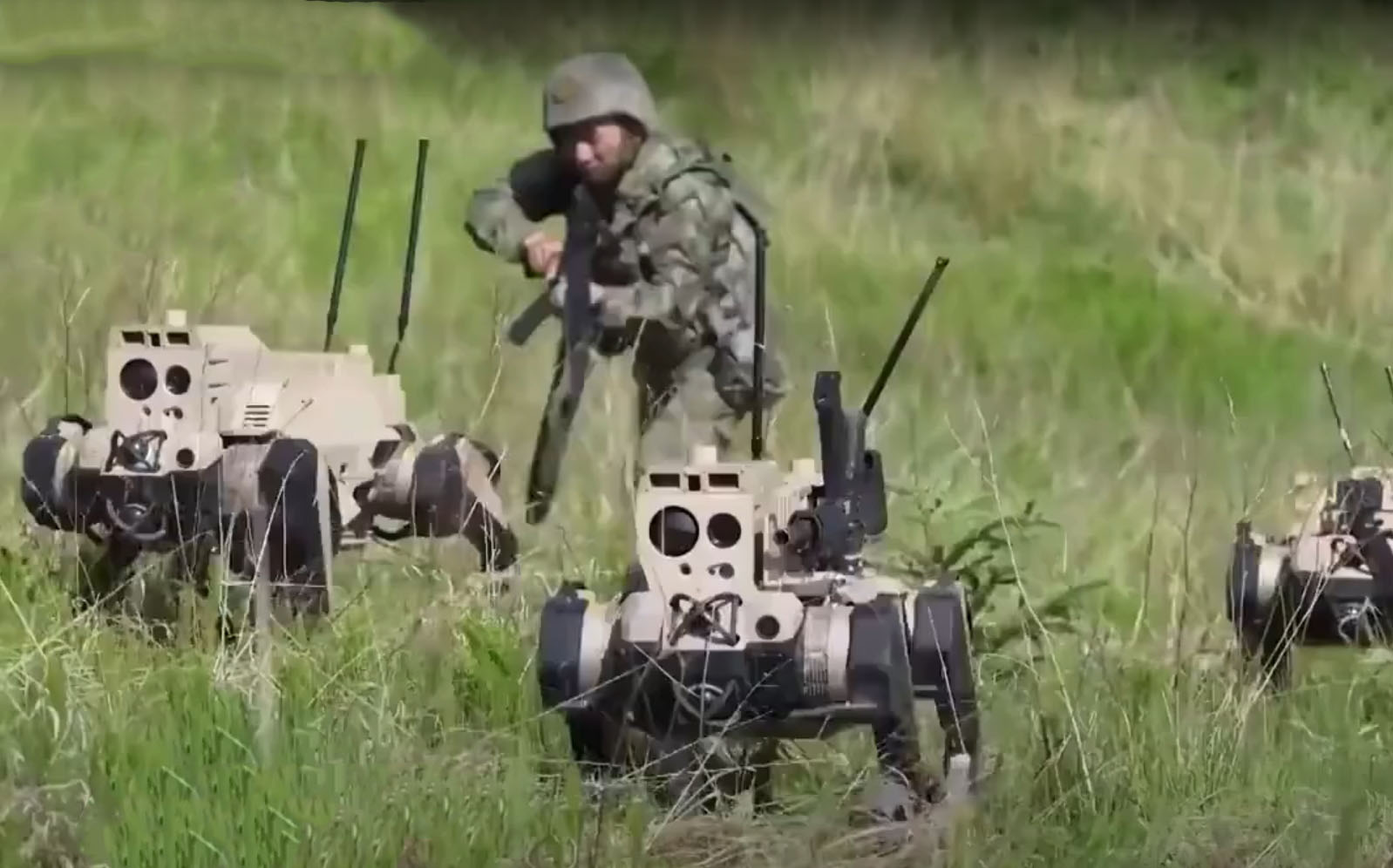
Analysis: The guidelines contain no explicit reference to defense or military-civil fusion, yet their priority list overlaps heavily with the industrial base the People’s Liberation Army (PLA) draws on: shipbuilding, aerospace, high-end equipment, AI, quantum technology and drones. The instruction to coordinate development and security places all of it within Beijing’s broader security framing. Opening national technology tasks to private firms widens the pool of suppliers able to deliver dual-use breakthroughs quickly, while first-unit support shortens the path from prototype to production. For US and allied planners, the signal is less about new money, since none is disclosed, than about Beijing’s attempt to raise the return on capital already committed through fewer duplicated local projects and faster commercialization.
The guidelines set no budget, quantitative targets or deadlines. The next indicators will be the size of any increase in the R&D super-deduction rate, the rules governing the corporate R&D reserve fund, and the first national technology tasks awarded to private companies. Sector-specific implementation plans from ministries and provincial governments, along with the Central Economic Work Conference typically held in December, will show how strictly Beijing intends to enforce the anti-bubble provisions.