The Netherlands and France held the first meeting of a bilateral Nuclear Steering Group on October 14, 2026, opening the first high-level talks between the two governments on how French nuclear deterrence and European conventional capabilities could work together to deter aggression against Europe, the Dutch Ministry of Defence announced on October 15.
The meeting responds to an offer French President Emmanuel Macron made on March 2, 2026, at the Île Longue ballistic missile submarine base in Brittany, where he announced a shift toward what Paris calls dissuasion avancée, or forward deterrence, and ordered an increase in the French warhead stockpile. The Dutch cabinet accepted the offer in line with its coalition agreement, arguing that Russia’s war against Ukraine has fundamentally degraded European security and requires Europe to take greater responsibility for its own defense.
Where the Netherlands Fits in French Nuclear Deterrence Expansion
Senior French government officials attended. The Dutch delegation drew on the Ministry of General Affairs, which houses the prime minister’s office, alongside the defense and foreign ministries. The two sides explored options for strengthening the European dimension of nuclear and conventional deterrence; the ministry disclosed no decisions and no date for a second meeting.
The Netherlands was one of eight countries Macron named in March as initial partners, alongside the United Kingdom, Germany, Poland, Belgium, Denmark, Greece and Sweden. France and Germany created their own steering group on the day of the Île Longue speech, agreeing to German conventional participation in French nuclear exercises. Sweden held its first steering group meeting with France in Paris on April 23, 2026, and Poland followed on July 10, 2026. London and Paris had already set up their own nuclear steering group under the Northwood Declaration of July 2025.
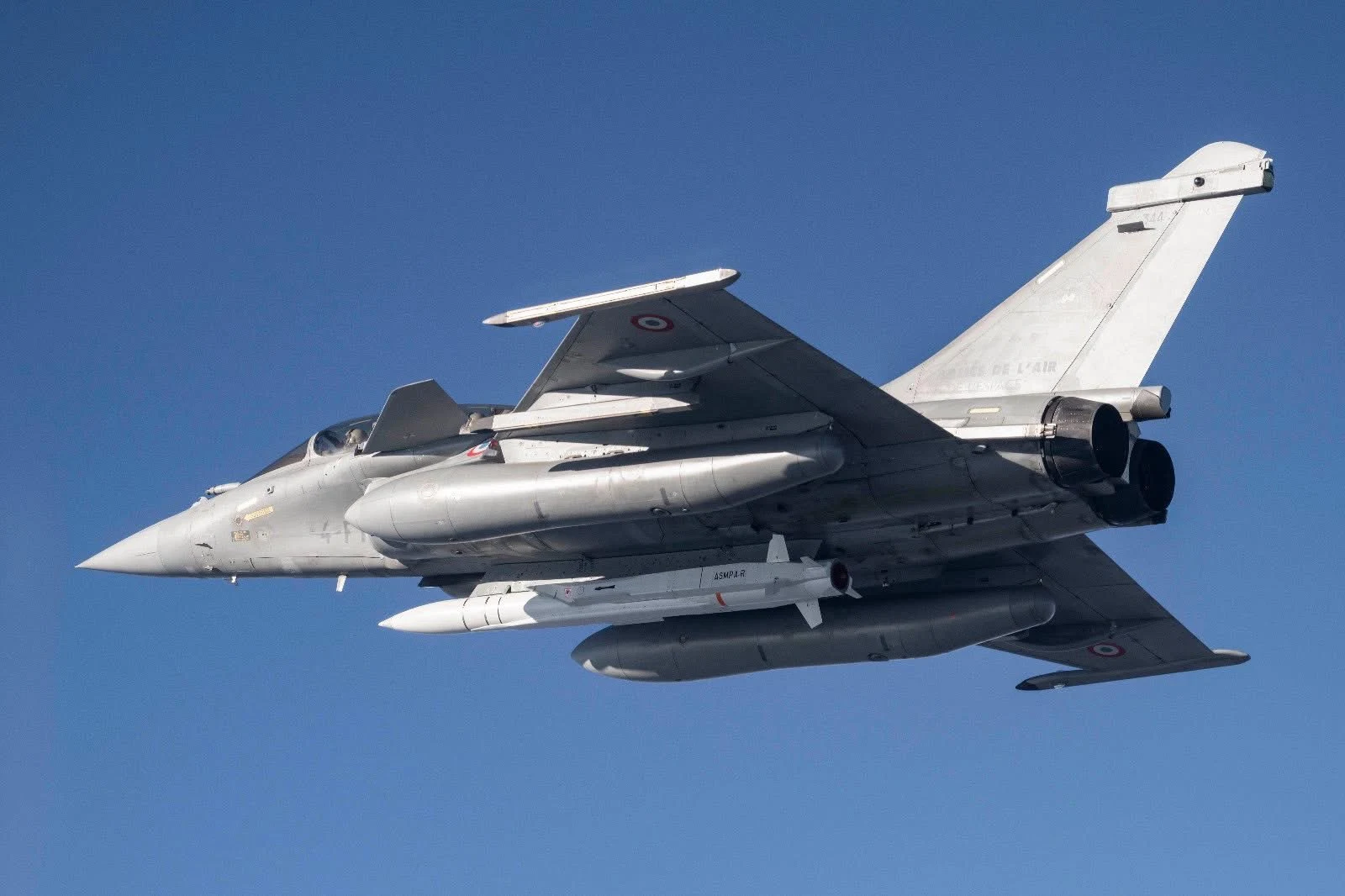
Forward deterrence centers on the Forces Aériennes Stratégiques (FAS), the airborne component of the French deterrent. Macron said elements of the FAS could deploy temporarily to allied territory, while partners would contribute early warning, air defense and long-range strike capabilities that reinforce the conventional layer beneath the nuclear threshold. Publicly available information indicates the FAS operates Rafale B fighters armed with the ASMP-A supersonic nuclear cruise missile, now upgraded to the ASMPA-R standard, with a range commonly estimated at around 500 km. A hypersonic successor, the ASN4G, is planned for the 2030s. The French arsenal is estimated at about 290 warheads, and Paris has said it will no longer publish the figure.
Volkel, F-35A and B61-12: How Dutch NATO Nuclear Sharing Coexists With Paris
The Netherlands enters the French dialogue as an established NATO nuclear-sharing state. On June 1, 2024, the Royal Netherlands Air Force became the first European ally to hand its dual-capable aircraft mission to the F-35A, operating from Volkel Air Base. Open-source estimates indicate Volkel stores US B61 gravity bombs in underground vaults, with the guided B61-12 as the variant certified for the F-35A. The United States retains custody of the weapons, and their release requires NATO Nuclear Planning Group consultation and US presidential authorization.
The French framework works on a different logic. Use of French nuclear weapons remains the exclusive decision of the French president, and Macron ruled out any sharing of that authority under forward deterrence. Partners’ likely role is conventional: hosting deployed FAS aircraft, providing air defense and escort, and feeding early warning data into French planning. Germany’s agreement to join French nuclear exercises in a conventional capacity offers the clearest template so far.
The Dutch cabinet framed the talks as an addition to, not a replacement for, NATO collective defense and deterrence, echoing the language France and Germany used in March. Key unknowns remain. The Hague has not said whether it would host FAS aircraft, whether Dutch F-35As or tankers would join French drills such as the recurring Poker nuclear raid exercise, or how French planning would be deconflicted from the NATO mission at Volkel.
Analysis: The Netherlands joins Germany as a NATO nuclear-sharing host with a dedicated nuclear channel to Paris, and that dual position gives the Dutch format operational weight beyond its diplomatic signal. Volkel already holds the security procedures, hardened infrastructure and fifth-generation aircraft that any French dispersal concept would need on allied soil. For The Hague, the dialogue serves as a hedge against doubts over long-term US commitment without loosening ties to American extended deterrence. The risk is planning friction: two nuclear frameworks drawing on the same bases, airspace and aircrews require deliberate coordination to avoid ambiguity for allies and adversaries alike.
The ministry gave no timeline for the steering group’s next session. Near-term indicators include whether Dutch personnel observe or join French nuclear exercises, how much the cabinet discloses to the House of Representatives about the group’s mandate, and whether the parallel bilateral formats with Berlin, Warsaw, Stockholm, London and The Hague converge into a multilateral European body.