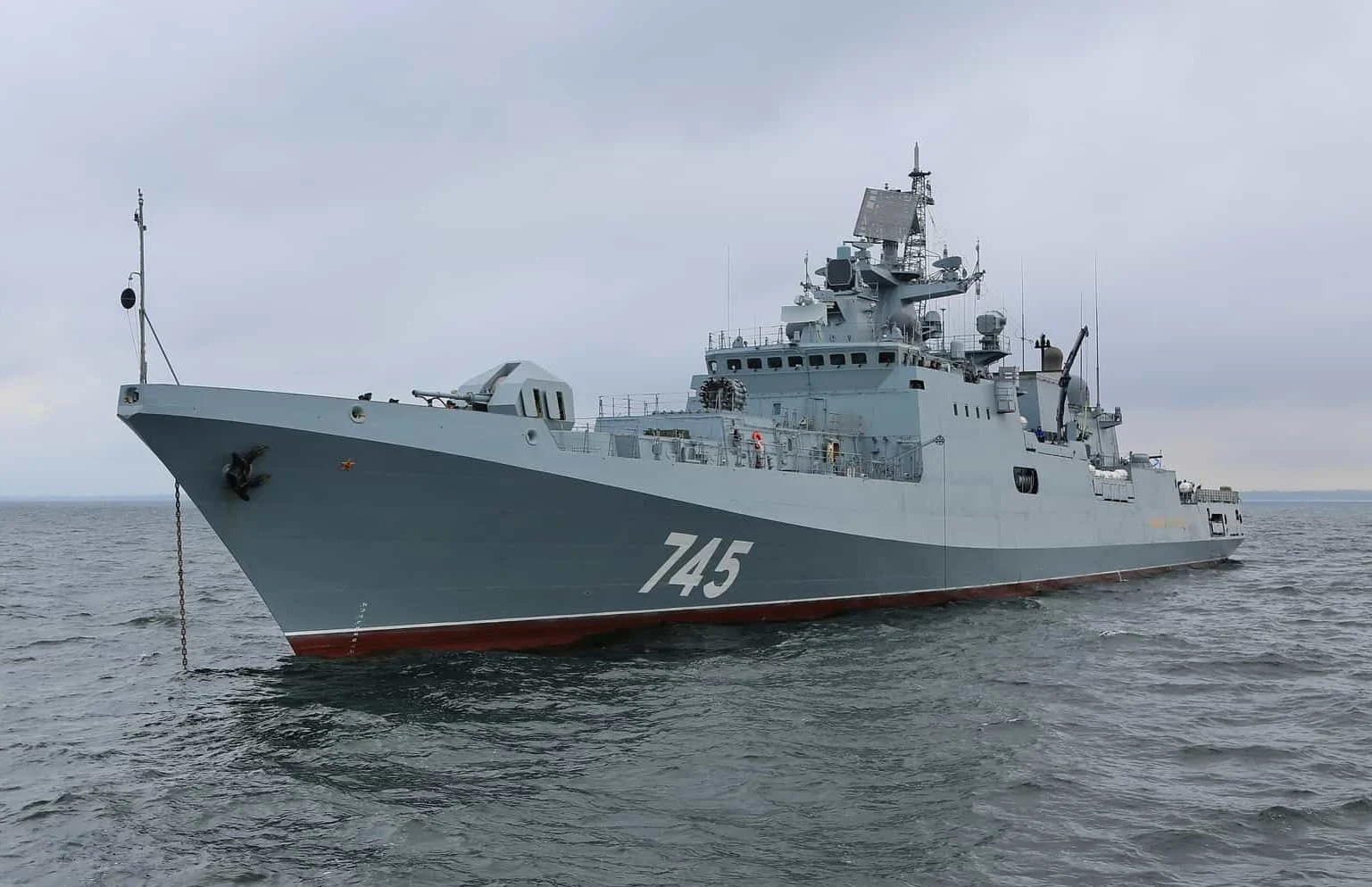
Russia will use the third Russia-Africa Summit in Moscow on October 28-29, 2026, to offer five African states agreements simplifying port entry for Russian warships and auxiliary vessels, according to an assessment published October 26 by the Defence Intelligence of Ukraine (HUR). The directorate named Cameroon, the Republic of the Congo, Madagascar, Nigeria and Togo as targets for the Russian naval access deals, and said Benin and Senegal would be offered military cooperation agreements.
The summit, the first since July 2023, is expected to adopt a Russia-Africa action plan for 2027-2029; more than 30 of Africa’s 54 states had confirmed attendance by mid-September, according to the Russian Foreign Ministry. HUR, the intelligence service of a country at war with Russia, published no supporting documents, and the offers could not be independently verified. Several, however, track agreements Moscow has signed or pursued since the fall of Bashar al-Assad in December 2024 put its Syrian bases in doubt.
Russian Naval Access From the Gulf of Guinea to the Red Sea
Simplified port-entry agreements replace case-by-case diplomatic clearance with a notification regime, giving warships and fleet auxiliaries predictable access for refueling, resupply, crew rest and minor repairs. Moscow already holds such arrangements with Equatorial Guinea, signed in July 2015, and Mozambique, signed in April 2018. A 2019 draft with Sudan shows the typical terms: notification no later than seven working days before arrival, and no more than seven Russian warships present at once.
Togo is the most advanced of the five. A military cooperation agreement signed in Lomé in March 2025 and ratified by Russia in October 2025 covers joint exercises, training, intelligence sharing, hydrography, counter-piracy and warship visits. Defense Minister Andrei Belousov traveled to Lomé in March 2026 to discuss implementing the agreement. The deep-water port is the main maritime gateway for landlocked Mali, Niger and Burkina Faso, the Sahel juntas that host Russian forces. In July 2026, a Russian cargo ship observed loading infantry fighting vehicles and armored personnel carriers resurfaced at Lomé, offering an alternative to the Conakry, Guinea, supply route.
Benin’s inclusion matches statements by Igor Evdokimov, Moscow’s ambassador to Benin and Togo, that a military cooperation agreement was in preparation, as well as a draft accord on simplified Russian Navy port calls in Benin that the Russian government approved by January 2026. Nigeria, Cameroon and the Republic of the Congo would extend that coverage across the Gulf of Guinea. Madagascar, under military rule since October 2025 and already expanding defense ties with Moscow, would add an Indian Ocean node. HUR said the deals would let Russia monitor traffic in the Mozambique Channel and support its “shadow fleet” on routes linking Africa, the Middle East and Asia.
Port Sudan, Berbera and Assab: Basing Bids to Sustain the Africa Corps
HUR said Moscow also wants a naval logistics and support facility at Port Sudan, a restored Soviet-era facility at Berbera and a logistics hub at Assab, Eritrea. All three overlook the shipping corridor between the Suez Canal and the Gulf of Aden.
Port Sudan carries the longest paper trail. A December 2020 agreement provided for a 25-year logistics center hosting up to 300 personnel and four warships, including nuclear-powered vessels, with rights to bring in weapons and ammunition. Sudan never ratified it. Khartoum’s foreign minister declared full agreement in February 2025, and Sudanese officials said a new 25-year offer went to Moscow in October 2025 in exchange for air defense systems and mining access. By December 2025, Sudanese military sources described the project as frozen. Rapid Support Forces drone strikes on the port in May 2025 had exposed its vulnerability.
The Soviet Navy operated a facility at Berbera in the 1970s until Somalia expelled Soviet personnel in November 1977, after Moscow backed Ethiopia in the Ogaden War. The port now lies in self-declared Somaliland, whose independence Mogadishu rejects. Russia announced plans for a logistics center at an unnamed Eritrean port in August 2018; Assab previously hosted an Emirati military base used in the Yemen war.
HUR links the network to the Africa Corps, the Russian Ministry of Defense force that absorbed Wagner Group operations, including in Mali in June 2025. The Central African Republic, Libya and Mali host the largest Russian deployments, with up to 2,500 personnel in Mali as of early 2026, according to the US Congressional Research Service.
Analysis: The pattern HUR describes is a distributed access network rather than a single base: notification-based port calls in the Gulf of Guinea and the Indian Ocean, anchored by fixed nodes on the Red Sea corridor, to replace logistics once concentrated at Tartus. Since Türkiye closed the Turkish Straits to belligerent warships in February 2022, Russian warships bound for African waters must deploy from the Baltic, Northern or Pacific fleets, raising the value of reliable replenishment points. Port-call agreements cost little and are hard for Washington or Paris to contest. They also leave hosts in control: six years of Sudanese hesitation over Port Sudan show how fixed basing ambitions stall in fragile states.
The first test is whether the summit produces signed intergovernmental texts, which Russia publishes on its legal portal before ratification. HUR also expects Moscow to push “human capital” cooperation and expand its Russian Houses, Rossotrudnichestvo-run cultural centers that Ukrainian intelligence says serve influence and recruitment. Whether Abuja and Dakar sign anything this week will show if the network can reach beyond the Sahel juntas and Togo.