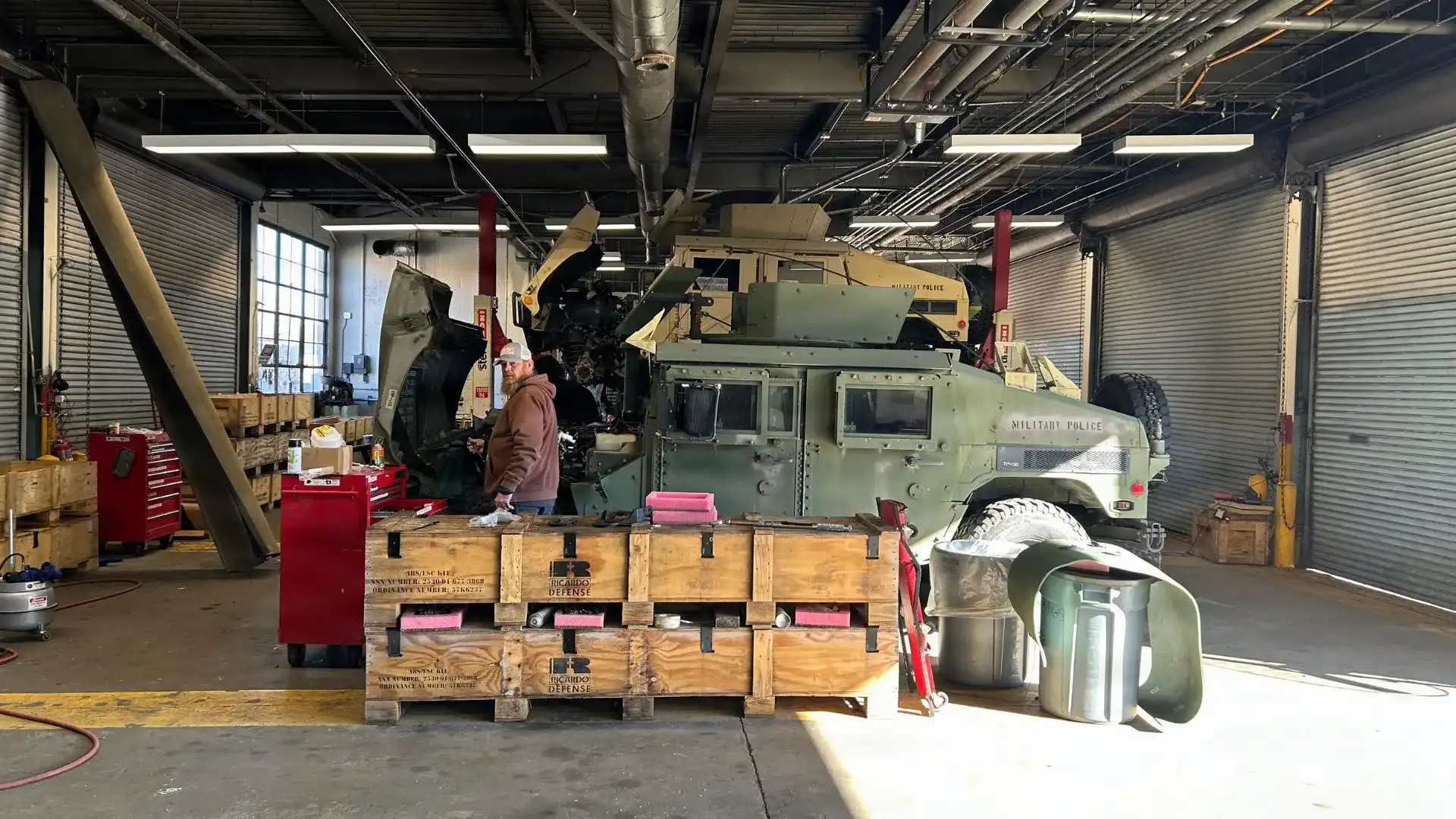
The U.S. Army has awarded Amentum Services Inc. of Chantilly, Virginia, a $608,999,219 firm-fixed-price contract to provide a supplemental workforce of at least 500 full-time equivalent (FTE) personnel to sustain organic industrial base operations across key depots, the Department of War announced on November 5, 2026. Work will be performed in Texarkana, Texas, home of Red River Army Depot, with an estimated completion date of November 12, 2031.
The award comes as the Army’s government-owned maintenance depots contend with a shrinking civilian workforce. A Government Accountability Office (GAO) review published on August 10, 2026, found that the Army spent more than $7.1 billion operating Anniston Army Depot in Alabama and Red River Army Depot from fiscal 2021 through fiscal 2025, even as both sites lost skilled government maintainers. The Army lifted its civilian hiring freeze effective September 25, 2026, nearly 20 months after a governmentwide freeze took hold in January 2025.
Inside the $609 Million Depot Workforce Contract With Amentum
Army Contracting Command at Detroit Arsenal, Michigan, is the contracting activity under contract number W911RQ-27-C-A004. Bids were solicited via the internet, and only one offer was received. At award, the Army obligated $121,946,770 in fiscal 2027 funds, which the announcement lists as consolidated working fund, Army, engineers, civil funds.
The announcement does not identify which depots the workforce will support beyond the Texarkana place of performance, nor which trades or labor categories the contract personnel will fill. It also does not specify how the 500 FTE floor will be distributed across sites or how far headcount could rise above that minimum. Over five years, the total value equates to about $244,000 per FTE per year at the 500-person floor, a figure that includes contractor overhead, benefits, and profit, not wages alone.
The award builds on an existing relationship. Federal procurement records show Amentum previously held a multi-site supplemental labor task order issued under the same W911RQ contracting office code, with a performance period from January 2023 to January 2025 and about $99.1 million obligated.
Red River serves as the Army’s Center of Industrial and Technical Excellence for tactical wheeled vehicles, with a workload anchored on High Mobility Multipurpose Wheeled Vehicle (HMMWV) recapitalization alongside Bradley Fighting Vehicle, M270 Multiple Launch Rocket System, and High Mobility Artillery Rocket System rework. Under the SkyFoundry initiative authorized in the Fiscal Year 2026 National Defense Authorization Act (NDAA), the depot is also standing up small unmanned aircraft system production, with responsibility for batteries, final assembly, and test. SkyFoundry is structured as a government-owned, government-operated, contractor-augmented facility.
GAO Finds 18% Workforce Loss at Anniston and Red River Depots
The GAO report, prepared in response to a provision in House Report 119-231 accompanying the Fiscal Year 2026 NDAA, documents the trend behind the award. The permanent and term-limited government workforce at Anniston and Red River fell by a combined 785 people, roughly 18%, between fiscal 2021 and fiscal 2025. Anniston lost 616 people, about 22%, while its contractor headcount more than doubled from 101 to 258. Red River lost 169 people, about 11%, as its contract workforce grew from 589 to 673.
At Red River, those losses ran against the workload curve. GAO found that Anniston’s total workload declined slightly over the period, while Red River’s generally trended up. HMMWV work accounted for the largest share of Red River’s workload, and other depot work, including electronic stability control and anti-lock brake kits for the HMMWV, made up a growing share. At Anniston, Abrams work totaled about $1.8 billion, more than half of the depot’s workload.
GAO reported that depot officials cited the deferred resignation program, known as the “fork in the road” offer, and hiring freezes initiated in fiscal 2025, on top of normal attrition, as factors behind a shortage of trained and skilled maintainers. The deferred resignation program alone accounted for 105 departures at Anniston and 119 at Red River. Depot officials told auditors the freeze prevented them from backfilling skilled maintainers who retired or left, and that experienced tradespeople such as electricians are difficult to recruit and retain even without a freeze. They also said contract workers often arrive without the skills the job requires and that contractor turnover can disrupt production.
In February 2026, the Red River contracting office opened an area of interest titled Solutions for Supplemental Labor Management under its organic industrial base modernization commercial solutions opening, seeking one way to source and manage contract labor across multiple Army sites. The Army has not said whether the Amentum award resulted from that solicitation.
Analysis: The Amentum award converts a workforce gap, driven in part by federal personnel policy, into a five-year contract line. Deferred resignations and the hiring freeze removed government artisans faster than depots could replace them, and the Army is now buying back capacity through a single-offer vehicle that limits price leverage. The trade carries the two risks depot officials flagged to GAO: skill gaps among contract labor and turnover that disrupts throughput. It also tests the Army’s 15-year, nearly $18 billion Organic Industrial Base Modernization Implementation Plan, whose early phases have prioritized infrastructure such as roads, electrical systems, and water, while workforce needs fall under a separate human capital plan. At Red River, where vehicle recapitalization and SkyFoundry drone production now compete for the same labor pool, people rather than plant equipment are becoming the binding constraint on output.
Key unknowns remain: which depots the 500 FTE will support, which trades they will fill, and how the contract will interact with resumed civilian hiring. Next indicators include task allocation across sites, contract modifications, fiscal 2028 obligations, and whether SkyFoundry production at Red River draws on this labor pool.