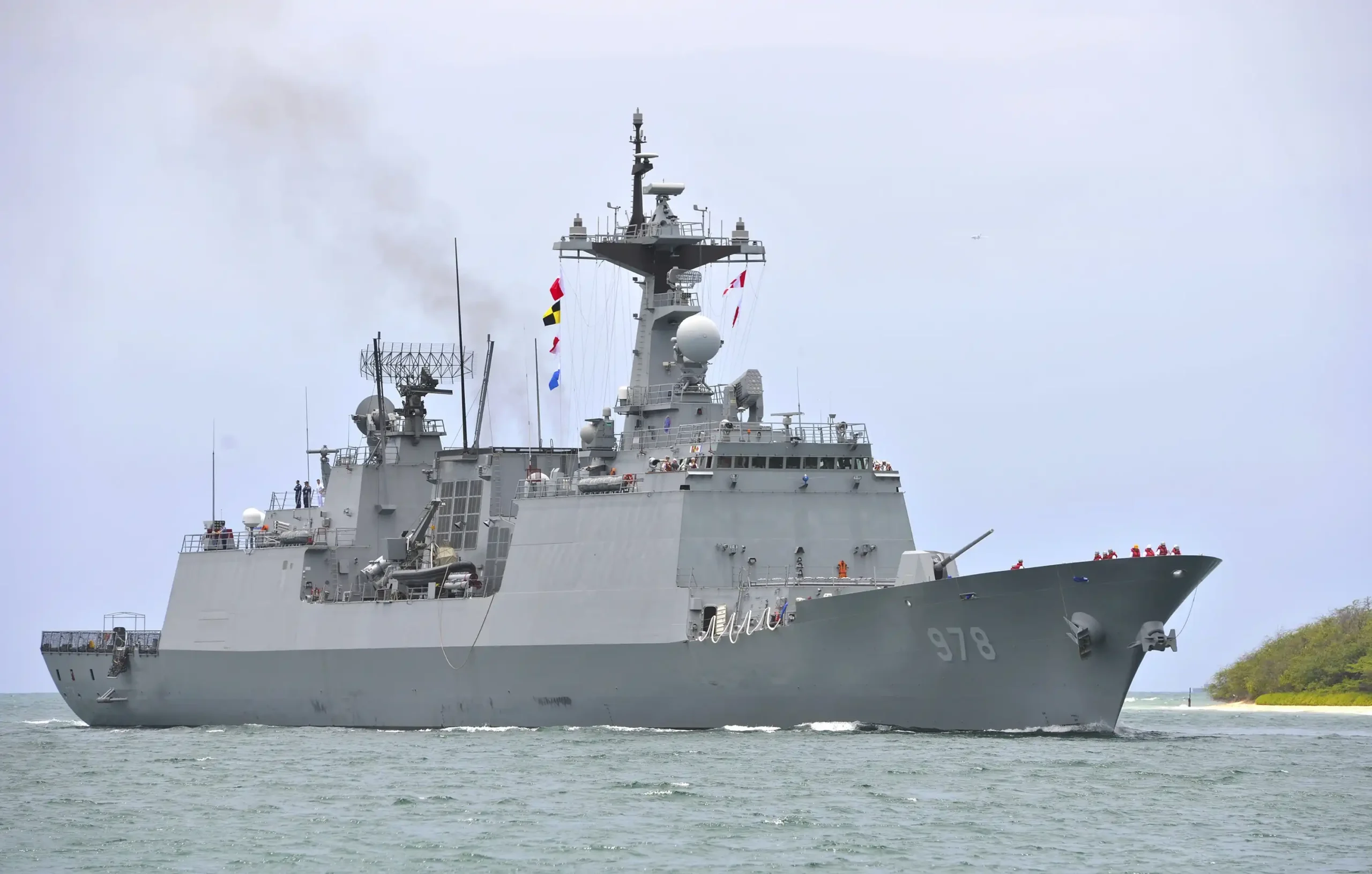
South Korea is reviewing a plan to extend the operating area of its Cheonghae anti-piracy unit from the Gulf of Aden into the Gulf of Oman, which opens onto the Strait of Hormuz, according to a Seoul newspaper report published October 15, 2026. The Ministry of National Defense confirmed it is weighing a motion to the National Assembly to extend the unit’s deployment before its mandate expires on December 31, 2026, but said no details have been decided.
The review comes amid alliance strain. The United States and Israel launched strikes on Iran on February 28, 2026; Tehran effectively closed the Strait of Hormuz, and Washington imposed a naval blockade on Iranian ports. President Donald Trump has criticized Seoul’s support for the war as insufficient, and in mid-August he announced cuts to the Ulchi Freedom Shield exercise, citing its cost, his relationship with Kim Jong Un and his claim that Lee had rejected a US request for support on Iran. On September 18, President Lee Jae Myung ruled out any deployment that could draw South Korea into the conflict, but left open a larger role in protecting navigation.
Cheonghae Unit Mandate, Force Package and the Gulf of Oman Option
The current parliamentary authorization covers one destroyer, one maritime operations helicopter and up to three high-speed boats, operating in the Gulf of Aden off Somalia plus waters designated to protect South Korean nationals in contingencies. Deployed continuously since March 2009, the unit renews its mandate annually with National Assembly consent and fields around 300 personnel against an authorized ceiling of 320.
The 48th rotation deployed aboard ROKS Wang Geon (DDH 978), a Chungmugong Yi Sun-sin-class (KDX-II) destroyer that sailed from Busan on May 15, 2026, with roughly 260 personnel, a naval special warfare boarding team and a Lynx helicopter detachment. The 49th rotation left Busan on October 4 aboard the class lead ship, ROKS Chungmugong Yi Sun-sin. Publicly available specifications indicate the KDX-II displaces about 4,400 tons light and 5,500 tons full load on a 150-meter hull, with two General Electric LM2500 gas turbines and two MTU diesels driving it to about 29 knots. Armament includes a 127 mm Mk 45 gun, a 32-cell Mk 41 vertical launch system for SM-2 Block IIIA missiles, Harpoon anti-ship missiles, a 21-round RIM-116 Rolling Airframe Missile launcher and a Goalkeeper close-in weapon system. That layered air defense suits drone and anti-ship missile threats; the lack of organic mine countermeasures is a hard limit near a strait where the Revolutionary Guard claims mine strikes.
The proposal would add one maritime patrol aircraft for aerial surveillance and reconnaissance, according to the original Korean-language report; some translated accounts cited a frigate instead, and the ministry has confirmed neither. Korean media identify the candidate as a Boeing P-8A Poseidon, a type the Republic of Korea Navy already operates; no host nation for the aircraft has been named. Seoul has a precedent: in January 2020, it extended the unit’s area of operations to the Strait of Hormuz under independent national command rather than joining a US-led coalition.
Gulf of Aden Piracy and Hormuz Mines Define the Operating Environment
The ministry cited a sharp year-on-year rise in Gulf of Aden piracy; the Korean report put the increase above 30 percent. International Maritime Organization data show at least 15 attacks off the Horn of Africa through late August 2026, against five in all of 2025, the highest level since 2013. On April 21, 2026, about 30 pirates seized the tanker Honour 25 north of Eyl in Puntland and took its 17 crew members hostage.
The Gulf of Oman presents a different threat set. US forces have intercepted vessels in those waters under the blockade of Iranian ports, and the Islamic Revolutionary Guard Corps Navy has claimed mine strikes on merchant ships near Hormuz in October, including a vessel it said sank after hitting a mine; a US official attributed that loss to an Iranian missile. An adviser to the IRGC commander has said Iran will close routes it deems illegal, including passages along Oman’s coast. United Kingdom Maritime Trade Operations had issued 24 warnings for October by mid-month. A Cheonghae destroyer escorting Korean-flagged tankers in the Gulf of Oman would share the battlespace with the US blockade force, whatever its command arrangement.
The government is reportedly leaning toward activating any area expansion only after the US-Iran war ends, a sequencing meant to insulate the move from charges of indirect participation. In an October 16 statement, the defense ministry said the government would not get involved in war or combat under any circumstances. Critics are unconvinced: Homeland Innovation Party floor leader Kim Jun-hyung called the plan a move that satisfies neither side, and an anti-war civic coalition plans a press conference outside Cheong Wa Dae on October 19 against what it calls a detour deployment.
Analysis: The Cheonghae option turns an existing, parliament-approved counter-piracy mandate into an alliance hedge without crossing Lee’s stated red line. It gives Washington a visible South Korean presence near the Gulf route that has historically carried most of the country’s crude imports, while keeping national command and a legal basis rooted in protecting Korean shipping. The weakness is operational: one destroyer and one patrol aircraft cannot clear mines or deter Revolutionary Guard attacks, and Tehran has little reason to distinguish a Korean escort from US blockade ships in the same waters. Seoul gains political cover, not military effect.
The motion must clear the National Assembly, where Lee’s Democratic Party holds a majority, before December 31. Key variables are whether the text names the Gulf of Oman or folds it into the existing contingency clause, whether activation is tied to a ceasefire, and whether the patrol aircraft is authorized.