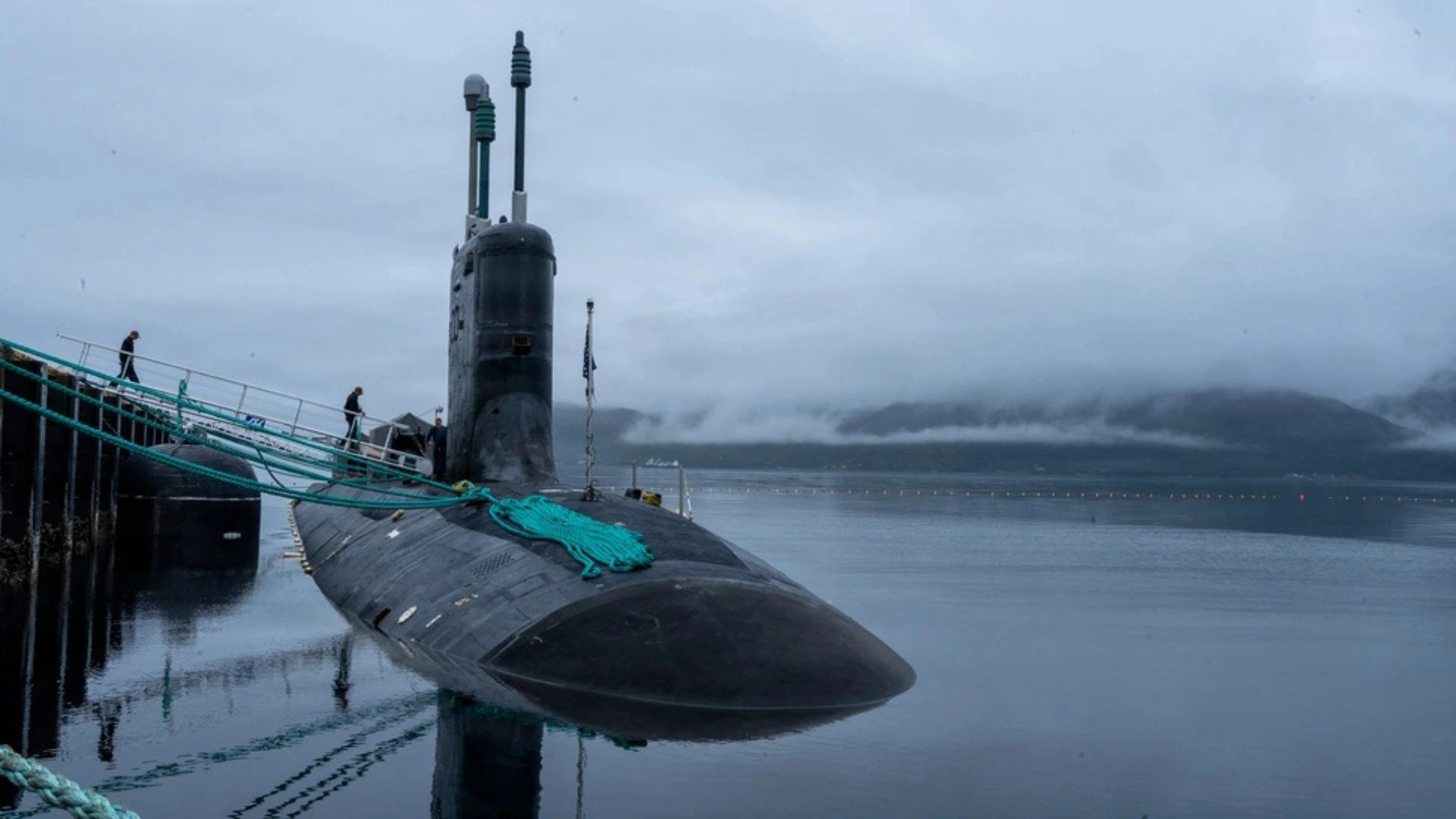
L3Harris Technologies supplies the power distribution systems and Universal Modular Masts (UMM) fitted to every Virginia-class attack submarine in U.S. Navy service and is carrying its submarine power systems portfolio into the Columbia-class ballistic missile submarine program, the company said on October 22, 2026. The statement places L3Harris electrical hardware aboard both of the Navy’s top-priority undersea programs as shipbuilders push to accelerate production.
The timing follows a $76.6 billion package of contract modifications awarded on July 29, 2026, to General Dynamics Electric Boat and HII’s Newport News Shipbuilding: $42.1 billion for nine Block VI Virginia-class boats plus material for a tenth, $29.5 billion for five Build II Columbia-class boats beginning with the future Groton (SSBN-828), and $5 billion for workforce improvements. L3Harris has built its own 2026 submarine order book alongside it: 26 communications shipsets from Electric Boat in February, battery monitoring systems in July, and a $139 million Naval Sea Systems Command (NAVSEA) award on September 21 for Low-Profile Masts on both classes.
Submarine Power Systems Inside the Virginia-Class Electrical Architecture
The baseline Virginia design, a 7,800-ton, 377-foot nuclear-powered attack submarine, routes sensors, weapons, propulsion support and crew systems through a single electrical architecture that must run for months submerged. L3Harris describes its contribution as rugged, high-density power conversion and distribution equipment, spanning switchgear, power protection and power conversion hardware. The company cites four qualification drivers: shock resistance, electromagnetic compatibility, thermal performance and long-term reliability. Each maps to a combat condition. Shock qualification determines whether electrical service survives a near-miss underwater explosion, while electromagnetic compatibility keeps power electronics from degrading sonar and electronic support receivers on a platform whose value rests on acoustic and electronic discretion.
The UMM is the second pillar. Publicly available program data describe a two-stage, non-hull-penetrating telescoping hoist, developed by L3Harris predecessor L-3 with its Italian subsidiary Calzoni in Bologna, with each Virginia-class boat carrying a bank of eight. It raises the photonics, multifunction, integrated electronic and high-data-rate masts. Because the Virginia class dispensed with the hull-penetrating optical periscope, the boat’s mast-mounted sensors depend on that hoist deploying on demand and stowing quickly to cut exposure time.
L3Harris is also prime contractor and design agent for the Low-Profile Mast (LPM), which replaces the periscope with a telescoping arm carrying high-definition visible and infrared imaging with 360-degree coverage. The September award covers continued LPM deliveries and engineering support for the Type 20 and Type 24 variants. “The Navy trusts us with the most critical systems on its most advanced platforms, and that is not something we take lightly,” said Nino DiCosmo, president of Maritime at L3Harris.
Columbia-Class Electric Drive Raises the Shipboard Power Stakes
The Columbia class, 560 feet long and displacing nearly 21,000 tons, will carry 16 Trident II D5 missiles and replace the 14 Ohio-class SSBNs, with 12 boats planned. It is also the first U.S. ballistic missile submarine with electric drive propulsion, which raises the electrical load the ship’s architecture must carry. That propulsion train, comprising the permanent magnet main motor, propulsion motor drives, propulsion switchgear and controls, sits under contracts worth more than $3 billion to Leonardo DRS through shipset 12. L3Harris’ Columbia power role therefore appears to lie outside the propulsion chain. The company has not specified which Columbia power systems it will supply, nor disclosed contract values for that work.
Schedule pressure frames that work. General Dynamics says lead boat District of Columbia (SSBN-826) is on a path to delivery by the end of 2028, while the Navy’s Fiscal Year 2027 budget lists March 2029, with Wisconsin (SSBN-827) following in April 2030. The first deterrent patrol remains planned for 2030.
Analysis: The constraint on undersea force growth increasingly sits in the supplier tier, not the dry docks alone. Virginia-class deliveries run at about 1.3 boats a year against a long-range shipbuilding goal of two Virginias and one Columbia annually by Fiscal Year 2031, backed by $6.2 billion in submarine industrial base funding; AUKUS lifts the Virginia requirement to 2.33 boats a year. Measured against current Virginia output, that goal implies roughly 2.3 times today’s annual shipset volume for common suppliers. District of Columbia’s slip traced partly to late bow and stern sections and late steam turbine production, a reminder that one late mission-critical subsystem can hold a hull at the pier. A vendor fitted to every Virginia-class boat is a proven supplier and a single point of schedule risk at the same time.
The next markers are District of Columbia’s delivery date, the pace at which Block VI boats enter construction at Groton and Newport News, and whether L3Harris attaches values and delivery schedules to its Columbia power work. The company says it is investing in power technologies for future radar, directed energy and next-generation propulsion loads but has published no figures, leaving the scale of that bet unquantified.