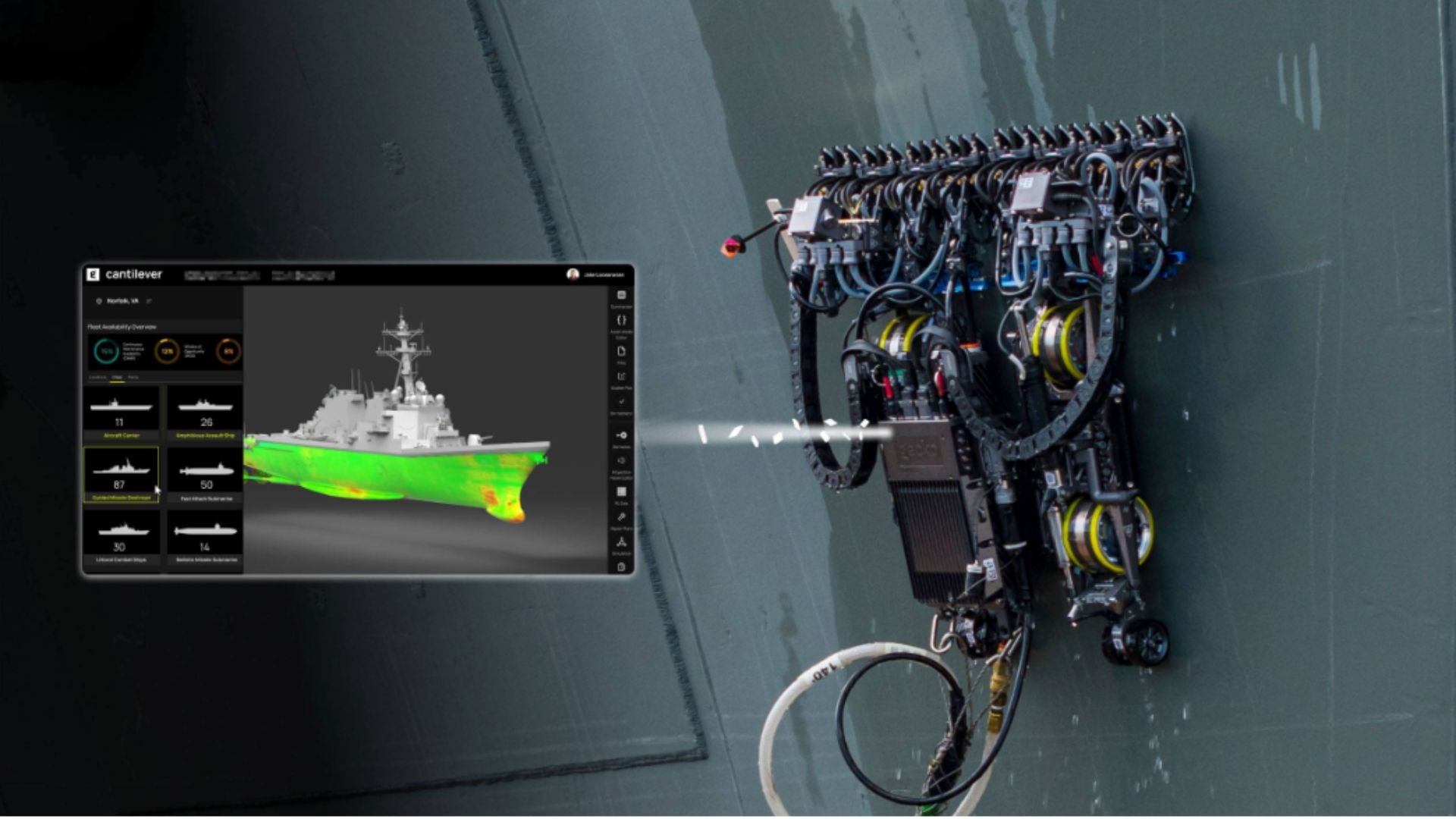
The US Navy and the General Services Administration (GSA) have raised the ceiling on Gecko Robotics’ fleet inspection contract from $71 million to $300 million, the Pittsburgh-based company announced on October 20, 2026. The indefinite delivery, indefinite quantity (IDIQ) vehicle, awarded only six months earlier, funds robotic and artificial intelligence (AI) inspections of surface combatants before they enter maintenance availabilities.
The expansion lands as the Navy struggles to bring ships out of repair yards on schedule. A Government Accountability Office (GAO) report released in August 2026 estimated that maintenance delays and idle time for attack submarines cost the service $3.4 billion and more than 15,000 operational days between fiscal years 2016 and 2025. An earlier GAO review found that 50 of 71 maintenance periods for forward-based surface ships overran their schedules, with unplanned repairs a leading cause. With the Navy pursuing an 80% fleet readiness goal, growth work discovered after a ship is opened up remains a central obstacle.
Gecko Robotics Contract Moves From the Pacific to the Atlantic Fleet
The five-year agreement, first announced in March 2026, carried an initial task order of roughly $54 million covering 18 ships of Naval Surface Force, US Pacific Fleet (SURFPAC), primarily Arleigh Burke-class guided-missile destroyers (DDG) and amphibious assault ships. Company president and co-founder Troy Demmer told Tectonic Defense that SURFPAC demand effectively absorbed the original ceiling and that the increase was sized to bring Naval Surface Force Atlantic (SURFLANT) into the program.
The $300 million figure is a ceiling, not obligated funding. It lets the Navy issue further task orders without establishing a new vehicle each time. Gecko has not disclosed how many hulls the expanded ceiling will cover or the value of any SURFLANT orders.
“It’s a big step forward,” Demmer told Janes, adding that data aggregated across a fleet or a ship class can yield insights that change class-wide maintenance plans. The prize is a structural baseline spanning whole destroyer flights.
Gecko’s performance claims are aggressive. The company says its systems identify structural problems up to 50 times faster than conventional methods, compress inspections from months to days, and can save up to $8 million in repair costs per ship. Its showcase case involves two unnamed destroyers that entered maintenance with similar deck problems. Conventional inspection gathered about 3,000 data points over several weeks and led to a $7.9 million flight deck replacement that extended the availability by months. Robotic inspection of the second ship captured more than 8 million data points, scoped the work to an estimated $427,000, and the ship finished on schedule. Gecko has not released maintenance records that would allow independent verification.
How Komodo Reads Deck Steel Through Non-Skid Coatings
The centerpiece of the expansion is Komodo, a proprietary ground-driving crawler that traverses a ship’s deck on top of its non-skid coating. It measures the thickness of the steel underneath without stripping or damaging the coating. Previously, that coating had to be removed before any assessment, a slow and labor-intensive step.
Komodo produces a full-deck heatmap of corrosion and material thickness. Because the survey runs while the ship is still in the water, repair teams can pinpoint degraded plate and build the work package before the hull enters drydock, rather than discovering damage after the availability has begun.
Komodo operates within a broader sensor family. Gecko also fields wall-climbing robots that scan hulls, decks, welds and ballast tanks, along with drones and fixed sensors. All feed Cantilever, the company’s AI software platform, which fuses the measurements into digital models that Navy engineers use to scope repairs. Chief executive Jake Loosararian has cited another case in which robotic data narrowed a planned 1,200-square-foot repair to about 300 square feet.
Analysis: The value of this contract lies less in the robots than in the procurement signal. Fleet maintenance overruns are driven largely by growth work, defects found only after a ship is opened up, which forces contract modifications, delays material orders and pushes ships out of their deployment cycles. Moving condition assessment ahead of the availability attacks that problem at its source. Quadrupling a GSA-held ceiling within six months also shows the Navy using a flexible commercial vehicle to scale a sustainment technology quickly, a pace rarely seen in ship maintenance. The open question is whether vendor-reported savings hold across SURFLANT’s mix of hull types.
Next milestones include the first SURFLANT task orders and the hull count they cover, along with any Navy-published data validating Gecko’s savings figures. Whether the expanded vehicle will extend to submarines and aircraft carriers, on which Gecko has previously worked, has not been disclosed. Until orders are placed, the $300 million ceiling represents authorized capacity, not committed spending.