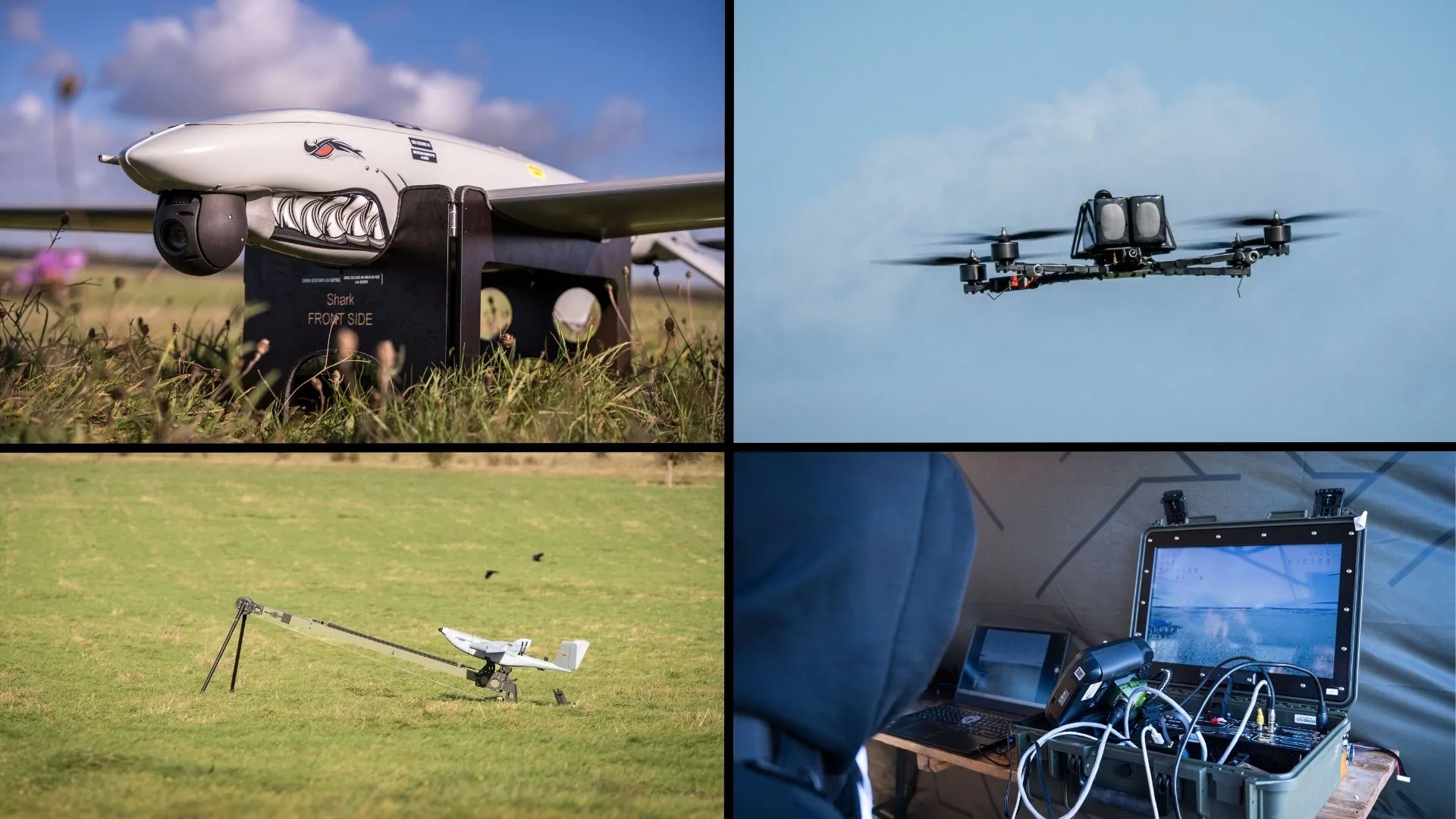
The UK Ministry of Defence (MOD) hosted 12 Ukrainian drone manufacturers at Larkhill Garrison on Salisbury Plain, where the firms demonstrated combat-tested uncrewed systems to British industry, investors and military officials, the ministry announced on October 30, 2026. The showcase was built to broker co-development, investment and production partnerships in uncrewed aerial systems (UAS) and related technologies between the two countries’ defense sectors.
The event is the latest practical application of the UK-Ukraine 100 Year Partnership, signed in Kyiv on January 16, 2025, which commits both governments to closer integration of their defense industrial bases and pledges no less than £3 billion in annual UK military assistance to Ukraine through 2030/31. London has since built the institutional plumbing to absorb Ukrainian battlefield innovation: a June 23, 2025 technology-sharing agreement opening frontline designs to British manufacturers, co-leadership with Latvia of the international Drone Capability Coalition, and the Uncrewed Systems Centre (USC), inaugurated in Swindon on June 12, 2026.
What 12 Ukrainian Drone Manufacturers Showed at Larkhill
According to the MOD, the participating companies demonstrated technologies spanning intelligence, surveillance and reconnaissance (ISR), autonomous systems and other emerging UAS capabilities, with the format pairing live demonstrations with dedicated networking and engagement sessions. The ministry did not name the 12 firms, identify specific platforms or release performance data, and no contracts, investment figures or letters of intent were announced. Those gaps matter: until named partnerships surface, the event is best read as market-making rather than procurement.
The venue carries its own signal. Larkhill is the home of the Royal Artillery and sits on the Salisbury Plain Training Area, the largest military training estate in the UK, giving British gunners and ISTAR specialists a direct view of systems designed around the sensor-to-shooter compression that defines the Ukrainian front. The MOD framed the demonstrations as technology shaped by frontline experience, a reference to design cycles that UK officials said in June 2025 turn over roughly every six weeks.
Brigadier Stu Nasse, Head of the Drone Capability Coalition and Deputy Head of the Uncrewed Systems Centre, described the goal as connecting Ukrainian companies with UK manufacturers, investors and defense stakeholders to accelerate development and delivery. “One of the most important lessons from Ukraine is that government, industry, and the military must work together earlier and more closely to keep pace with rapidly evolving threats,” he said.
From Showcase to Production Line: The UK-Ukraine Drone Pipeline
Nasse’s dual appointment is the structural link in this effort. The Drone Capability Coalition, launched by the UK and Latvia in February 2024, coordinates allied UAS supply to Ukraine, while the USC, built around the DroneTEX test facility in Swindon, is tasked with moving uncrewed capabilities into British service in weeks rather than years. Placing both under shared leadership means lessons from Ukrainian procurement feed directly into UK force development.
Ukrainian production is already moving onto British soil. Ukrspecsystems opened a factory in Mildenhall, Suffolk, on February 25, 2026, the first stage of a reported £200 million, five-year UK investment that includes a test and training site at Elmsett; publicly reported targets point to output of up to 1,000 drones per month across the company’s product range, which includes the Shark fixed-wing ISR family. The MOD also cited the Kyiv Business Centre, which supports British companies exploring opportunities inside Ukraine, as a parallel channel.
Minister for the Armed Forces Louise Sandher-Jones framed the policy in explicitly reciprocal terms. “We want businesses and innovators from both countries to build together, invest together and succeed together,” she said.
Analysis: The strategic value for the UK lies less in any single airframe than in access to a combat feedback loop British industry cannot replicate in peacetime. Ukrainian firms, in turn, gain production capacity beyond the reach of Russian strikes, Western capital and a path into allied markets. The constraint sits on the British side: a showcase generates relationships, not orders, and the test is whether UK acquisition can contract at a tempo that matches Ukrainian iteration cycles, the exact problem the USC was created to solve.
The MOD has not announced follow-on commitments from Larkhill. Indicators to watch include named UK-Ukrainian joint ventures, new Drone Capability Coalition competitions drawing on the participating firms, USC trials of Ukrainian-origin designs and whether additional manufacturers follow Ukrspecsystems in establishing UK production lines.