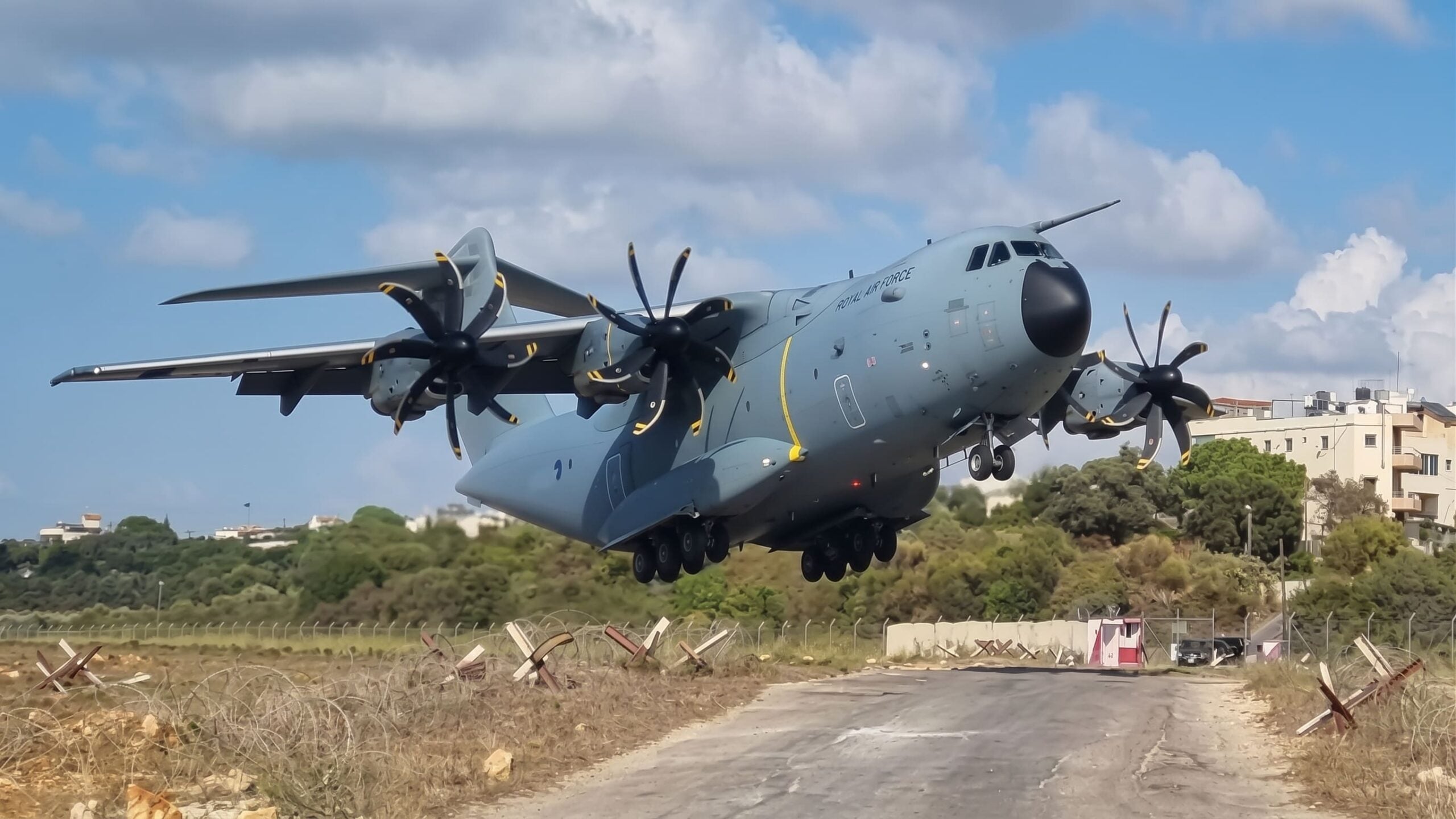
British Army soldiers from the Support Company of the 4th Battalion, The Royal Regiment of Scotland (4 SCOTS) have deployed from Cyprus to Lebanon for Exercise Pegasus Cedar 2026, a three-week training rotation with the Lebanese Armed Forces (LAF) Air Assault Regiment, the British Embassy in Beirut announced on October 7, 2026. US and Italian army personnel are taking part, while France, Cyprus, Qatar and Jordan have sent observers.
The exercise lands in a country absorbing its second war in three years. Hezbollah opened fire on Israel in early March 2026 in support of Iran, days after the United States and Israel launched strikes on Tehran, and Israeli ground forces pushed into southern Lebanon. A US-brokered framework agreement signed on June 26, 2026, ties a phased Israeli withdrawal to LAF deployment and Hezbollah’s disarmament, yet Israeli forces still hold a self-declared security zone in the south. The United Nations Interim Force in Lebanon (UNIFIL) loses its mandate on December 31, 2026, leaving the LAF as the primary security actor along the Blue Line.
Pegasus Cedar 2026 Training Package: Mortars, Recce and Heliborne Drills
The embassy lists mortar weapon systems, small unit tactics, reconnaissance and helicopter drills, a syllabus that matches the unit London sent. In a British infantry battalion, the support company typically groups the mortar, reconnaissance and heavier weapons platoons that give a light force its organic firepower and its eyes forward.
The embassy did not name the mortar involved. British infantry mortar platoons field the L16A2 81mm mortar, which publicly available specifications credit with a maximum range of 5,650 m, a 1,280 mm barrel, a muzzle velocity of 225 m/s and an in-action weight of 35.3 kg. It fires the 4.2 kg L36A2 high-explosive bomb plus smoke and illumination rounds at up to 15 rounds per minute. For an air assault unit, that envelope matters: once inserted by helicopter, man-portable 81mm fire is often the only indirect fire available until artillery or air support arrives.
Helicopter drills put the spotlight on Lebanese lift. Open-source order-of-battle data credit the Lebanese Air Force with 14 Bell Huey II and nine legacy UH-1H utility helicopters, alongside Gazelle and IAR 330 Puma airframes; the release does not specify which aircraft support the exercise. That fleet caps how many troops the Air Assault Regiment can move per lift, placing a premium on drills that shorten loading, landing zone and dismount times.
The 2026 iteration also differs in duration and format from the first Pegasus Cedar. In September 2023, more than 65 soldiers from the 2nd Battalion, The Parachute Regiment (2 PARA) trained with the same Lebanese regiment for 10 days, supported by the Lebanese Air Force and culminating in two field training exercises. This year’s rotation runs three weeks and adds foreign participants, though the embassy has not disclosed troop numbers, training areas or a culminating live-fire event.
US, Italian Roles Widen UK Support to Lebanese Armed Forces
4 SCOTS is one of two resident infantry battalions of British Forces Cyprus, based at Alexander Barracks in Dhekelia, and serves as a high-readiness regional standby battalion for the Middle East and North Africa. A company-level deployment to Lebanon exercises that role at modest cost and keeps a British unit familiar with Lebanese terrain and counterparts.
The guest list is the more telling change. The 2023 exercise was bilateral. This year, the United States, the LAF’s largest military donor, and Italy, the second-largest UNIFIL troop contributor, are participating. Italy also runs a standing bilateral training mission with the LAF, known as MIBIL, and Rome and Paris agreed in June 2026 to build a multinational coalition to support Lebanon after UNIFIL’s exit. Qatar, an observer, has covered part of LAF salaries in recent years and supplied fuel and 162 vehicles, according to the Qatari government.
London’s own stake runs deeper than the exercise format. The UK spent more than £115 million supporting the LAF between 2009 and 2025, according to the British government, much of it through the Land Border Regiments program on the Syrian frontier: 78 border towers, 100 armored Land Rover RWMIK patrol vehicles and training for more than 26,500 personnel by early 2024. LAF commander Gen. Rodolphe Haykal visited the UK from June 24 to 26, 2026, at the invitation of Chief of the Defence Staff Air Chief Marshal Sir Rich Knighton. British Ambassador Hamish Cowell described UK support as building the LAF’s capabilities as the “sole legitimate defender of Lebanon.”
Analysis: Pegasus Cedar 2026 shows Western partners extending LAF assistance from static border security toward mobile, combined-arms capability just as the LAF is asked to replace UNIFIL and absorb an Israeli withdrawal that the June 26 framework makes conditional on its performance. Heliborne insertion, organic indirect fire and reconnaissance are the skills a force needs to react across southern Lebanon without fixed positions. The limits are equally clear: a three-week company-level exercise does not expand a fleet of 23 Huey-family utility helicopters, and Hezbollah’s disarmament remains a political decision in Beirut rather than a tactical problem for an air assault regiment.
The exercise runs through October. The next markers are an eighth round of US-sponsored Lebanon-Israel talks expected this month, the December 31 end of UNIFIL’s mandate and a drawdown planned to remove most peacekeepers by mid-2027. Open questions: whether Pegasus Cedar becomes a regular event after a three-year gap, and whether the Franco-Italian coalition will include a British training component.