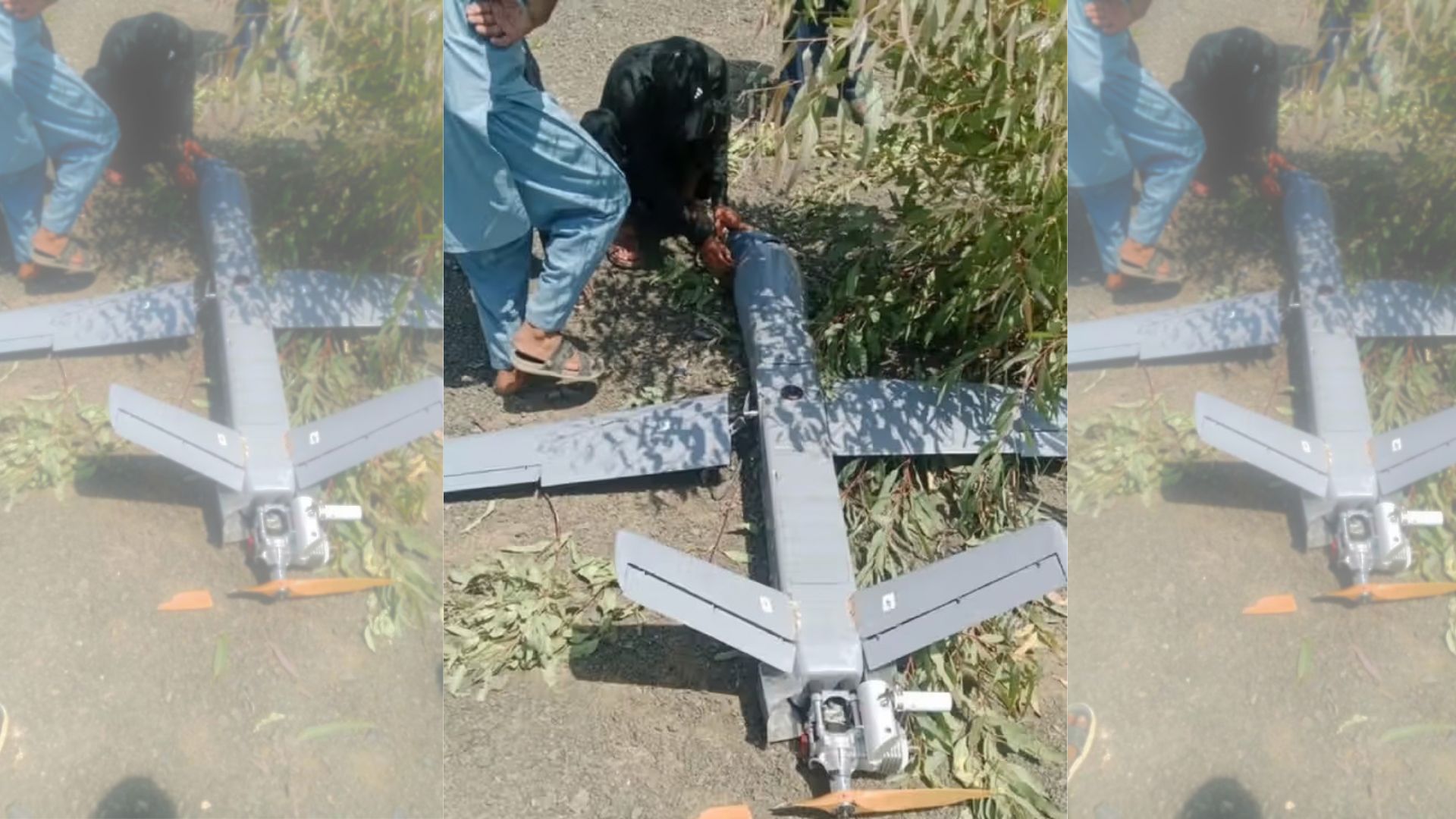
Pakistan’s air defense network shot down eight drones launched from Afghanistan on September 23, 2026, four near the Torkham border crossing and four in the mountains outside Kohat in Khyber Pakhtunkhwa, according to Pakistani security sources, who attributed the drones to the Afghan Taliban. Early on September 24, Islamabad answered with aerial and drone strikes on 10 sites inside Afghanistan that Information Minister Attaullah Tarar said included militant hideouts and drone launch and storage sites.
The exchange is the latest round in a conflict that has escalated since Pakistan launched Operation Ghazab lil-Haq in late February 2026 and declared open war on the Taliban government. Drones have become Kabul’s principal means of reaching across the Durand Line. Between February 27 and March 15, 2026, the Taliban claimed 15 drone attacks on targets in Khyber Pakhtunkhwa and Islamabad, and Pakistan reported further interceptions over Balochistan in June.
The September 23 launches came two days after Pakistani airstrikes in Kunar and Paktika provinces on September 21, which the Information Ministry said targeted militant hideouts following a string of attacks that included the assault on the Kohat Police Lines. Taliban officials denied launching the drones and said the September 24 strikes killed civilians.
How Afghan Taliban Drones Evolved From Propaganda to One-Way Attack
The Taliban first used small unmanned aircraft around 2016 to film operations for propaganda. By 2020, fighters were arming commercial platforms such as the DJI Matrice 210 to drop grenades and mortar rounds on Afghan security posts in Logar, Kunduz, and Takhar. The 2021 takeover added several US-supplied ScanEagle reconnaissance aircraft, a 1.6-meter airframe with a 3.1-meter wingspan, though there is no indication the type has delivered ordnance.
The move to cross-border strike runs through the 313th Battalion, a Haqqani network formation known during the insurgency for suicide attacks on Afghan and NATO forces. The unit now operates one-way attack drones, an aerial substitute for the suicide bomber. Launch sites cluster along the Durand Line in Kandahar, Nangarhar, Paktia, and Paktika provinces, shortening flight paths to Quetta, Peshawar, Waziristan, and Islamabad.
Procurement is deliberately diffuse: commercially available platforms, systems moved through regional networks, and locally modified or assembled airframes. Pakistani security sources have reported jamming a Chinese-made agricultural spraying drone over Balochistan. The result is a capability with no single supply chain for Pakistan to interdict.
Airframe, Payload, and Range of the Taliban One-Way Attack UAV
Publicly available assessments describe the aircraft used against Pakistani cities as small fixed-wing one-way attack drones with wingspans of roughly 2 to 3 meters, lengths of 1.5 to 2 meters, and takeoff weights of 10 to 15 kilograms. Western drone analysts compare the design to a scaled-down Iranian Shahed-101, with composite wings, likely carbon fiber, and a small piston engine. The warhead is estimated at about 5 kilograms, sufficient to damage vehicles and light structures within roughly 40 meters. Estimated range reaches 300 kilometers or more depending on fuel, payload, and weather, placing Peshawar, Kohat, and the Islamabad-Rawalpindi area inside the envelope from border launch sites.
The airframes appear to be assembled locally from imported commercial components, including flight-control boards, gyroscopes, accelerometers, and GPS modules. A 13-member team, reportedly including Kabul engineering students and former Afghan security personnel, has been modifying designs since 2021. Dependence on satellite navigation points to preprogrammed waypoint flight: cheap to field, but exposed to jamming and spoofing. Pakistani security sources said two of the drones near Kohat were brought down with soft-kill methods.
A 5-kilogram warhead will not defeat a hardened facility. Its value lies elsewhere. A force with little fixed-wing combat aviation can now hold border posts, police compounds, and soft infrastructure at risk at negligible cost, and can expend airframes to map Pakistani air defense reactions.
How TTP Proliferation Is Reshaping Pakistan’s Counter-Drone Requirements
For Islamabad, the larger risk is diffusion. Tehreek-e-Taliban Pakistan (TTP), which Pakistan says operates from Afghan sanctuaries, has publicized its own drone unit, and the Hafiz Gul Bahadur group was reported in 2025 to be seeking commercial drones modified to drop explosives at ranges up to 10 kilometers. TTP systems remain largely limited to daylight use, but the group is experimenting with thermal cameras. Pakistan accuses Kabul of enabling these groups; the Taliban deny it.
Small systems change the arithmetic. One airframe can observe a checkpoint, identify a target, test air defense response times, and carry a charge. Even low-damage attacks spread disruption across Khyber Pakhtunkhwa, where police and paramilitary posts already absorb much of the militant violence; the September 18 and 19 attack on the Kohat Police Lines killed at least 22 people.
Pakistani security analysts identify detection as the weakest layer. Conventional radar struggles against small, low-flying targets in the cluttered terrain of the western borderlands, pointing toward a network of short-range radar, electro-optical and infrared sensors, and radio-frequency detectors, backed by jamming, spoofing, and kinetic interceptors. They also urge analysis of launch patterns, routes, frequencies, and timing to shift from reaction to prediction. Pakistan’s domestic UAV base, which publicly available information indicates includes the NESCOM Burraq and GIDS Shahpar programs, offers the repair and upgrade capacity a prolonged campaign will demand.
Analysis: The cost curve on the Durand Line favors the attacker. Pakistan intercepted all eight drones on September 23, but each engagement consumes sensor coverage and interceptors along a border of roughly 2,600 kilometers, while the Taliban can replace a 15-kilogram airframe built from commercial parts in workshops that strikes cannot reliably locate. Two rounds of Pakistani strikes in four days, on September 21 and 24, show that each incursion now carries an immediate escalation price. The decisive variable is transfer: if TTP acquires Taliban-grade fixed-wing designs, Pakistan’s internal security problem gains an aerial dimension across its northwest.
Afghan sources say a Taliban Ministry of Defense delegation led by chief inspector Abdul Latif Hakimi surveyed the 205th Corps in Kandahar and Spin Boldak in September to install newly acquired anti-drone systems, with wider border deployment planned. Kabul has warned that the September 24 strikes will draw a response. Key unknowns remain the Taliban’s production rate, airframe inventory, and foreign component pipeline.