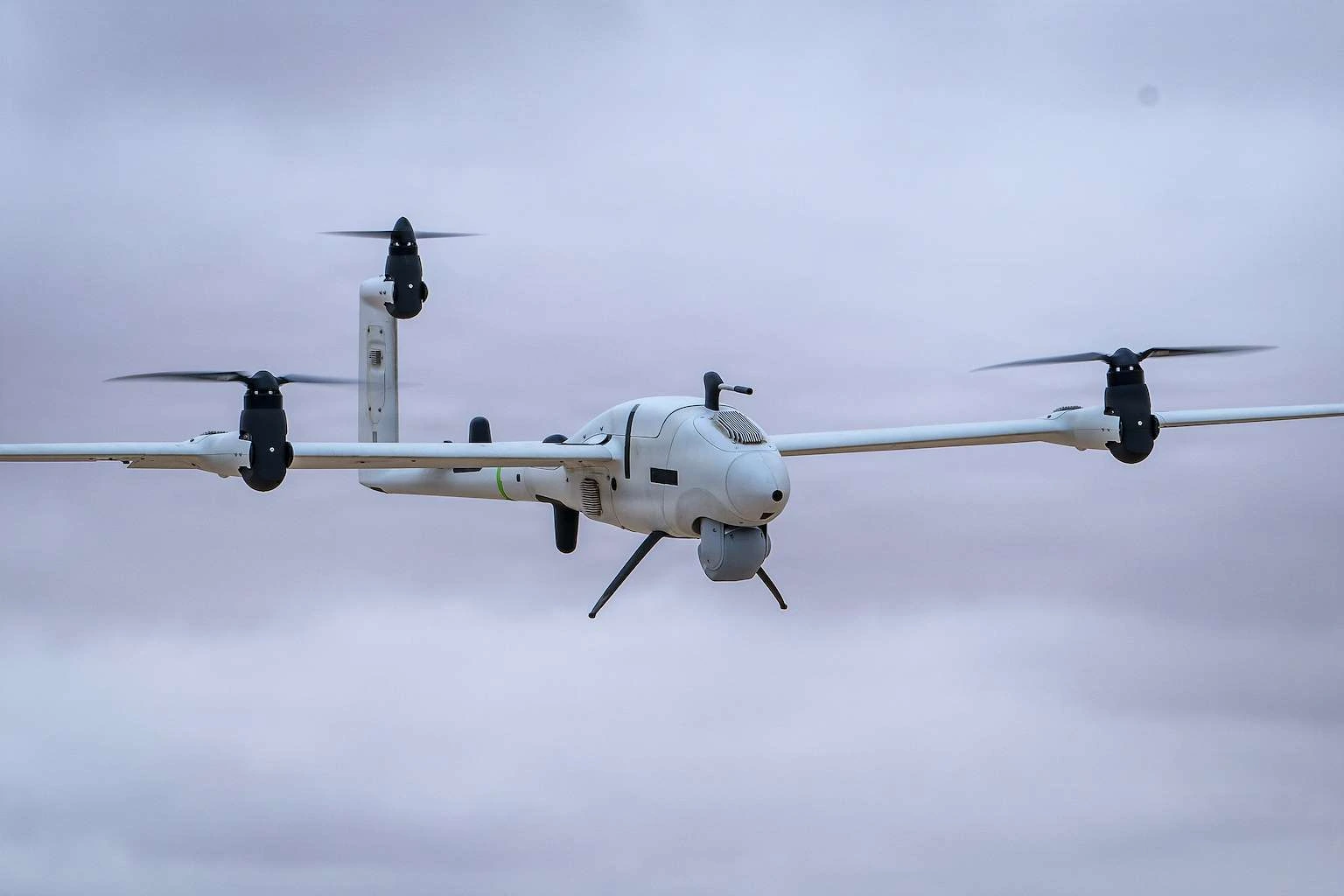
U.S. Army Southern European Task Force, Africa (SETAF-AF) has partnered with the Army’s Global Tactical Edge Acquisition Directorate (G-TEAD) to test emerging drone and counter-drone systems in Africa and deliver validated equipment to soldiers within 180 days, the Army announced on October 16, 2026. The first accelerated capability event under the arrangement is scheduled for spring 2027 in Tan-Tan, Morocco, and will focus on counter-unmanned aircraft systems (C-UAS) and force protection for early-entry command posts and operating locations exposed to small drones.
The partnership extends a rapid acquisition model the Army formalized in its November 2025 acquisition overhaul. That reform created the Pathway for Innovation and Technology (PIT) office, which reports to the Assistant Secretary of the Army for Acquisition, Logistics and Technology and houses G-TEAD alongside Army FUZE and the Joint Innovation Outpost. G-TEAD’s mandate is to push acquisition authority and research, development, test and evaluation (RDT&E) funding down to the Army service component commands that support the combatant commanders. SETAF-AF, headquartered in Vicenza, Italy, leads Army operations and exercises across the continent for U.S. Army Europe and Africa (USAREUR-AF) and U.S. Africa Command (AFRICOM).
How the Army Counter-Drone Event in Morocco Will Work
Tan-Tan is familiar ground for SETAF-AF. The Cap Draa training area hosted the capstone of African Lion 26, AFRICOM’s largest annual joint exercise, which ran from April 20 to May 8, 2026, across Ghana, Morocco, Senegal and Tunisia with more than 5,600 personnel from over 40 nations. Industry partners tested counter-unmanned aircraft systems in Morocco during the exercise, alongside autonomous systems, AI-enabled command and control and advanced ISR platforms. The Army has not said whether the spring 2027 capability event will run alongside African Lion 27.
According to the Army, Africa offers open spectrum, uncongested airspace and varied terrain that ranges in the United States and Europe cannot easily replicate. That matters for counter-drone work in particular. Radio-frequency detection, jamming and spoofing, the core of most layered C-UAS architectures, are tightly restricted on U.S. and European ranges by spectrum management rules and dense civil air traffic. A permissive desert range lets soldiers run electronic attack and sensor-to-shooter chains at realistic power levels and distances.
The operational problem is specific: protecting early-entry command posts and expeditionary operating locations against small UAS. Those nodes are lightly defended by design, emit radio and thermal signatures, and sit within reach of commercial and military drones used for reconnaissance and one-way attack. Closing that gap requires detection, identification and defeat layers compact enough to deploy with a forward headquarters.
Capability events follow a three-phase model: submission and preparation, soldier-led demonstrations, and follow-on operational evaluation. The release does not identify candidate systems, participating vendors, the number of soldiers involved or the funding attached to the Tan-Tan event.
G-TEAD Brings Acquisition Authority and RDT&E Dollars to the Edge
G-TEAD embeds acquisition personnel inside Army service component commands, where they translate urgent commander priorities into executable requirements. Teams already operate within USAREUR-AF, U.S. Army Pacific and U.S. Army Central. The directorate assigned a team to SETAF-AF in summer 2026 to connect the command’s operational needs with rapid acquisition resources.
Army Col. Christopher Hill, G-TEAD’s director, framed the problem in budgetary terms. “[Army service component commands have] always had priorities, they’ve always had capability gaps, but the two things they’ve never had is acquisition authority and research, development, test and evaluation dollars,” he said. Hill added that visibility across multiple commands lets his personnel align modernization efforts, maximize funding and transition proven theater solutions Army-wide.
The mechanism behind that claim is the G-TEAD Marketplace, a vehicle for buying operationally ready equipment and software at Technology Readiness Level 6 or higher for the Army, its component commands and allied and partner nations. Capability events feed the Marketplace through prize challenges such as the Army xTech program and through open-call submissions. Earlier challenges include xTech Counter Strike, held in November 2025, and xTech Edge Strike: Ground, run with USAREUR-AF.
The pipeline has already produced C-UAS contracts. G-TEAD has awarded other transaction agreements for the Merops counter-drone system and for Mountain Horse Solutions’ FD-1 interceptor, which has since received a second order. The 409th Contracting Support Brigade executes contracting for G-TEAD efforts, while G-TEAD works with the Army’s portfolio acquisition executives to decide whether a theater solution answers a broader service need and should transition to a program office.
Analysis: The Tan-Tan event tests whether G-TEAD’s model can scale from Europe, where the war in Ukraine supplies a constant demand signal, to a theater where the Army operates with small footprints and partner forces. Africa’s open spectrum is an asset for evaluating emitters, but it is also a limitation. A C-UAS system validated against cooperative targets in uncontested electromagnetic conditions may perform very differently against an adversary using frequency-hopping links, fiber-optic control or GNSS-denied navigation. The value of the event will depend on how aggressively the Army builds realistic threat profiles into the soldier-led demonstrations, and on whether portfolio acquisition executives treat AFRICOM-validated systems as candidates for Army-wide procurement rather than theater-specific stopgaps.
The next milestones are a solicitation or call for submissions ahead of the spring 2027 event, the identification of participating units, and confirmation of whether the 180-day delivery clock starts at selection or after operational evaluation. Funding levels, candidate technologies and partner-nation participation remain undisclosed.