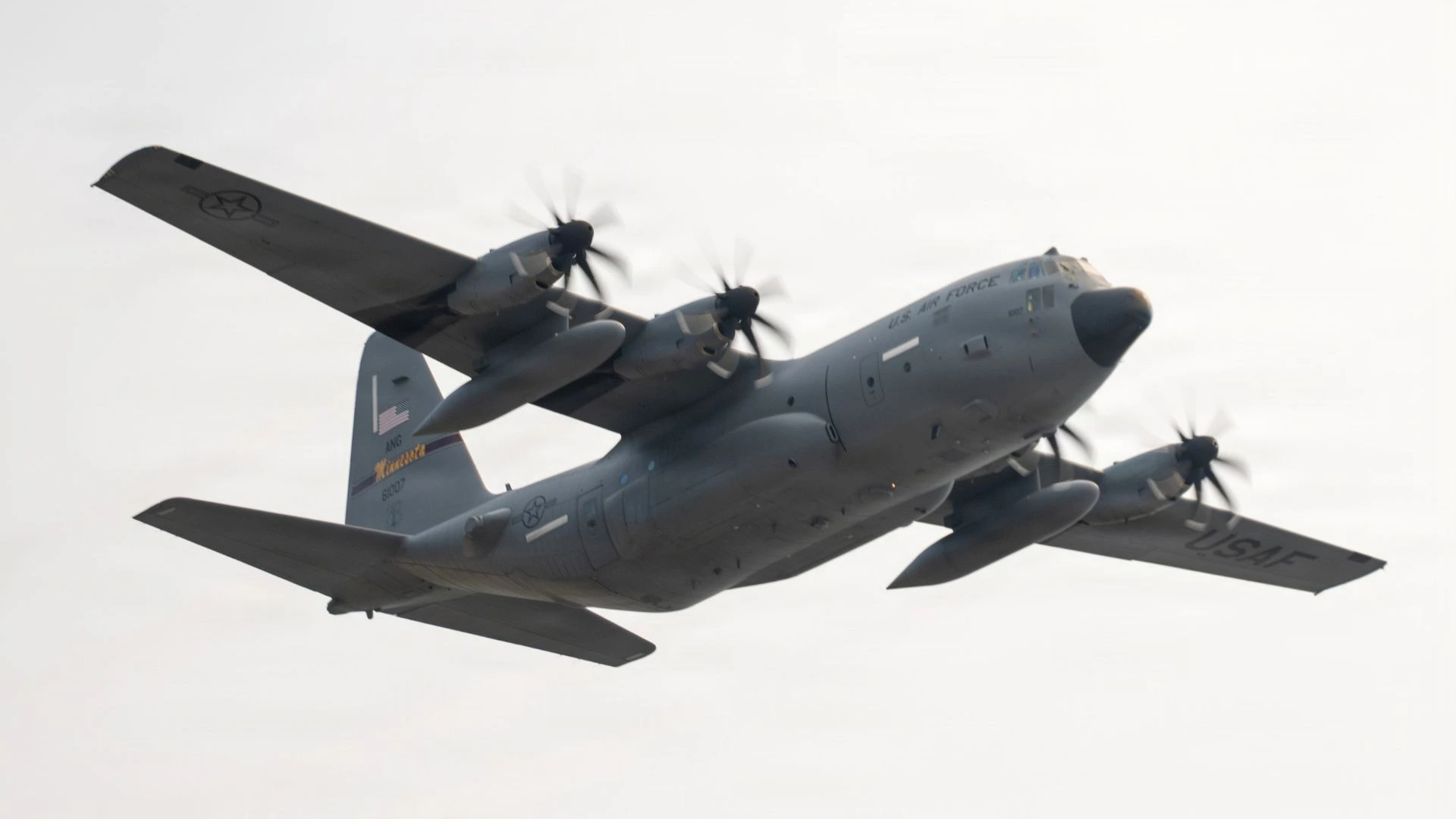
Northrop Grumman has been selected as a Certified Continental U.S. depot for the Hercules fleet, adding C-130 depot-level repair, overhaul and inspection capacity at its facility in Lake Charles, Louisiana. Lockheed Martin, the aircraft’s original equipment manufacturer, recognized the designation during the C-130 Technical Coordination Group World Wide Review in Orlando, Florida, and Northrop Grumman announced it on October 27, 2026.
The certification arrives as U.S. forces continue to rely on the C-130 for tactical airlift across combat, humanitarian and special mission roles, with legacy C-130H airframes flying alongside a growing C-130J Super Hercules fleet. Depot throughput is a direct readiness lever: every airframe held in heavy maintenance is one fewer available to operational units. A new certified commercial depot in the continental United States widens the pool of facilities able to perform that work to manufacturer standards.
C-130 Depot Maintenance Scope at Northrop Grumman’s Lake Charles Site
As a certified depot, Northrop Grumman will provide comprehensive C-130 maintenance, including repair, overhaul and inspection. The company cites an experienced workforce, specialized infrastructure, digital tools, custom fabrication and existing aircraft capabilities at Lake Charles as the basis for increasing capacity, improving aircraft availability and returning C-130s to service faster.
Company data describe the site, located at Chennault International Airpark, as offering more than 500,000 square feet of hangar space and 105,000 square feet of fabrication floor space, supported by 3D modeling, precision scanning and reverse engineering. Those tools matter for an airframe family in service since the 1950s: reverse engineering allows a depot to reproduce structural parts when original sources are out of production, a recurring constraint in legacy C-130 sustainment.
Lockheed Martin-authorized C-130 service centers are expected to work to the manufacturer’s maintenance standards and engineering practices. Key details remain undisclosed. Northrop Grumman has not released a contract value, a number of aircraft, the variants covered, the customers expected to induct aircraft or a date for the first induction. The certification establishes eligibility to perform C-130 depot work; it is not, on its own, a funded workload award.
From E-6B Mercury to Hercules: Lake Charles Heavy Aircraft Track Record
Lake Charles already performs integrated modification and maintenance on the U.S. Navy’s E-6B Mercury in support of the Take Charge and Move Out (TACAMO) mission. Northrop Grumman won the five-year, $111 million E-6B Integrated Modification and Maintenance Contract in 2022, establishing a consolidated production line at the site to upgrade the command, control and communications systems linking the national command authority with the nuclear triad.
The facility’s heavy-aircraft record runs deeper. It previously handled periodic depot maintenance on the E-8C Joint Surveillance Target Attack Radar System (Joint STARS) and the KC-10 Extender, and has inducted U.S. Customs and Border Protection P-3 Orion aircraft under a depot maintenance and logistics support contract covering the agency’s 14-aircraft fleet. Publicly available specifications indicate the P-3 and legacy C-130 variants share the Allison T56 turboprop engine family, giving the workforce direct four-engine turboprop experience.
Analysis: The C-130 designation helps refill a site whose two anchor Air Force workloads are gone, with the E-8C and KC-10 both retired from U.S. service. The more consequential link is the E-130J. In December 2024, the Navy awarded Northrop Grumman a $3.46 billion contract to integrate TACAMO mission systems into Lockheed Martin-built C-130J-30 airframes, creating the E-6B’s successor. A Lake Charles workforce certified on the C-130 platform could position the company for long-term E-130J sustainment, although Northrop Grumman has not tied this certification to that program. For C-130 operators, the move adds commercial capacity alongside organic depot work at Warner Robins Air Logistics Complex in Georgia.
The next markers are the first C-130 induction at Lake Charles, the identity of the first customers and whether work centers on the C-130H, the C-130J or both. Also worth tracking is how the site’s C-130 role intersects with the E-130J as engineering development models move toward test. Northrop Grumman has published no timeline for any of these milestones.