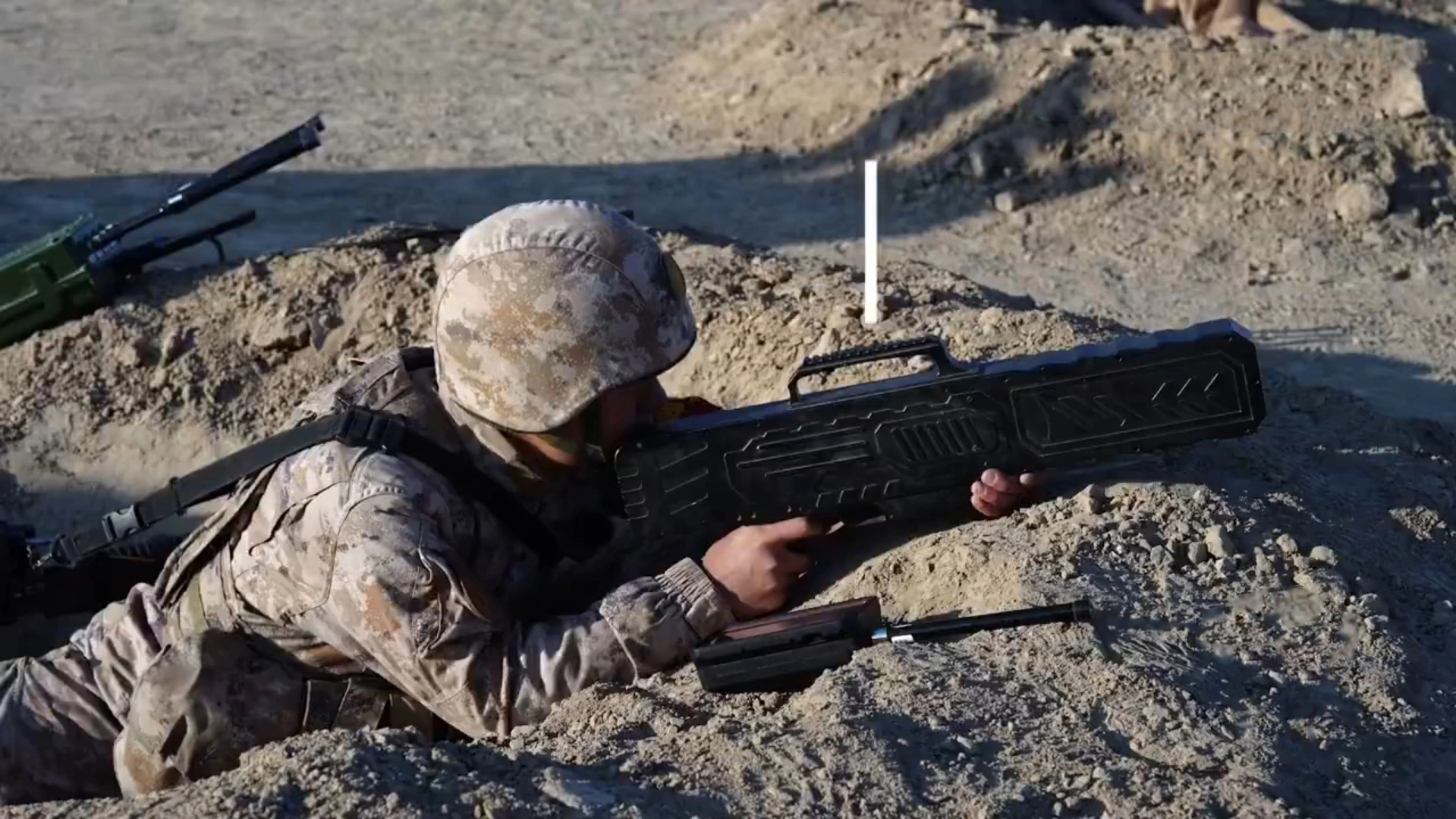
Chinese military analysts register new drone warfare techniques from the Russia-Ukraine war within an average of four months of their battlefield debut, but the People’s Liberation Army (PLA) needs a year or more to turn them into hardware, training, and force structure, according to a study published October 7, 2026, by the Center for Strategic and International Studies (CSIS). The most detailed Chinese research comes from engineers responsible for defending China’s air bases and harbors against Ukrainian-style attacks.
Authored by Lilly Min-Chen Lee of Taiwan’s Research Institute for Democracy, Society and Emerging Technology and Kateryna Bondar of the CSIS Wadhwani AI Center, the study draws on more than 90 Chinese-language sources published between July 2022 and August 2026, from the Central Military Commission’s PLA Daily to journals run by China’s missile, shipbuilding, and aviation conglomerates. Chinese writers already call 2024 the first year of a world drone war. The findings arrive as the PLA approaches its August 1, 2027 centenary modernization milestone and as Taiwan and the United States invest in uncrewed mass to complicate any cross-strait operation.
How PLA Drone Warfare Studies Copy Russia’s Kill Chain
China’s learning system is distributed. By the study’s figures, about 43 percent of its sources appeared in venues run by defense industrial groups, from shipbuilding and missile institutes to the aviation conglomerate’s unmanned systems journal and the ordnance ecosystem serving the ground forces. Each channel feeds its own service’s requirements, so lessons reach acquisition offices without waiting for a top-down doctrinal verdict.
On offense, Chinese analysts borrow from Russia, whose army structure resembles the PLA’s. The first lesson is cost: in March 2025, PLA Daily treated as settled the claim that a reconnaissance-strike drone costs under 1 percent of a modern fighter while delivering more than 90 percent of its battlefield coverage. The second is tempo. The National Defense University’s Joint Operations College credits Russian forces with striking a detected target within three to five minutes, against hours in earlier wars.
The enabler is the reconnaissance-strike complex, in which Orlan-10 drones push deep into the enemy rear and cue ZALA Kub and Lancet loitering munitions. Publicly available specifications credit the Orlan-10 with a 3.1-meter wingspan and endurance above 10 hours, and the Lancet-3 with a warhead of about 3 kilograms and a range near 40 kilometers. The PLA’s copying target is the link, not the airframes: drones wired directly into artillery and command networks, consistent with the multi-domain precision warfare concept the Pentagon identifies as the PLA’s core operational approach.
Chinese analysts treat electronic warfare as the decisive variable. PLA Daily flagged Russia’s fiber-optic first-person-view (FPV) drone, steered through a cable immune to jamming, in May 2024, within weeks of its operational debut. By April 2025, state broadcaster China Central Television (CCTV) showed a People’s Armed Police unit in Yunnan training with FPV drones and researching fiber-optic models, about a year after the technique first appeared in Russian service.
Sea Drones and Airfield Raids Drive Chinese Counter-Drone Requirements
The study’s sharpest finding is that China reads the war mainly from the target’s perspective. A Naval University of Engineering team, writing in the journal of the state shipbuilder’s underwater warfare institute, counted more than 10 large Russian naval vessels damaged in Ukrainian strikes on ships, ports, and the Kerch Bridge, and concluded that a systematized unmanned surface vessel (USV) offensive demands counter-USV equipment that also fights as a system. Ukraine’s Magura V5, credited in publicly available specifications with a length of about 5.5 meters, a top speed near 42 knots, and a warhead of roughly 300 kilograms, is the threat class a PLA Navy amphibious force would meet while massing for a Taiwan operation.
The second template is the airfield raid. Operation Spider’s Web hit Russian bomber bases on June 1, 2025, with what Ukrainian officials said were 117 drones launched from trucks inside Russia. A magazine published by China’s foreign ministry estimated losses at 11 strategic bombers. Within four and a half months, a PLA brigade exercised against a drone attack team of more than 20 operators, using detectors that locate drones by their radio emissions and match them against a library of more than 800 commercial models.
Cost logic shaped the defensive conclusions. Chinese commentary on Ukraine’s interceptor drones observed that one man-portable air defense missile costs as much as several hundred air defense FPV drones, and concluded that drones are the most cost-effective counter to drones. Beijing is also copying Russia’s combat-tested layering, which a 2026 review by a state aerospace design institute summarized as jamming first, kinetic interception as the backstop, and point self-defense as the supplement.
Hurricane 3000, LW-60, and KVD002 Move Lessons Into Hardware
Defensive lessons reached hardware fastest. At Airshow China in Zhuhai in November 2024, domestic coverage centered on the China Electronics Technology Group Corporation (CETC) Tianqiong counter-drone system, the China North Industries Group Corporation (NORINCO) Hurricane 3000 high-power microwave (HPM) weapon, and the China Aerospace Science and Industry Corporation (CASIC) LW-60 laser. NORINCO says the truck-mounted Hurricane 3000 intercepts small drones and swarms beyond 3 kilometers, cueing with radar and tracking electro-optically, and can be networked with lasers and air defense guns. An HPM emitter trades range for a wide cone of effect and a magazine limited only by power, the attributes that matter against massed, low-cost attackers. CASIC’s Zhuhai display credited the LW-60 with drone kills at 6 kilometers or more and sensor dazzling at 10 kilometers or more, extending the envelope of the 30-kilowatt-class LW-30. CETC has released few Tianqiong performance figures.
Counter-USV training followed. In August 2025, PLA Daily reported a missile boat drill with an inject of enemy unmanned boats closing, 35 months after the first Ukrainian sea drone washed ashore near Sevastopol on September 21, 2022. In April 2026, an Eastern Theater Command frigate flotilla ran a live-fire drill against unmanned boats, and on July 31, 2026, CCTV aired a PLA Army KVD002 armed reconnaissance drone striking a maneuvering USV off China’s southeast coast.
Unveiled by China Aerospace Science and Technology Corporation (CASC) in September 2023 as the Army’s first armed reconnaissance drone, the KVD002 is widely assessed as a CH-4 derivative; publicly available CH-4B specifications list an 18-meter wingspan and a maximum takeoff weight near 1,330 kilograms. China has not published the KVD002’s range, ceiling, or endurance. Further exercises in early August 2026 showed at least 13 of the aircraft. One scripted strike proves little about performance under jamming, but it confirms that the Army, not only the Navy, now holds part of the coastal counter-USV mission.
New Military Universities, Militia Detachments, and an Industrial Production Edge
Organizational change ran ahead of the published debate. A November 2025 PLA Daily analysis weighed Ukraine’s practice of embedding drone battalions and companies inside conventional brigades against a separate drone service of the kind Ukraine, Russia, and Poland have each created, and judged the two models complementary. Six months earlier, the Central Military Commission had formed three new military universities, including an Army combat arms university in Hefei that merged the armored forces academy with the artillery and air defense academy. A 2026 enrollment notice lists unmanned systems command and control among its majors. Militia drone detachments in Xinjiang and elsewhere extend the effort, and by August 2026 CCTV presented PLA Air Force drones as a cross-service network feeding targeting data to the Rocket Force, situational awareness to the Navy, and long-range strike support to the Army.
The industrial conclusion is that production decides drone wars, a point the Chinese youth press made in November 2023 when explaining Russia’s recovery from early drone inferiority. That logic favors Beijing, the world’s largest drone producer, which also accounted for 60 percent of global optical fiber and cable shipments in 2025, according to Chinese state media, a direct input to fiber-optic FPV production. A 2022 Chinese study of Starlink’s battlefield role concluded that China needed its own low Earth orbit constellation; the Guowang and Qianfan networks have been launching since 2024. And despite Beijing’s stated opposition to military use of civilian drones, the PLA procurement website carries a unit’s tender for DJI Matrice enterprise drones and automated docks.
Analysis: The defensive orientation of China’s learning carries the most operational weight for Washington and Taipei. US Indo-Pacific Command’s concept of saturating the Taiwan Strait with uncrewed systems, which its commander described in 2024 as an unmanned “hellscape,” and Taiwan’s expanding sea and air drone programs are exactly the threats the PLA has studied from the receiving end for four years. Counter-USV drills, emission-detection libraries, and directed-energy weapons are its first answers, and the Balikatan 2026 exercise, in which US special forces used a Ukrainian Magura sea drone to sink a target ship in the Luzon Strait, gives PLA planners another data point. The limit is structural: the PLA can replicate platforms, schools, and drills, but not the frontline feedback loop in which units iterate tactics in weeks under fire, and a force built on centralized approval has no obvious mechanism to command bottom-up improvisation.
Swarms mark the edge of what the war has proven. In October 2024, China National Defense News asked why swarm warfare had produced “all thunder and little rain,” citing flight control, communications, onboard intelligence, energy, and payload as unresolved obstacles; the PLA is now running domestic swarm trials to generate the data the war has not. Proven concepts go into procurement, unproven ones into the laboratory. Indicators to watch before the August 2027 centenary include counter-USV serials in joint Taiwan-scenario exercises, a decision between embedded drone units and a separate branch, and the first unmanned systems graduates reaching brigades.