GE Aerospace, Shield AI and Polish state-owned Wojskowe Zakłady Lotnicze Nr 2 (WZL-2) signed a memorandum of understanding (MoU) in Warsaw on October 12, 2026, to explore establishing maintenance, repair and overhaul (MRO) capability in Poland for the F110 engine and its Axisymmetric Vectoring Exhaust Nozzle (AVEN), the propulsion system that powers Shield AI’s X-BAT AI-piloted vertical takeoff and landing (VTOL) fighter. The partners will assess the infrastructure, equipment and training required.
The deal builds on two earlier agreements. GE Aerospace and WZL-2 signed a first MoU on October 29, 2025, to study intermediate and depot-level maintenance for the F110-GE-129. On September 8, 2026, at the MSPO exhibition in Kielce, Shield AI, Polska Grupa Zbrojeniowa (PGZ) and WZL-2, a PGZ subsidiary, signed a five-year letter of intent (LOI) covering the design, production, delivery and in-country sustainment of X-BAT for Polish and export customers. That followed Prime Minister Donald Tusk’s statement in June that Poland intended to pursue an autonomous combat aircraft program with Shield AI. None of these documents commits Poland to buy X-BAT.
How WZL-2 and GE Aerospace Plan F110 Engine MRO for X-BAT
The new MoU extends work WZL-2 has already started. Under the 2025 agreement, the company and GE Aerospace set out to define the tooling, machining, training and test cell modifications needed to support the F110-GE-129. GE Aerospace says the engine’s modular architecture, built around Shop Replacement Units, allows up to 90 percent of maintenance to be performed in-country. A separate September 2025 MoU with Poland’s Military University of Technology (WAT) covers F110 training curricula and a possible additive manufacturing laboratory.
The new agreement adds the AVEN, where the risk sits. No operational aircraft has ever fielded the nozzle, so no depot holds a mature repair process for it. Shield AI said the goal is to plan sustainment alongside the aircraft from the start rather than retrofit it after fielding. Ryan Tseng, the company’s president and chief strategy officer, said “WZL-2 has the people and facilities to maintain it in Poland,” and cast Polish industry as part of the X-BAT supply chain.
The line would also be new to Poland’s fleet. The Polish Air Force’s F-16C/D Block 52+ aircraft fly on the Pratt & Whitney F100-PW-229, according to publicly available data, and the Ministry of National Defence said in August 2026 that it does not plan to buy the F110-powered F-15EX.
AVEN Thrust Vectoring and the F110-GE-129E: What WZL-2 Would Maintain
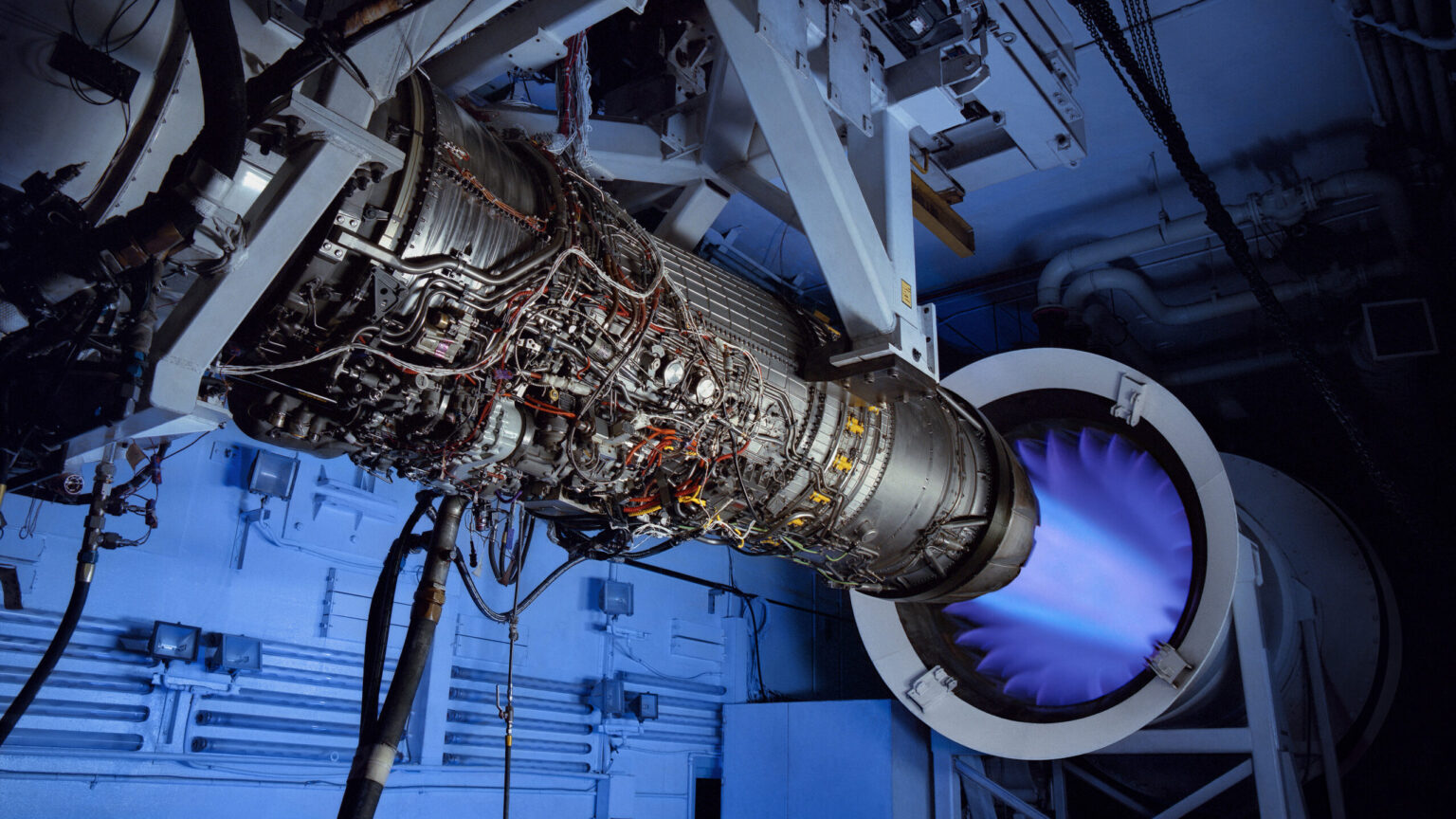
X-BAT uses a modified F110-GE-129E, from the engine family that powers the F-16 Block 50 and later variants as well as the F-15EX. GE Aerospace rates the F110-GE-129 at 29,500 pounds of thrust and says the F110 family has logged more than 11 million flight hours over 40 years of continuous production. Shield AI selected the engine in November 2025 for its thrust, size and fuel economy. For vertical launch from its trailer, X-BAT runs the engine in full afterburner.
The AVEN is the enabling component. GE Aerospace flew it in the 1990s on the F-16 Multi-Axis Thrust Vectoring (MATV) demonstrator, powered by an F110-GE-100. Publicly available program data indicate the nozzle could deflect thrust up to 17 degrees in any direction, vectoring within the divergent section to keep pressure disturbances away from the engine. The hardware then sat in storage for about 30 years. GE Aerospace’s Edison Works and Shield AI refurbished it, rewrote its control software and completed functional checkouts and engine light-off at GE’s Peebles, Ohio, test site in June 2026.
The sustainment burden will differ from MATV. According to Shield AI, vertical flight demands fast gimbaling to hold attitude, a duty the original program never imposed. Wear data for an operational VTOL nozzle therefore do not yet exist, and any Polish MRO plan depends on numbers X-BAT flight testing has yet to generate.
X-BAT Flight Test Schedule and Poland’s Industrial Role to 2029
X-BAT is a tail-sitting, single-engine, low-observable strike aircraft flown by Shield AI’s Hivemind autonomy software and designed for GPS-denied, communications-degraded environments. Shield AI lists a length of about 26 feet, a 39-foot wingspan, a service ceiling above 50,000 feet, range beyond 2,000 nautical miles and a combat radius of about 1,000 nautical miles, with an internal bay for 2,000-pound-class weapons.
The program remains pre-flight. Shield AI planned to roll out its first prototypes by the end of October 2026 and begin VTOL testing in Kansas around year’s end, initially with the aircraft suspended from a crane. Full mission capability flights are planned for 2028 and production for 2029. On October 8, 2026, the U.S. Navy executed a $150 million modification to its Other Transaction agreement through the Defense Exportability Features program, matched by Shield AI. With an earlier $50 million Navy and Defense Innovation Unit action under the Runway Independent Maritime Expeditionary Strike (RIMES) effort, also matched, announced commitments reach $400 million. Under the LOI, the Polish share could span production, final assembly and F110 support, though scope remains under negotiation.
Analysis: The funding line matters more than the dollar figure. The Navy routed its latest $150 million through the Defense Exportability Features program, which pays to build export configurations and technology protection into a system during development. That is the precondition for any foreign depot handling AVEN hardware, and it shows the Pentagon is preparing X-BAT for export from the outset. Poland is positioning WZL-2 as the European sustainment node before the aircraft has flown, which gives Warsaw industrial leverage in any future procurement. The risk runs both ways: if X-BAT slips or Poland never orders it, WZL-2 holds F110 depot capability with no domestic F110 fleet to support.
The next milestones are prototype rollout, crane-suspended VTOL trials and the start of flight testing, all targeted before the end of 2026. On the Polish side, the partners have disclosed no timeline, investment figure or facility location for the F110 and AVEN line, and Poland has not announced an X-BAT procurement. The decision point is whether the September LOI becomes binding contracts.