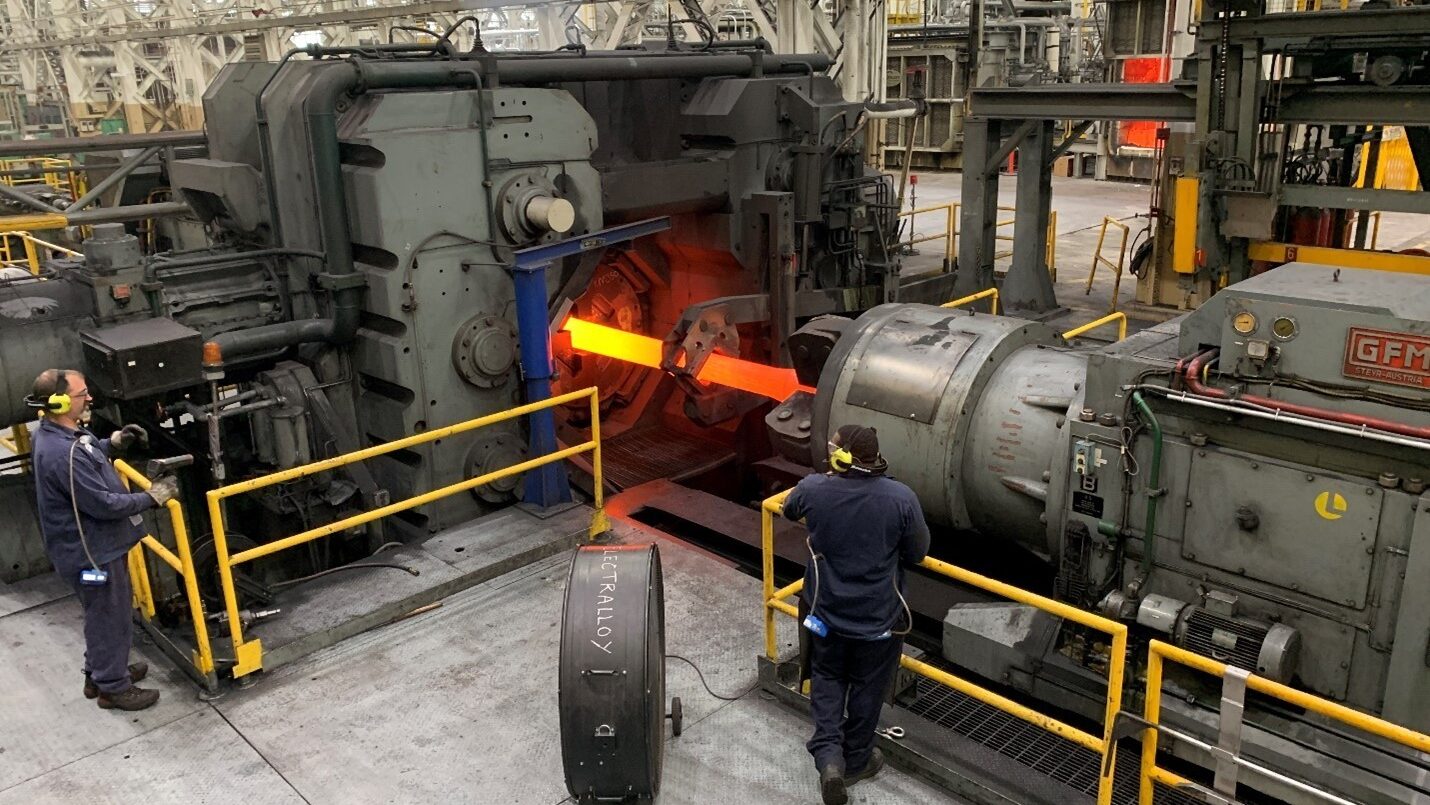
Acting Secretary of the Army Adam Telle announced on October 12, 2026, that the US Army will hold its first Manufacturing Rodeo early next year, a competitive production race among industrial base partners built to strain the service’s organic industrial base and supply chain until they break. Telle unveiled the initiative at the opening ceremony of the Association of the United States Army (AUSA) Annual Meeting and Exposition in Washington, D.C., describing it as a stress test for both the Army’s own facilities and the wider US manufacturing network.
The announcement comes as the Army overhauls how its 23 government-owned depots, arsenals and ammunition plants, collectively the Organic Industrial Base (OIB), produce and sustain equipment. The service’s 15-year OIB Modernization Implementation Plan, launched in fiscal year 2024, is estimated at roughly $18 billion, and Army senior leaders approved a separate OIB Transformation Strategy in April 2026 to move the enterprise from a maintenance-focused posture toward a data-driven production network. Telle, previously the Assistant Secretary of the Army for Civil Works, has led the service in an acting capacity since September 3, 2026, following the resignation of Secretary Dan Driscoll.
How the Army Manufacturing Rodeo Will Stress the Industrial Base
Telle framed the event as a deliberate attempt to induce failure. He described the rodeo as “a race between our industrial base partners that strains our organic industrial base, stresses the supply chain, pressures manufacturing processes, and shows us exactly where it breaks.” The objective, he said, is to learn by doing rather than by “sitting around postulating at the Pentagon,” then identify weak links, reinforce them and iterate toward a more resilient and responsive production base.
The stressors Telle listed map onto distinct layers of the production chain: facility capacity inside the OIB, sub-tier sourcing across the supply chain, and process maturity on the factory floor. A timed, competitive run would replace modeled assumptions with observed throughput, lead times and failure points. For industrial partners, that would put performance under load, rather than proposal quality, at the center of evaluation. That marks a shift from how Army Materiel Command (AMC) has typically tracked industrial readiness, through data reviews and periodic modernization war games that assess capacity largely on paper.
Key details remain undisclosed. The Army has not identified which companies or depots will compete, what components or end items they will build, how performance will be scored, what funding or incentives are attached, or the exact date. The phrase “industrial base partners” points to a mix of commercial firms and organic facilities, but the Army has not confirmed the format. It is also unclear whether results will be published or kept internal, a distinction that matters for suppliers positioning for follow-on work.
Advanced Manufacturing Hubs at Red River, Anniston and Tobyhanna
According to the Army, the rodeo builds on a 2026 pivot away from single-system production targets toward flexible advanced manufacturing capacity able to produce diverse subcomponents on demand for legacy and future weapon systems. Three depots anchor that effort.
At Red River Army Depot in Texas, the Army awarded Hadrian Automation a firm-fixed-price contract in March 2026 for the first phase of an Advanced Automation Manufacturing project covering components for weapon systems and small unmanned aircraft systems (sUAS). The award carries a reported ceiling of $80 million, with an initial value of $39.2 million.
At Anniston Army Depot in Alabama, Army Contracting Command awarded Siemens Government Technologies an $80 million firm-fixed-price contract on August 10, 2026, to convert a World War II-era facility into a hub for unmanned aircraft electric motor stator assemblies. Selected from 11 bids, Siemens is using digital twins to validate production lines before physical commissioning. The 12-month effort is due to finish by August 2027.
Tobyhanna Army Depot in Pennsylvania opened a dedicated sUAS advanced manufacturing facility in June 2026. Its brushless motor line launched with an initial goal of 200,000 motors, and depot officials put scalable capacity above 500,000 motors per year. The depot is also targeting capacity for 1 million circuit cards annually by the end of fiscal year 2027.
A Partnership Solutions Opening issued in May 2026 sought industry partners for further lines, including track shoes and road wheels for the M1 Abrams, M2 Bradley, M88 and M109 at Red River, and wiring harness connectors and raw printed circuit boards at Tobyhanna.
Analysis: The rodeo’s value will hinge less on which partner wins than on where the bottlenecks surface. The new hubs add machining, assembly and electronics capacity, yet the parts at the center of the Army’s drone push, stator assemblies and brushless motors, depend on permanent magnets and rare earth inputs largely processed in China. The Army has begun addressing that exposure, conditionally selecting four companies to build critical mineral processing facilities at OIB sites, but those facilities remain in development. A race that genuinely stresses the supply chain is therefore more likely to expose sub-tier material dependencies than shortfalls in depot floor space.
The Army has given no timeline beyond early 2027. The next markers are a formal call for participants with published competition rules, completion of the Siemens work at Anniston by August 2027, and whether the initiative survives a change in civilian leadership, since Telle holds the post in an acting capacity. Whether the Army publishes the rodeo’s findings and funds fixes in subsequent budget requests will determine whether it becomes a planning tool or a showcase.