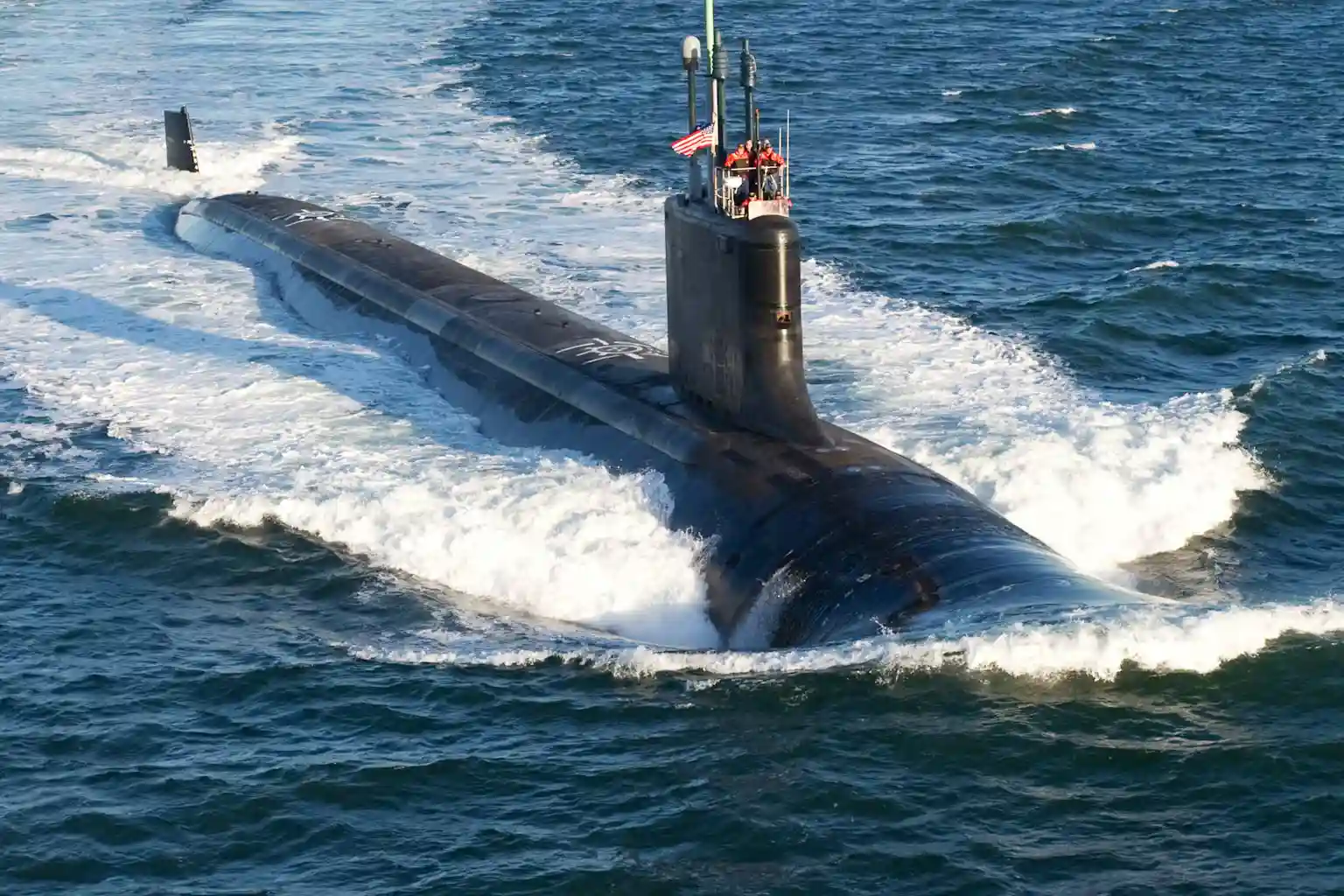
General Dynamics Mission Systems (GDMS) has received a $194.1 million cost-plus-fixed-fee contract modification from the U.S. Navy’s Strategic Systems Programs (SSP) for engineering and technical work on the fire control subsystem of the Nuclear-Armed Sea-Launched Cruise Missile (SLCM-N), the weapon the Navy plans to field aboard Virginia-class attack submarines. The Pentagon disclosed the award on September 3, 2026, and the company announced it on October 19, 2026.
The award gives SLCM-N a dedicated weapon control architecture as Congress presses for speed. The first Trump administration revived the concept in its 2018 Nuclear Posture Review, the Biden administration sought cancellation in 2022, and lawmakers reversed course in the Fiscal Year 2024 National Defense Authorization Act (NDAA), requiring initial operational capability (IOC) no later than September 30, 2034. The FY2026 NDAA added a limited operational deployment requirement by September 2032, while 2025 reconciliation legislation provided $2 billion to accelerate the missile and $400 million for its warhead.
Inside the $194 Million SLCM-N Fire Control Modification
The modification, valued at $194,139,485 including options, applies to a previously awarded unpriced letter contract under which work began in April 2026. The Navy obligated $135.3 million in FY2025 reconciliation research, development, test and evaluation (RDT&E) funds at award, none of which expires at the end of the current fiscal year, according to the Pentagon. Work runs through September 30, 2028, with roughly 75% performed in Pittsfield, Massachusetts, and 25% in Manassas, Virginia.
SSP awarded the work on a sole-source basis, citing the statutory exception for a single responsible source. The rationale rests on Pittsfield’s lineage: GDMS has designed, produced and sustained fire control systems for the Polaris, Poseidon, Trident I and Trident II D5 submarine-launched ballistic missiles, and remains prime integrator for the Trident II Fire Control System.
Dr. Laura Hooks, vice president and general manager of the company’s Maritime and Strategic Systems business, called SLCM-N “a national priority” that the Navy needs on an accelerated timeline. The company expects to add about 200 engineering and manufacturing positions and is spending $1.3 million on facility modifications to expand fire control engineering and test capacity.
From Payload Tube to Launch: Integrating SLCM-N on Virginia-Class Boats
In a submarine strategic weapon system, fire control links the boat’s combat and navigation systems to the weapon. GDMS defines its SLCM-N scope as weapon control, mission planning, platform integration and system test, all of which must meet nuclear surety requirements.
The missile follows an All Up Round concept combining a booster, the cruise missile and a launch canister. According to SSP, the launcher subsystem will integrate with a Virginia Payload Tube (VPT) and connect the missile to shipboard systems, with integration planned in the 2030s on boats fitted with the Virginia Payload Module (VPM). Publicly available specifications indicate Block III and IV boats carry two bow VPTs holding six Tomahawks each, while the Block V VPM adds four tubes holding seven each. The Navy has not disclosed how many SLCM-N rounds a single tube will accommodate.
The fire control architecture is being defined while the missile itself remains in competition. On September 23, 2026, SSP awarded five prototype agreements worth $743.6 million: Dynetics, a Leidos subsidiary, Raytheon and Northrop Grumman for missile development and flight system integration, plus Northrop Grumman Mission Systems and Pacific Engineering for launch canisters, with work through December 31, 2027. Sandia National Laboratories, part of the National Nuclear Security Administration complex, announced in January 2026 that SLCM-N will use the W80-5, a new variant of the W80 warhead family. Range, speed and yield remain undisclosed; the retired Tomahawk Land Attack Missile-Nuclear (TLAM-N) that SLCM-N succeeds reached about 2,500 kilometers.
Analysis: The award shows SLCM-N maturing from a missile study into an integrated submarine weapon system, with missile, canister, launcher and fire control now under contract in parallel. Routing fire control through SSP’s long-standing Trident supplier buys proven nuclear surety experience and lowers certification risk on a compressed schedule. It also concentrates demand on a narrow workforce: the same Pittsfield engineering base supports Trident II D5 fire control through the transition from Ohio-class to Columbia-class ballistic missile submarines, and SSP’s director told the House Armed Services Committee in April 2026 that the program must find capacity in an already burdened cruise missile industrial base, warning that understaffing his command would hurt Trident II D5, Conventional Prompt Strike and SLCM-N alike. The 200 new positions are a capacity test as much as a hiring figure.
The near-term calendar is tight. The prototype agreements expire on December 31, 2027, and the Navy has not publicly said when it will select a missile design; the GDMS fire control work runs to September 30, 2028. Congress expects a limited operational deployment by September 2032 and IOC by September 30, 2034. Open questions include per-boat loadout and the fire control implications of the planned Trump-class battleships, which listed SLCM-N among their armament when the class was announced in December 2025.