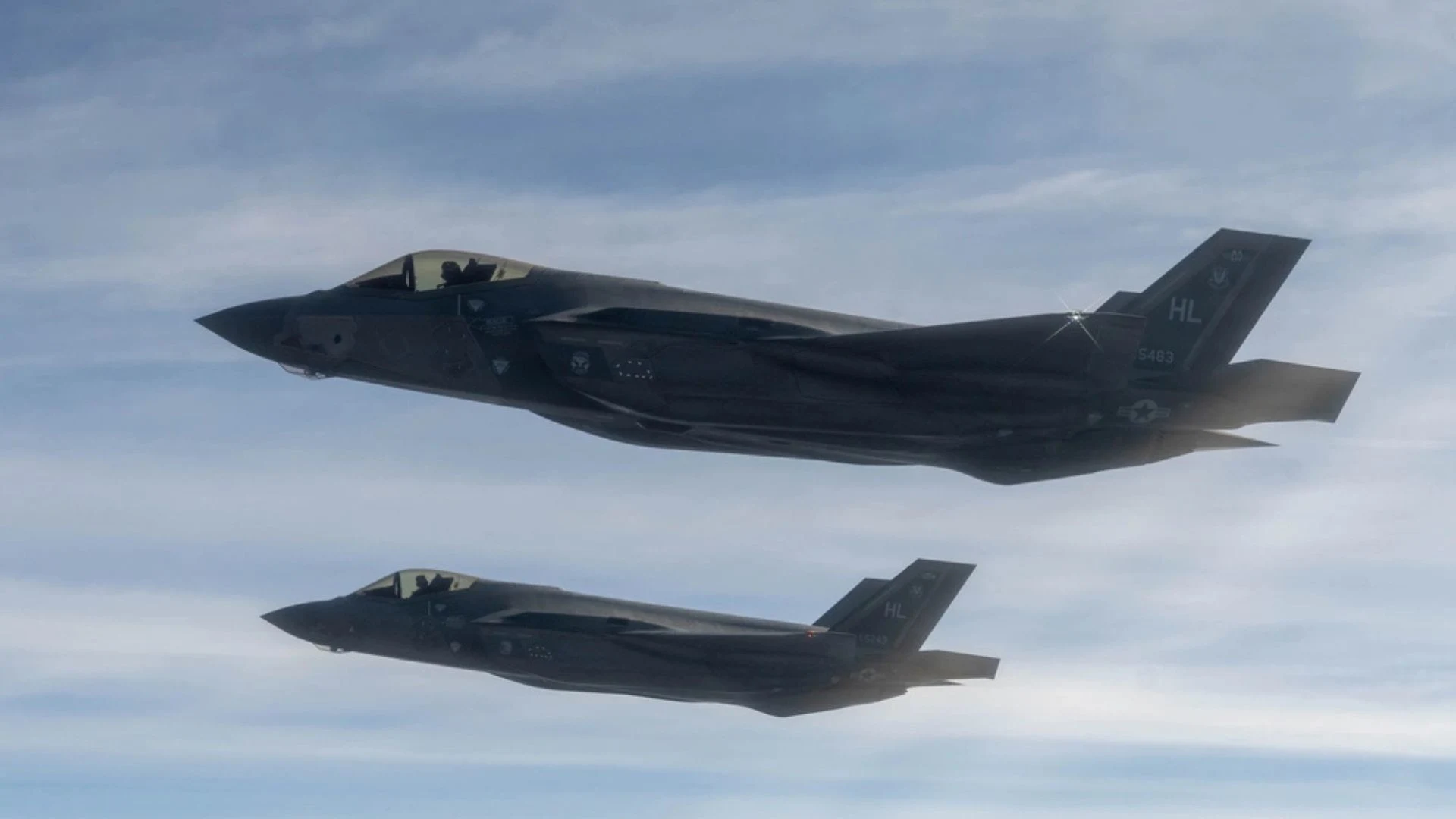
The Department of War and Lockheed Martin on October 22, 2026, unveiled a 10-year framework agreement for multiyear F-35 Lightning II production and sustainment that sets a floor of 850 U.S. aircraft, covers international orders across production Lots 21 through 30, and holds output at 156 jets per year. The agreement takes effect only if Congress grants multiyear procurement authority and the matching appropriations.
The framework would replace the lot-by-lot contracting that has repeatedly strained the program. The last finalized deal, covering 296 aircraft in Lots 18 and 19 for $24.3 billion, was signed on September 29, 2025, after protracted negotiations. Lot 20, long earmarked as the first multiyear candidate, sits outside the announced Lot 21-30 range and remains under negotiation. Lockheed reported the same day that costs on its Lot 20 advance acquisition contract now exceed the amount the government has authorized and funded.
What the F-35 Multiyear Framework Covers Across Lots 21-30
The 850-aircraft floor averages 85 U.S. jets a year, matching the fiscal 2027 budget request: 38 F-35As for the Air Force, 37 carrier-based F-35Cs for the Navy and Marine Corps, and 10 short takeoff and vertical landing F-35Bs for the Marine Corps, up from 47 aircraft funded in fiscal 2026. The 156-jet annual rate covers U.S. and international customers combined.
Beyond airframes, the framework packages initial spares, 10 years of modification kits, and 10 years of sustainment into a single procurement model. Lockheed says buying those items together unlocks volume discounts and would end reliance on supplemental funding to cover parts obsolescence and production tooling. The company also commits to data tools that tie spending to readiness results, including live tracking of parts inventory.
The kit line is central to Block 4, the incremental upgrade built on Technology Refresh 3 (TR-3) hardware that expands onboard processing power and memory. The fiscal 2027 mandatory funding request includes $324 million to accelerate 200 Block 4 modification kits, which would move the first fleet delivery from fiscal 2031 to fiscal 2030. A decade of committed kit funding would give that retrofit a stable line across the U.S. fleet.
In exchange for the decade-long commitment, Lockheed will self-fund at least $7 billion in program initiatives, according to the Department of War. Neither party disclosed the potential contract value, unit prices, or how the $7 billion will be spent. Under Secretary of War for Acquisition and Sustainment Michael P. Duffey said the deal aligns “financial incentives with actual performance,” without specifying which metrics will carry incentives. Lockheed Chairman, President and CEO Jim Taiclet said the agreement “strengthens the way we can plan and invest in the F-35 enterprise.”
Bundled Sustainment Targets F-35 Readiness Shortfalls Flagged by GAO
The sustainment emphasis answers a readiness problem the program has not solved. A Government Accountability Office (GAO) report published June 11, 2026, found the fleet’s mission capable rate fell from 67 percent in fiscal 2021 to 44 percent in fiscal 2025, while the full mission capable rate, the share of time a jet can perform every assigned mission, dropped from 38 percent to 25 percent. The program targets 80 and 65 percent, respectively, by 2030.
GAO also found that the current sustainment contract, covering 2025 through 2028, ties no incentives to full mission capable rates and instead rewards parts supply metrics set below program goals. Of 46 sustainment recommendations GAO has issued since 2014, the Pentagon had implemented 14 as of March 2026.
Lockheed argues that predictable demand will let suppliers buy raw materials and critical parts in bulk, shorten repair turnaround, and reinforce its existing investments in the global spares pool. Delivery consistency is a parallel concern: after a record 191 deliveries in 2025, Lockheed handed over 94 aircraft in the first nine months of 2026, against 143 over the same period a year earlier.
Congress has signaled support, with conditions. The House version of the fiscal 2027 National Defense Authorization Act (NDAA), passed July 22, 2026, would grant multiyear F-35 authority beginning with the fiscal 2027 program year, but only after certification that each aircraft comes with its full complement of initial spares and alternate mission equipment, and that the contract saves at least 5 percent. The Senate Armed Services Committee version also authorizes multiyear F-35 contracts, but the Senate bill stalled on the floor in July. The NDAA has not been enacted.
Analysis: The framework looks engineered to clear the House’s first test: it bundles initial spares by design and matches the 85-jet annual quantity the Pentagon already requested. The second test is harder. With no pricing disclosed, lawmakers are being asked to authorize a decade of procurement before the 5 percent savings threshold can be checked. And the F-35’s binding constraint is sustainment, not production volume. The deal will move readiness only if the final contract ties fees to full mission capable rates, the metric GAO found missing from the current arrangement.
No formal House-Senate conference has begun, lawmakers expect to settle a compromise NDAA after the November elections, and appropriators must then fund the multiyear buy. Only after both steps will the F-35 Joint Program Office and Lockheed negotiate terms, pricing, and schedules toward a formal award. The unresolved Lot 20 contract and the proposed fiscal 2030 Block 4 kit delivery are the nearer milestones to watch.