The US Navy awarded Fluor Marine Propulsion LLC a $2,409,077,590 cost-plus-fixed-fee modification on September 24, 2026, for naval nuclear propulsion work at the Naval Nuclear Laboratory, according to a Pentagon contract announcement published October 23, 2026. Naval Sea Systems Command (NAVSEA) in Washington, D.C., is the contracting activity for the action, which modifies contract N00024-18-C-2130.
Fluor Marine Propulsion, based in Arlington, Virginia, is a wholly owned special-purpose subsidiary of Fluor Corporation. It has managed and operated the Naval Nuclear Laboratory (NNL) since October 2018, when it succeeded Bechtel Marine Propulsion Corporation after a full and open competition run by Naval Reactors, the joint Department of Energy (DOE) and Navy organization responsible for every US naval reactor. That competition produced parallel Navy and DOE contracts with an estimated combined value of about $30 billion over 10 years if all options were exercised. Following the exercise of a five-year option in 2023, the current period of performance runs through September 30, 2028.
Naval Nuclear Propulsion Funding Split Across Three Laboratory Sites
Work under the modification will be performed in Pittsburgh, Pennsylvania (47%); Schenectady, New York (45%); and Idaho Falls, Idaho (8%). Those locations correspond to the NNL’s principal sites: Bettis Atomic Power Laboratory in West Mifflin, near Pittsburgh; Knolls Atomic Power Laboratory in Niskayuna, near Schenectady; the Kenneth A. Kesselring Site in West Milton, New York, which hosts prototype reactors used to train Navy nuclear operators; and the Naval Reactors Facility in Idaho. The laboratory, dedicated solely to the Naval Nuclear Propulsion Program, has nearly 8,000 engineers, scientists, technicians, and support personnel.
Only $597,900 was obligated at the time of award: $582,062 in fiscal 2026 operations and maintenance (Navy) funds, or 97%, and $15,838 in fiscal 2026 shipbuilding and conversion (Navy) funds, or 3%, which expired at the end of fiscal 2026. That gap is typical of this contract: the $1,396,995,054 modification exercising fiscal 2025 options in August 2024 carried about $19 million in obligations at award.
The Pentagon notice does not specify the scope of the work or state whether the action exercises fiscal 2027 options. Earlier September actions did exactly that: a $1,362,922,002 modification exercised fiscal 2024 options in September 2023, and a $2.05 billion modification exercised fiscal 2026 options in September 2025. It follows a separate $1,034,700,000 modification announced in June 2026.
Columbia Reactor Cores and Aging Infrastructure at Naval Nuclear Laboratory Sites
The Naval Nuclear Propulsion Program supports a nuclear fleet spanning seven warship classes: the Columbia, Virginia, Los Angeles, Seawolf, and Ohio submarine classes and the Nimitz and Ford aircraft carrier classes. The NNL’s laboratories develop reactor cores and propulsion plant technology, provide technical support throughout each ship’s service life, which exceeds 50 years for aircraft carriers, and run the prototype plants where Navy nuclear operators train.
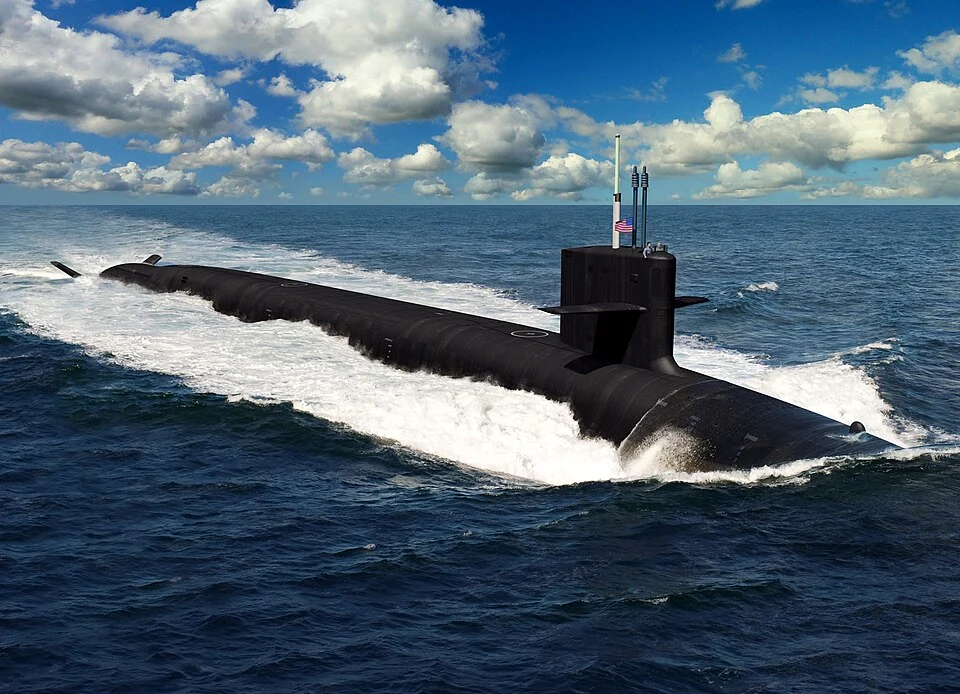
The Columbia-class ballistic missile submarine, the Navy’s top acquisition priority, anchors the near-term workload. In testimony to the Senate Armed Services Committee on April 20, 2026, Admiral William Houston, Deputy Administrator for Naval Reactors, said Columbia-class life-of-ship cores are entering serial production and that all lead-ship reactor plant components, including the core, would be on site at the submarine’s Connecticut production facility in 2026. Fiscal 2027 funding is set to complete lead-ship reactor design, closing out more than two decades of DOE-funded development.
Infrastructure is the second pressure point. Houston told lawmakers that recapitalization is under way at all four NNL sites, where many key structures date to the late 1940s. In Idaho, the Spent Fuel Handling Recapitalization Project faces peak construction tied to the fiscal 2027 request, while the Naval Examination Acquisition Project, which will replace core examinations at the Expended Core Facility, in service for more than 60 years, remains in detailed design. In New York, the Kesselring prototype resumed training after a multi-year refueling overhaul.
Analysis: The award does not signal a new program start; it signals sustained demand on one of the narrowest segments of the defense industrial base. The NNL, alongside Bechtel Plant Machinery Inc., concentrates the design and fleet-support expertise behind every US naval reactor, and Naval Reactors has told Congress that retaining that talent is increasingly difficult as its experts are courted across the economy. With Columbia in serial core production, laboratory facilities under recapitalization, and the fiscal 2027 Naval Reactors request of $2.39 billion running about 12% above the fiscal 2026 enacted level, Navy funding through NAVSEA forms a second stream alongside the DOE appropriation that pays for reactor development.
The larger decision point is the contract itself. The current NNL management and operating period ends September 30, 2028, and Naval Reactors’ approach to the follow-on period remains an open question. Nearer term, the markers to watch are further funding actions against this modification, congressional action on the fiscal 2027 Naval Reactors request, and lead Columbia-class reactor plant milestones in Connecticut.