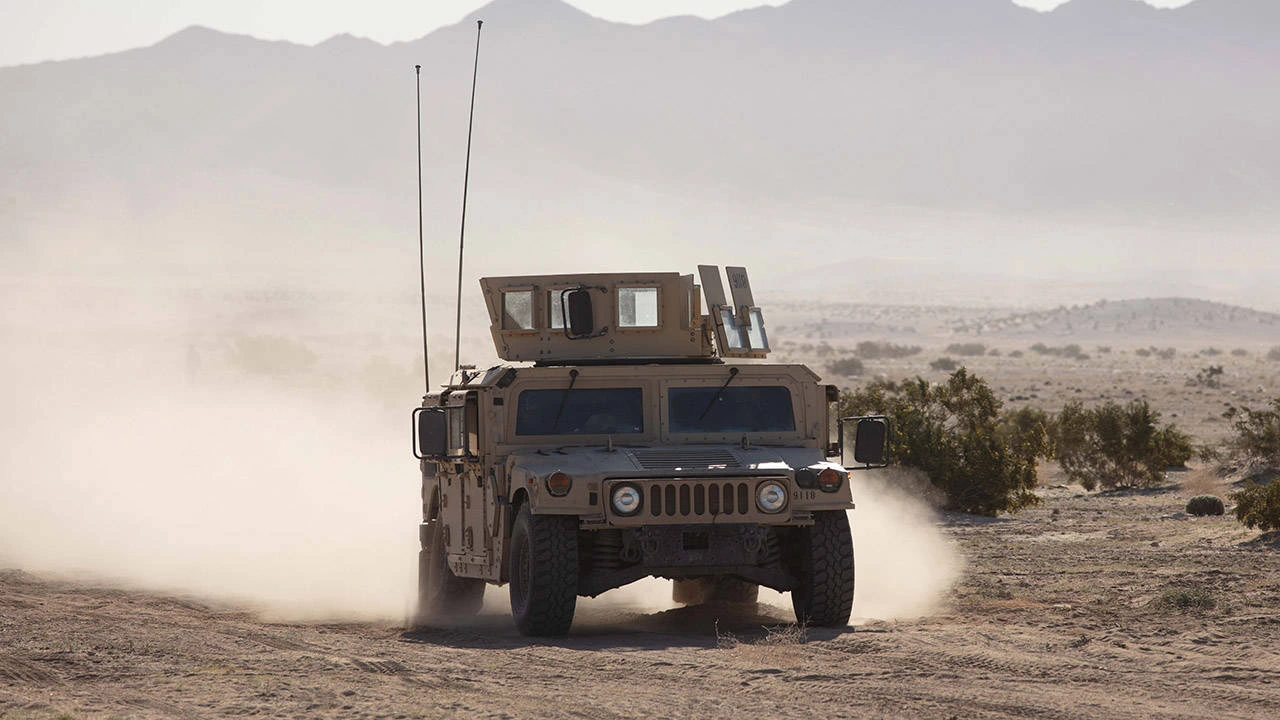
General Dynamics Mission Systems has won a U.S. Army contract to deliver the Radio Frequency (RF) Delivered Effects Platform-Portable 2.0 (RDEP-P 2.0), a ruggedized, modular host for cyber and electronic warfare (EW) payloads at the tactical edge, the company announced on October 26, 2026. The award, made in September, covers prototype delivery, operator training, open-systems integration and life cycle support under a 12-month base period, with options for additional production, fielding and sustainment. Neither the company nor the Army has disclosed the contract value.
The award moves a requirement the Army opened to industry in March 2026 through a commercial solutions opening toward hardware. The service is seeking a flexible cyber electromagnetic activities (CEMA) system able to integrate a range of payload cards, part of a wider push to strengthen electromagnetic spectrum operations through its Transforming in Contact initiative and Next Generation Command and Control (NGC2) effort. It also extends the reach of the C5ISR/EW Modular Open Suite of Standards (CMOSS), the Army framework for replacing stovepiped vehicle electronics with plug-in cards hosted in common chassis.
Rampart Chassis Anchors the Army Electronic Warfare Platform
General Dynamics will build RDEP-P 2.0 around its Rampart 10 chassis, originally developed for the CMOSS Mounted Form Factor (CMFF) program. Publicly available company specifications indicate the Rampart provides 10 conduction-cooled 3U OpenVPX slots compliant with VITA 48.2 inside a Standard A-Kit Vehicle Envelope (SAVE) profile, a backplane supporting 100-gigabit fat-pipe and 25-gigabit ultra-thin-pipe links, a VITA 46.11 Tier 3 chassis manager and MIL-STD-810 ruggedization. The chassis can run as a single-, dual- or multi-domain system depending on switch configuration.
That last feature matters for a cyber and EW host. The Army requires the platform to operate in both classified and unclassified environments; segregating security domains in hardware lets sensitive RF-enabled cyber payloads share an enclosure with other mission cards instead of requiring separate boxes.
The Rampart lineage also lowers integration risk. In September 2025, Program Executive Office Command, Control, Communications and Network (PEO C3N) awarded rapid prototyping agreements to General Dynamics and Pacific Defense to develop CMFF chassis, plug-in cards and smart displays. General Dynamics valued its two-year CMFF prototype award at $28.3 million. Sharing a chassis across both programs means payload cards qualified for one can, in principle, migrate to the other.
Portability and Payload Requirements in the RDEP-P 2.0 Solicitation
The Army solicitation, as reported by DefenseScoop, sets demanding parameters. The complete system must weigh no more than 100 pounds and support rapid-setup, fixed-site and vehicular operations, with a single operator able to switch between vehicle-mounted and stationary configurations within 10 minutes.
The platform must also allow over-the-air remote control of RF payloads, remain compatible with fielded Army IP communications systems and pass data to other Army programs of record. Its graphical user interface must integrate with command and control tools including the Tactical Assault Kit (TAK), and operators must be able to re-provision CMOSS cards directly within the chassis. Integration with small unmanned aircraft systems to extend range and situational awareness was listed as an optional capability.
General Dynamics has not disclosed the installed weight of its design, the payload cards it will host, the number of prototypes on order or whether the drone option is included.
“Cyber and electronic warfare missions demand technology that can evolve as quickly as the threat,” said Rachel Oberc, vice president, General Dynamics Mission Systems.
Analysis: The award illustrates the Army shift from buying EW systems to buying hosts. Standardizing on CMOSS-compliant chassis across mounted and portable form factors decouples the hardware cycle from the payload cycle, which in the spectrum fight can run in months as adversaries adapt waveforms and countermeasures. It also concentrates leverage in the chassis vendor: General Dynamics now holds positions on both CMFF and RDEP-P 2.0, giving Rampart a foothold as a de facto host for Army CEMA payloads, provided third-party cards integrate without proprietary friction.
The 12-month base period points to prototype delivery and operator training running through about September 2027. Next decision points include the exercise of production and fielding options, the selection of mission payloads and whether RDEP-P 2.0 prototypes appear in Transforming in Contact rotations or NGC2 experimentation. The contract value and awarding command remain undisclosed.