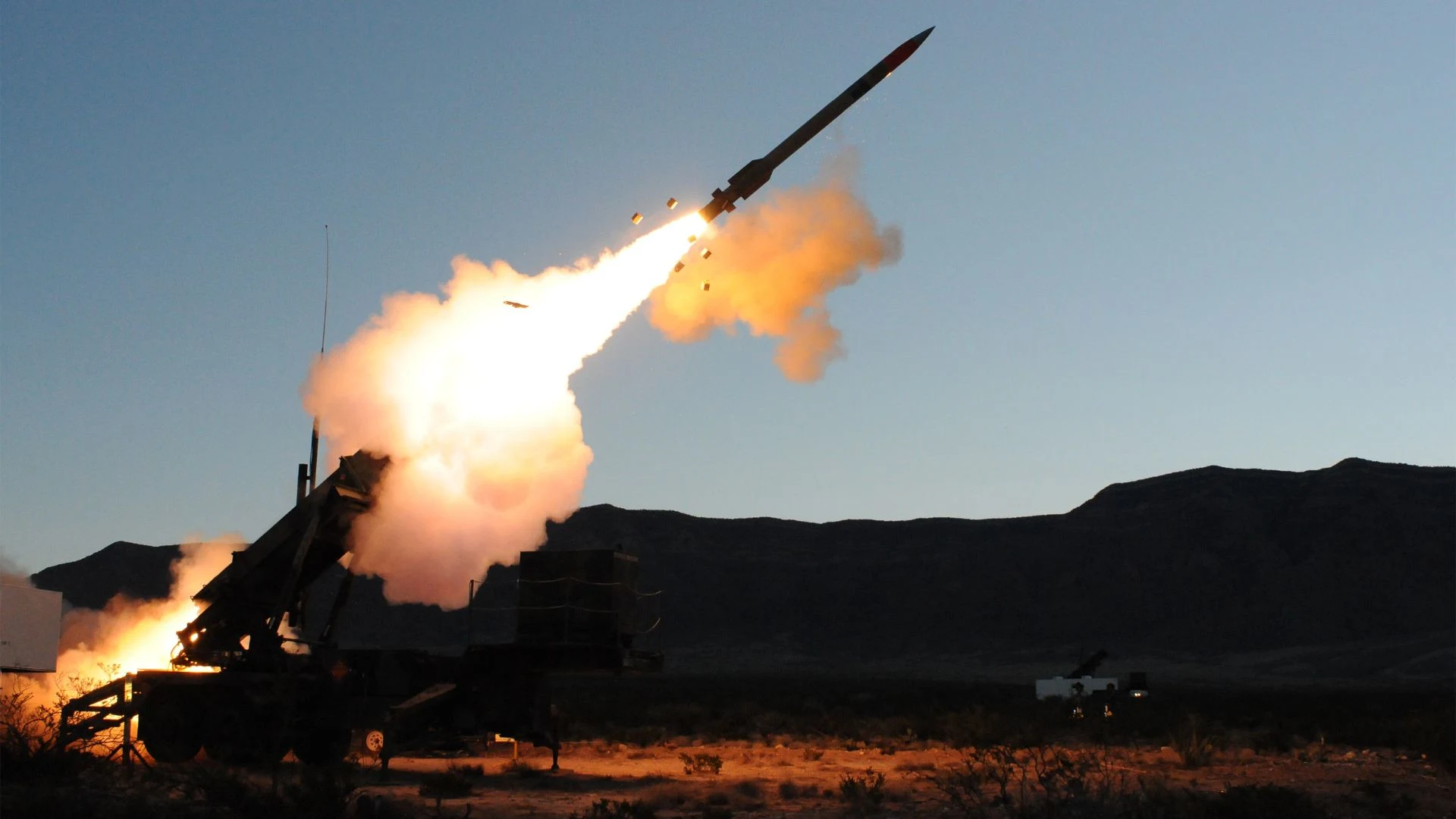
The US State Department on October 30, 2026, approved a possible Foreign Military Sale (FMS) of 500 Patriot Advanced Capability-3 Missile Segment Enhancement (PAC-3 MSE) interceptors to Ukraine, a package valued at an estimated $2.1 billion. Under Transmittal 26-113, the congressional notification states that partners and allies will cover the full cost, with no US funds involved. Lockheed Martin, headquartered in Bethesda, Maryland, is the principal contractor.
The approval comes as Ukraine’s Patriot batteries face an acute interceptor shortfall. On October 15, CNN reported that Kyiv’s supply of Patriot interceptors had run dry, citing a source familiar with the situation. Until now, the Prioritized Ukraine Requirements List (PURL), under which European allies buy US weapons for Kyiv, has delivered roughly 95% of Ukraine’s Patriot interceptors, according to Ukraine’s Ministry of Defense. The new case opens a second, larger procurement channel.
Inside the Ukraine Patriot Missiles Package and Its Funding Structure
The notification covers 500 PAC-3 MSE rounds plus classified and unclassified spare parts and related logistics and program support. Divided evenly, the $2.1 billion estimate implies roughly $4.2 million per missile, although that figure folds in sustainment and FMS administrative costs, and the final Letter of Offer and Acceptance (LOA) price may differ.
Financing rests on two pillars. The first is donations from Canada, Germany, and Norway routed through the Joint Ukraine Multinational Program for Services, Training and Articles Rapid Timeline (JUMPSTART). Created by the Pentagon in 2022, JUMPSTART lets allies deposit funds that pay directly for Ukrainian FMS cases; six allies had contributed about $2.8 billion as of June 2026. Per Defense Security Cooperation Agency (DSCA) guidance, Ukrainian requests under the program use cash-with-acceptance terms of sale, and contributing countries set up their funds through DSCA.
The second pillar is Ukrainian national funds drawn from the European Union’s €90 billion Ukraine Support Loan, whose first disbursements took place in June 2026. Of that total, €60 billion is earmarked for defense needs. The loan prioritizes procurement from companies in the EU, Ukraine, and EEA-EFTA states, but permits targeted derogations when equivalent products are unavailable in sufficient quantity or within required delivery times.
PAC-3 MSE Hit-to-Kill Performance Against Russian Ballistic Threats
PAC-3 MSE is the latest operational member of the PAC-3 hit-to-kill family. Rather than relying on a blast-fragmentation warhead detonating near the target, as the PAC-2 Guidance Enhanced Missile-Tactical (GEM-T) does, the interceptor destroys its target through direct body-to-body impact. Against tactical ballistic missiles, that approach reduces the risk of leaving a damaged but functional warhead on its trajectory.
Publicly available specifications indicate the MSE adds a larger-diameter, dual-pulse solid rocket motor and enlarged control fins over the baseline PAC-3 Cost Reduction Initiative (CRI) round. The second pulse can be ignited late in the engagement to restore energy for terminal maneuvering against a descending target. Lockheed Martin credits the design with increased altitude and range over the earlier PAC-3. Terminal homing relies on a Ka-band active radar seeker built by Boeing, cued by midcourse updates from the Patriot fire control radar. An M903 launcher can carry up to 12 MSE rounds, against four GEM-T missiles, deepening each fire unit’s ready magazine without adding launchers.
Those attributes explain Kyiv’s dependence on the round. Ukrainian Patriot units have engaged Kh-47M2 Kinzhal air-launched ballistic missiles and 9M723 Iskander-M missiles since 2023, threats few other systems in Ukraine’s inventory can reliably defeat. Standard Western practice fires two or more Patriot interceptors at each ballistic target, but Ukrainian crews have learned to engage with a single round, according to air defense commanders interviewed by The New York Times in July 2026, which stretches every delivered missile further.
Lockheed Martin PAC-3 MSE Production Ramp Faces Competing Demand
The sale draws on a production base already under strain. Lockheed Martin delivered 620 PAC-3 MSE interceptors in 2025, up more than 60% in two years. Under a seven-year framework agreement signed with the Pentagon on January 6, 2026, the company aims to raise annual capacity to roughly 2,000 missiles by the end of 2030, and in July 2026 it received a multiyear production contract supporting that ramp at its Camden, Arkansas, plant. On October 5, 2026, Boeing disclosed an undefinitized contract action worth approximately $14.7 billion from Lockheed Martin covering seven years of PAC-3 MSE seeker production in Huntsville, Alabama.
At 2025 rates, Ukraine’s 500 rounds equal about 80% of a full year of output. The same line must also feed US Army war reserves, training expenditure, and a growing roster of FMS customers; Germany alone was cleared for up to 600 PAC-3 MSE in 2024. An April 2026 analysis by the Center for Strategic and International Studies estimated 29 months of contract and manufacturing lead time before the first PAC-3 MSE deliveries.
Analysis: The case confirms a structural shift in how Ukraine’s air defense is financed. Washington now acts as producer and export authority, while Canada, European capitals, and Kyiv carry the bill through JUMPSTART, PURL, and EU-backed funds. Money is no longer the binding constraint; production slots and allocation priority are. The use of EU loan funds for a US interceptor also exposes the limits of Europe’s own missile defense industrial base, which cannot yet supply hit-to-kill rounds at this volume. Unless the US Army agrees to resequence deliveries, the order is more likely to shape Ukraine’s air defense posture in 2027 and 2028 than this winter, when Russian ballistic strikes on energy infrastructure have historically intensified.
Congress now has 30 calendar days to review the notification before an LOA can be offered. Once an LOA is accepted, JUMPSTART’s cash-with-acceptance terms apply at case implementation. The State Department has not announced a contract date, production schedule, or delivery timeline, and Washington is not aware of any proposed offset agreement. The variables to watch are whether Ukraine secures priority in the PAC-3 MSE delivery queue and whether further donors join Canada, Germany, and Norway to fund follow-on lots.