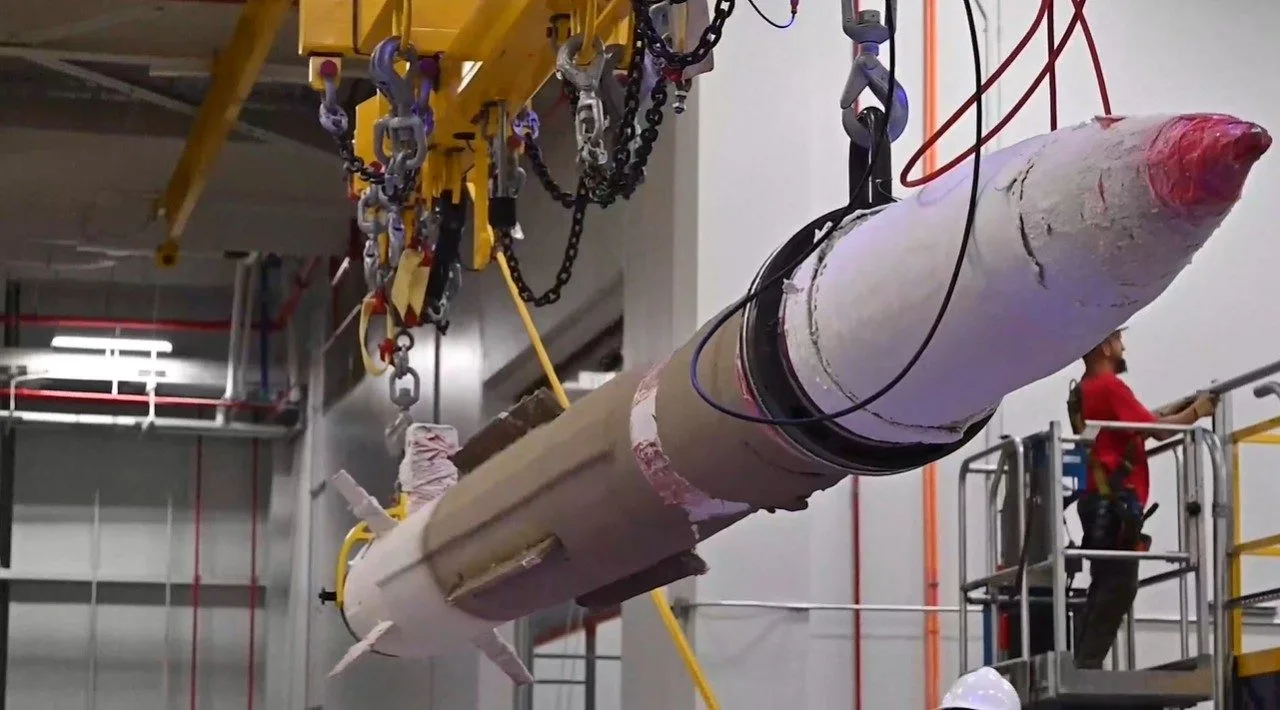
Lockheed Martin Corp. of Grand Prairie, Texas, received a $10,439,315 cost-plus-incentive-fee contract on October 30, 2026, to support flight testing of a redesigned guidance processor unit for the Patriot Advanced Capability-3 (PAC-3) interceptor fitted with the Seeker Block V. Army Contracting Command at Redstone Arsenal, Alabama, awarded the order under contract W31P4Q-27-F-A004, with work scheduled to run through November 30, 2027.
The award lands as the Army and Lockheed Martin push the PAC-3 Missile Segment Enhancement (MSE), the Patriot system’s hit-to-kill interceptor, whose first unit was equipped in 2015, through a production ramp that would more than triple output. A seven-year framework agreement signed on January 6, 2026, aims to raise annual production from roughly 600 to about 2,000 missiles, after Lockheed Martin delivered 620 rounds in 2025.
PAC-3 Guidance Processor Redesign and Seeker Block V Test Scope
The Pentagon describes the effort as PAC-3 guidance processor unit redesign and Seeker Block V flight test support. One bid was solicited and one received, leaving Lockheed Martin, the PAC-3 prime contractor, as the sole source. All work will be performed in Grand Prairie, and the full $10,439,315 in fiscal 2027 Army missile procurement funds was obligated at the time of award.
The guidance processor unit (GPU) is the interceptor’s main computer. Per Lockheed Martin program material, it processes range, range-rate, and angle data from the active Ka-band radar seeker, merges it with the inertial measurement unit’s navigation solution and uplinks received through the Multi-band Radio Frequency Data Link, and commands the attitude control motors and aerodynamic control fins that steer the missile into a direct body-to-body collision. Boeing builds the seeker in Huntsville, Alabama, where it has run Seeker Block V as a development program to fold upgrades into the production radar seeker.
The Army has not disclosed the number of flight tests, the test ranges, Seeker Block V performance changes, or whether the GPU redesign addresses parts obsolescence, new seeker processing load, or both.
How the Seeker Upgrade Fits a 2,000-Missile Annual Production Ramp
Per Lockheed Martin, the PAC-3 MSE pairs a larger dual-pulse solid rocket motor with larger fins, upgraded actuators, and thermal batteries, expanding its battlespace in both altitude and range; the CSIS Missile Defense Project assesses that the enlarged motor nearly doubles the range of the baseline PAC-3. Because the MSE kills by direct impact, terminal accuracy rests on the seeker and on the processor that converts its measurements into steering commands. Against the tactical ballistic missiles and evolving cruise missiles the MSE is designed to defeat, endgame processing speed bears directly on miss distance.
The industrial context raises the stakes. In late July 2026, the Army awarded Lockheed Martin a $53.9 billion undefinitized modification that brought its seven-year PAC-3 MSE production contract to about $58.7 billion. In September, L3Harris announced a seven-year, $4.7 billion undefinitized Lockheed Martin contract for PAC-3 MSE propulsion, including the dual-pulse solid rocket motor and attitude control motors. On October 5, Boeing received a seven-year undefinitized contract action worth up to $14.7 billion from Lockheed Martin to triple seeker production, a component that has reportedly constrained PAC-3 output.
Analysis: The dollar value is modest, but the timing matters. Qualifying a new processor and seeker block before the supply chain locks in at tripled rates lets the Army cut the upgraded configuration into the line rather than retrofit it across thousands of rounds later. Funding the work from missile procurement rather than research and development accounts suggests the Army treats the redesign as a production configuration change. The risk runs both ways: a flight test anomaly in 2027 would surface exactly as Boeing and Lockheed Martin add capacity around the seeker and its supporting electronics, and with more than a dozen allied operators drawing on the same line, any slip would ripple across the export customer base.
The next markers are the Seeker Block V flight tests themselves, an Army decision on the production cut-in point for the redesigned GPU, and fiscal 2028 budget justification documents, which may detail cost and schedule for both efforts. The contract’s November 30, 2027, completion date sets the outer boundary for test data to reach program decision-makers.