Latvia’s National Armed Forces (NBS) declared an airspace threat in Ludza municipality at 02:30 on November 27, 2026, after a drone (UAV) tracked along the border made a brief incursion into Latvian territory. Fighters assigned to NATO’s Baltic air mission were activated, and the NBS launched an interceptor drone that returned to its launch site after the flight. The Ludza alert ended at 02:55, and a precautionary warning in neighboring Balvi was lifted at about 03:30. The NBS did not report any engagement, crash, or damage.
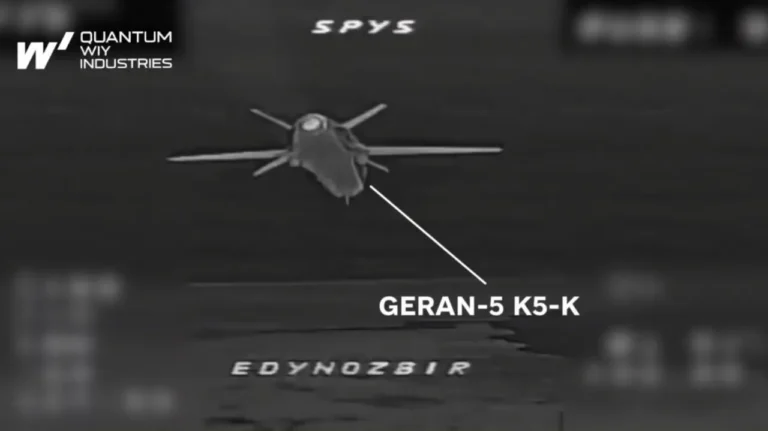
The incident is at least the fourth drone violation reported along Latvia’s eastern frontier this month. On November 1, a drone the NBS later assessed as most likely a Russian Geran-type entered from Belarus and exited into Russia through Ludza; the military launched a BLAZE interceptor, then triggered its self-destruct mechanism to avoid crossing the border. On November 3, an unidentified drone tracked by two Latvian interceptor drones may have come down in Balvi municipality, and on November 10 two drones crossed the eastern border in Ludza for one to two minutes each. Allied fighters destroyed drones over Latvia on June 8 and August 14.
Latvia Drone Incursion Timeline: From Orange Alert to All-Clear
According to the NBS, the military first detected the UAV moving in the immediate vicinity of the state border before it entered Latvian airspace for a short period. At 02:30, the military declared an airspace threat in Ludza and activated an orange warning. Ground-based air defense units stood ready to respond immediately.
At 02:55, the threat in Ludza was declared over and the orange warning cancelled. At the same moment, the NBS activated a yellow warning for a possible airspace threat in Balvi, the municipality to the north. That warning was lifted at approximately 03:30, about one hour after the first alert. The handoff from Ludza to Balvi is consistent with a track moving north along the frontier, but the NBS did not publish a flight path.
The two colors map to Latvia’s two-tier cell broadcast system. A yellow alert is informational and requires no immediate action. An orange alert signals a detected threat and instructs residents to go indoors and apply the two-wall principle, keeping at least two walls between themselves and the outside. The State Fire and Rescue Service sends them on NBS request.
Key details remain undisclosed: the drone’s type, origin, operator, payload, and point of entry. The same night, the Estonian Defence Forces issued a possible drone threat warning for six southern and southeastern counties at about 06:40 and scrambled NATO fighters, declaring the threat over at about 07:22. Reports of an overnight drone attack on Russia’s Leningrad region, near St. Petersburg, coincided with both alerts, though the NBS drew no link.
Interceptor Drones and Allied Fighters in Latvia’s Layered Air Defense
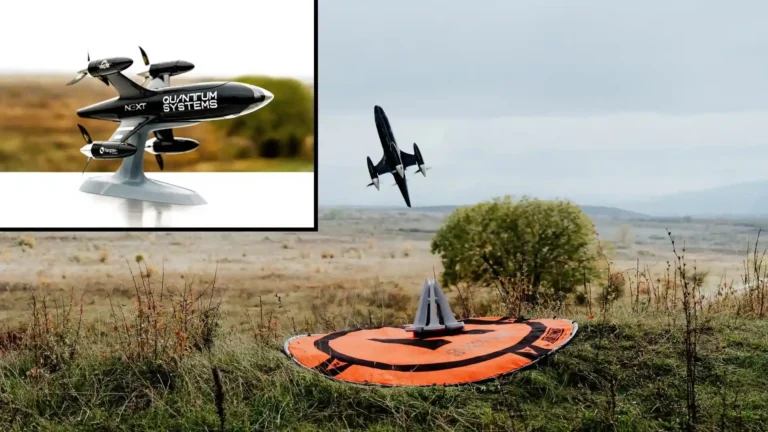
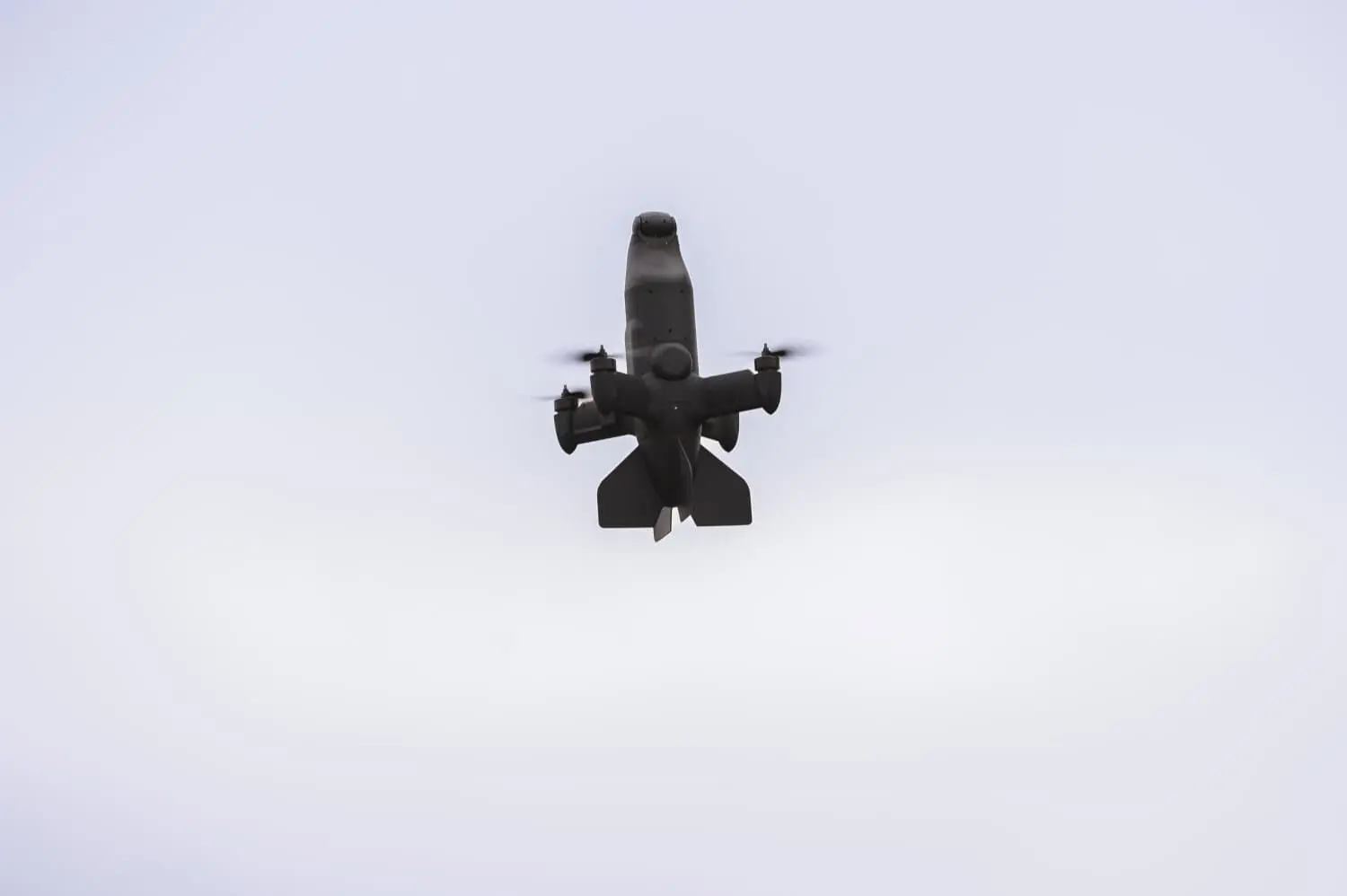
The NBS did not name the interceptor it launched on November 27. The only interceptor type the NBS has publicly named in an incident is BLAZE, built in Riga by Origin Robotics. BLAZE is a man-portable, briefcase-sized autonomous interceptor that combines computer vision with radar tracking to close on aerial targets. It carries a high-explosive fragmentation warhead in a STANAG-compliant module. Operators retain oversight until the final moment, and a wave-off function lets the drone return or self-destruct. The recovery reported on November 27 matches that profile, but the type remains unconfirmed.
Latvia secured BLAZE through a multi-year framework agreement signed in December 2025. The Cabinet of Ministers approved the first contract under it on April 21, 2026, financed through the European Union’s Security Action for Europe (SAFE) instrument; neither the value nor the quantity was disclosed. Estonia and Belgium also began receiving BLAZE in early 2026.
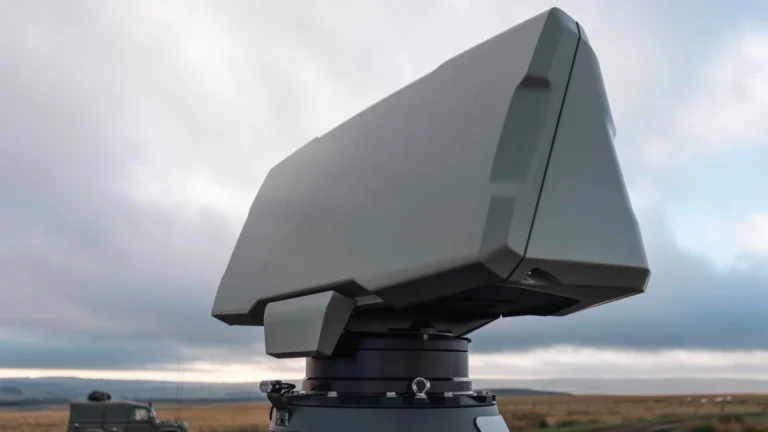
The fighter layer comes from the allied detachments at Šiauliai Air Base in Lithuania and Ämari Air Base in Estonia. Flown as Baltic Air Policing since 2004, the mission was redesignated the NATO Baltic air defence mission on August 1, 2026, following a decision at the Ankara summit. Italian Eurofighter Typhoons at Šiauliai and Turkish F-16s at Ämari took over at the end of July; the NBS did not say which aircraft responded. The NBS has also reinforced ground-based air defense on the eastern border with additional units.
Analysis: The November 27 response illustrates the cost-graded engagement chain Latvia is building against short, border-clipping incursions. A recoverable interceptor drone gives the NBS a first response that does not commit a fighter-launched missile to a low-cost target. The constraint is geography: tracks that spend minutes inside Latvian airspace near the Russian border leave a narrow engagement window, as the November 1 self-destruct showed. Attribution adds a second problem. Both Russian Geran-type drones and long-range drones diverted by Russian electronic warfare are transiting this corridor, so the NBS must treat every track as hostile until identified.
The NBS warned that similar incidents may recur while Russia’s war against Ukraine continues, and urged residents to follow official information and cell broadcast instructions. Indicators to watch include whether the NBS identifies the November 27 drone, as it did two days after the November 1 incident, further BLAZE call-offs, and the allied fighter rotation changeover due at the end of November.