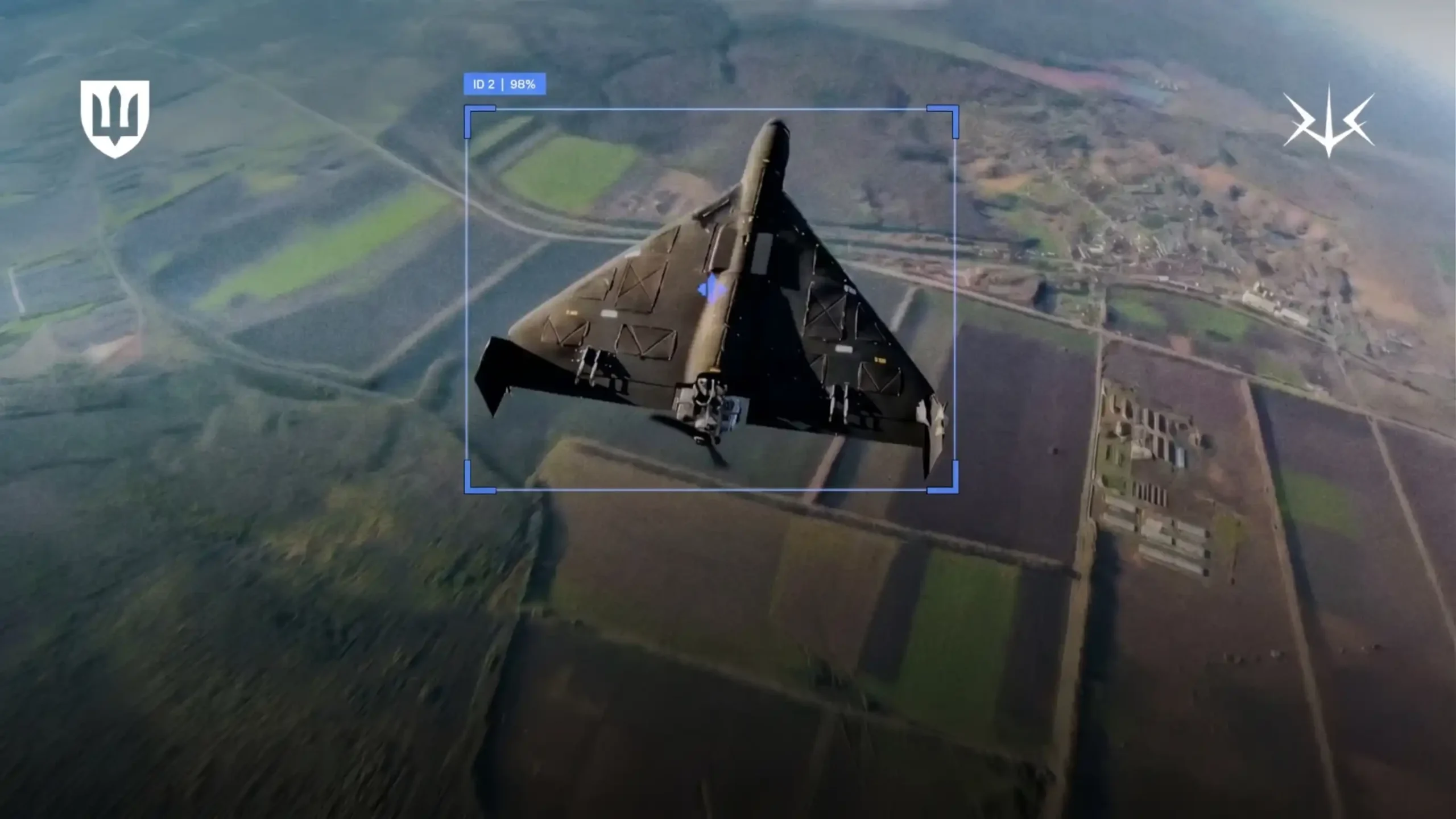
Ukraine’s Ministry of Defence will combine its Brave1 Dataroom and Avengers Labs platforms into a single environment for developing military artificial intelligence (AI), with the stated priority of improving the automatic detection and interception of Shahed-type drones. The ministry announced the merger on November 26, 2026, without publishing an integration timeline or details on how the combined platform will be governed.
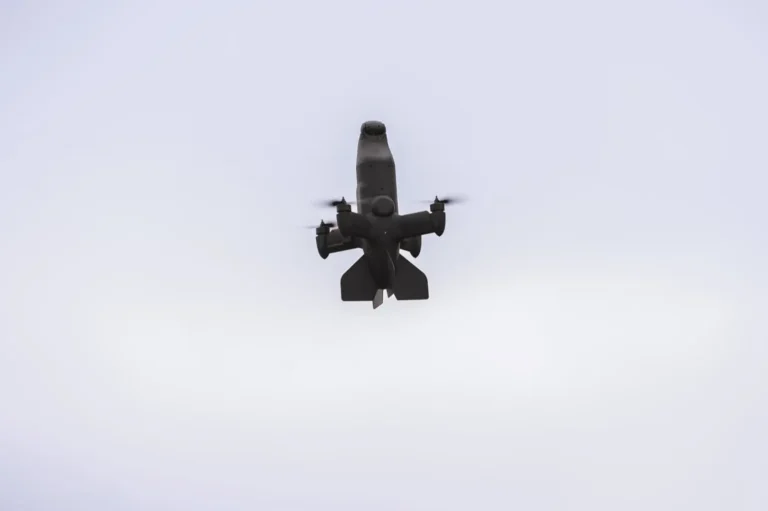
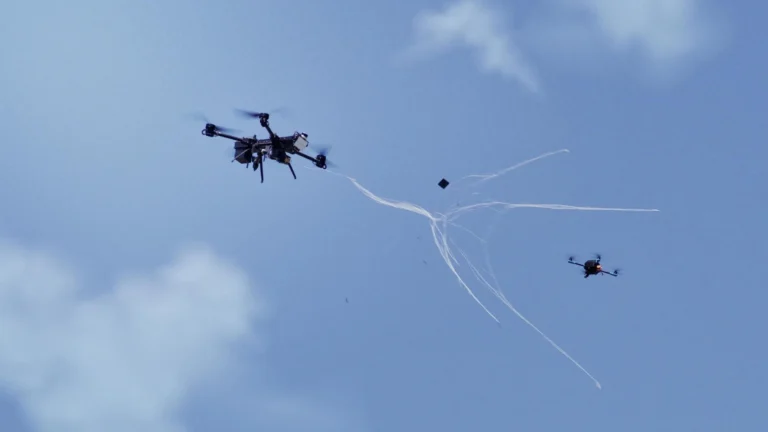
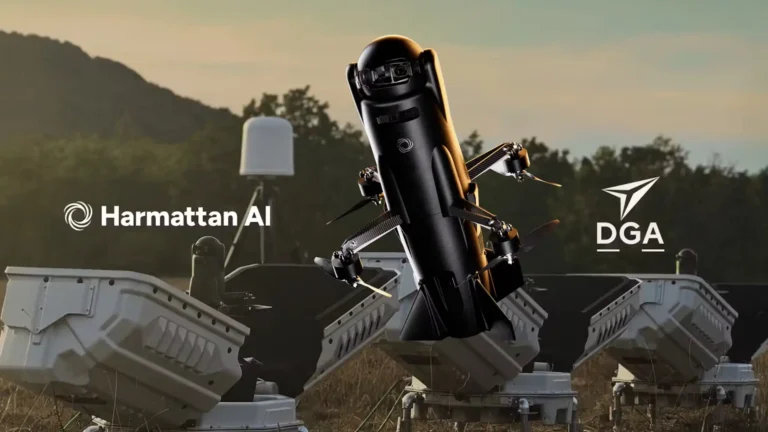
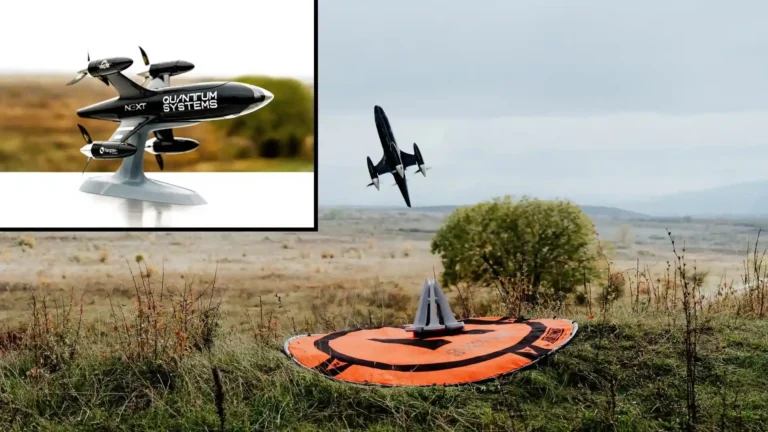
The move targets Ukraine’s most persistent air defense problem. Russia continues to launch Shahed-type one-way attack drones in nightly salvos that regularly exceed 100 airframes; on November 15, 2026, Ukraine’s Air Force reported 132 attack drones, 78 of them jet-powered, alongside Gerbera drones and Parodiya decoys. Interceptor drones have become a central layer of Ukraine’s counter-unmanned aircraft systems (C-UAS) architecture, and their effectiveness depends increasingly on onboard computer vision that can find, classify, and track a target with minimal operator input. Both platforms were built to feed that capability with combat data.
Brave1 Dataroom and Avengers Labs: 1,000 Models, 5 Million Frames
Brave1 Dataroom launched in January 2026 as a secure environment built on software from U.S. firm Palantir Technologies. It was designed around air threats from the outset, holding structured visual and thermal datasets of aerial targets, including Shahed-type unmanned aerial vehicles (UAVs), so that developers could train and validate models from detection and classification through to autonomous interception algorithms. According to the ministry, more than 130 companies have now joined the Dataroom and produced over 1,000 models for intercepting air targets, up from just over 100 companies reported in June 2026. At that point, the ministry said one participant had developed technology capable of automating 95 percent of the interception process.
Avengers Labs takes a broader approach. Developed by the ministry’s Center for Innovation and Development of Defence Technologies, the same organization behind the DELTA combat digital ecosystem, it trains AI models for unmanned systems on real battlefield data. Its core is an annotated dataset of more than 5 million frames, drawn largely from DELTA and covering tanks, artillery, air defense systems, infantry, and aerial targets including Shahed-type drones and reconnaissance UAVs. More than 30 Ukrainian companies were training models on the platform as of September 2026, with three resulting products in combat use. Participation criteria are set out in Cabinet of Ministers Resolution No. 310, adopted in March 2026.
Merging the two gives developers a single pool of labeled imagery and validation tools. For Shahed interception, the value lies in variety: the ministry stresses that training on real-world data adapts models to actual combat conditions. That matters as the threat shifts. Publicly available estimates put the piston-engined Geran-2 at roughly 185 km/h and its jet-powered successors at 300 km/h or more, a change in target profile that models trained on older footage may not handle without fresh data.
Allied Access: How the UK and Denmark Use Ukrainian Combat Data
The ministry said the merger will also create opportunities to involve international partners under existing and future intergovernmental agreements. The United Kingdom became the first foreign partner of Avengers Labs after a bilateral AI partnership signed on August 24, 2026, with up to 12 British defense companies to be selected through a UK competition. Denmark followed on November 18, 2026, when Ukrainian Defence Minister Evgeniy Khmara and Danish counterpart Jeppe Bruus signed a letter of intent on AI and data cooperation, alongside a separate agreement giving the Danish Defence AI Centre access to the platform.
The access model is the defining feature. Partners can train, fine-tune, and test their own models on Ukrainian combat data inside the secure environment, but they cannot export the data. Under the UK arrangement, access begins only after Ukraine completes export control procedures. The battlefield data itself, drawn mostly from DELTA, is anonymized and time-delayed so that it poses no risk to troops in combat. Kyiv thus trades access to its combat data for foreign AI expertise and industrial cooperation without surrendering custody of the dataset itself.
The ministry has not said whether foreign partners will gain access to Brave1 Dataroom holdings once the platforms are combined, nor whether the merged environment will continue to run on Palantir software.
Analysis: Ukraine is treating labeled combat data as a strategic asset on par with hardware. A library of more than 1,000 interception models and 5 million annotated frames is something no NATO military can generate outside an active war, and the controlled-access model converts it into diplomatic and industrial leverage. For allies confronting their own drone incursion problem, as Denmark did with drone sightings over its airports in September 2025, the platform offers a faster path to C-UAS algorithms validated against real threats. The technical challenge is consolidation: two datasets built by different teams, with different sensors and labeling conventions, must be harmonized before the combined pool improves model quality rather than diluting it.
Key unknowns include the integration timeline, which entity will operate the combined platform, and whether the Resolution No. 310 criteria will be extended to Dataroom participants. The ministry has said the combined platform could bring in further international partners under future intergovernmental agreements. The operational test will come this winter, as interceptor units show whether a growing model library translates into higher kill rates against Russia’s jet-powered Shahed salvos.