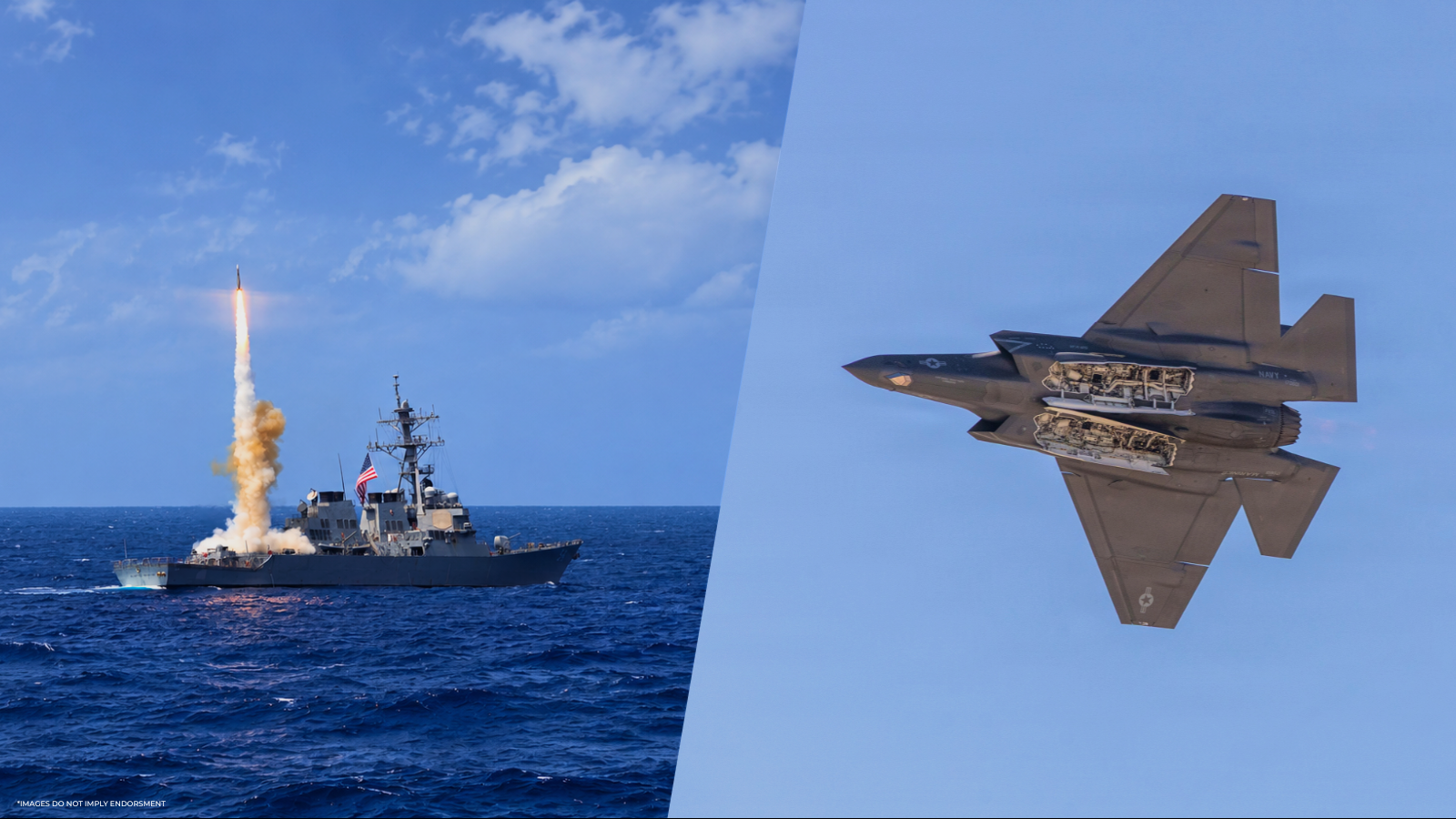
The U.S. Navy has awarded Ursa Major two contracts worth a combined $137 million to develop and qualify tactical solid rocket motors for the Compact Air-to-Air Missile (CAAM) and the Naval Modular Missile (NMM), the Colorado company announced on October 5, 2026. The larger award, $91 million, covers a 7-inch motor for CAAM; the second, $46 million, funds a 10-inch motor for the NMM Quad-Pack Medium-Range variant. Funding flows through the Office of the Under Secretary of War.
The awards target the propulsion bottleneck constraining U.S. munitions ramps since 2022. Tactical solid rocket motor (SRM) production has long rested on Northrop Grumman and L3Harris, owner of Aerojet Rocketdyne since 2023, and the Pentagon has funded entrants such as Ursa Major, X-Bow Systems, and Anduril to widen that base. Jason Meredith, president of Solid Missile Systems at Ursa Major, put it plainly: “Production is the bottleneck in missile programs right now.” Both motors will be built with the company’s additive-heavy Lynx manufacturing approach, using the methods planned for full-rate production.
7-Inch CAAM Solid Rocket Motor Built for Internal Carriage
The Navy first showed CAAM publicly on August 22, 2026, at the Tailhook Association Symposium, describing it as a future inner boundary weapon for short-range engagements. The missile is sized for internal carriage on stealth fighters such as the F-35C Lightning II and on future carrier-based uncrewed combat aircraft, where bay volume, not pylon count, caps the shots a jet carries into contested airspace. Its requirements are still being evaluated by the Chief of Naval Operations’ air warfare division. No prime contractor, seeker type, or range figure has been disclosed.
Ursa Major is designing a 7-inch (178 mm) motor using Highly Loaded Grain (HLG), a propellant geometry that fills more of the case volume with energetic material than conventional grain designs, raising total impulse within a fixed envelope. Publicly available specifications indicate that 7 inches matches the body diameter of the AIM-120 AMRAAM, while the AIM-9X Sidewinder, the Navy’s current short-range missile, measures 5 inches (127 mm). That diameter suggests, though the Navy has released no dimensions, that CAAM’s compactness will come chiefly from length, with HLG recovering energy lost to a shorter propellant column.
The motor matches a line of work the Naval Air Warfare Center Weapons Division (NAWCWD) at China Lake has pursued for years: high total impulse, energy-tailorable solid propulsion for compact weapons, with CAAM named in its solicitations. The operational payoff is magazine depth. The F-35C typically carries four AIM-120s internally; the Navy has said CAAM aims to raise internal missile loads without compromising signature. CAAM also overlaps with a separate effort: the Navy requested $83.3 million in fiscal 2027 for an AIM-9X Compact Variant optimized for internal carriage. Their relationship remains unconfirmed.
NMM Quad-Pack Motor and the Standard Missile Replacement Roadmap
The $46 million award funds a 10-inch (254 mm) motor for the NMM Quad-Pack Medium-Range (QP-MR) configuration, designed for high annual production volumes and compatibility with existing Navy shipboard launch systems. Quad-packing places four rounds in a single Mk 41 Vertical Launching System (VLS) cell, the arrangement the fleet already uses for the RIM-162 Evolved Sea Sparrow Missile (ESSM), which publicly available specifications put at the same 10-inch diameter.
NMM is the Navy’s planned successor to the Standard Missile family. Every variant is built around a common 10-inch Terminal Stage Interceptor (TSI) divided into five modules: seeker assembly, lethality, command, terminal-stage rocket motor, and control actuation. Different booster stacks and canisters then yield a single-cell hypersonic Long-Range variant on a 21-inch motor, dual-packed Extended-Range and quad-packed Medium-Range rounds for Mk 41, and an Extended-Range submarine-launched version for the Virginia Payload Module. The Navy’s stated objective is 1,000 interceptors per year within five years of contract award, and solicitation documents point to initial fielding in early fiscal 2031.
Ursa Major brings directly relevant hardware to the 10-inch class. In February 2026, it completed a $25 million cost-share SRM Manufacturing Pathfinder Program with the Navy and the Office of Strategic Capital, designing, building, and static-firing a 10-inch HLG motor with a proprietary propellant alongside NAWCWD China Lake and the Naval Surface Warfare Center Indian Head Division. In July 2026, the Navy added $10 million to take the company’s MK 104 dual-thrust rocket motor design, which powers the Standard Missile family, through critical design review and static fire testing.
Analysis: The structure of these awards matters more than their size. The Navy is buying qualified propulsion before either missile has a publicly announced prime contractor, treating the motor as the long-lead item, not a late subcontract. For NMM, a 1,000-per-year objective is out of reach without a motor base that extends beyond the two incumbents, and a second qualified 10-inch source would give the Navy leverage on cost and schedule. The risk sits in qualification: HLG designs and new propellants must clear Navy safety and insensitive munitions requirements for shipboard stowage, and reliability at rate, not at prototype quantities, is where this bet will be judged.
Ursa Major said next steps on both programs are design, testing, and qualification; it has not disclosed contract vehicles, periods of performance, motor quantities, or qualification dates. Watch for the Navy’s CAAM requirements decision, TSI prototype selections under NMM, MK 104 static fire results, and the closing of Ursa Major’s planned merger with Bleichroeder Acquisition Corp. III, announced on August 25, 2026, at a post-transaction equity value of about $2.3 billion.