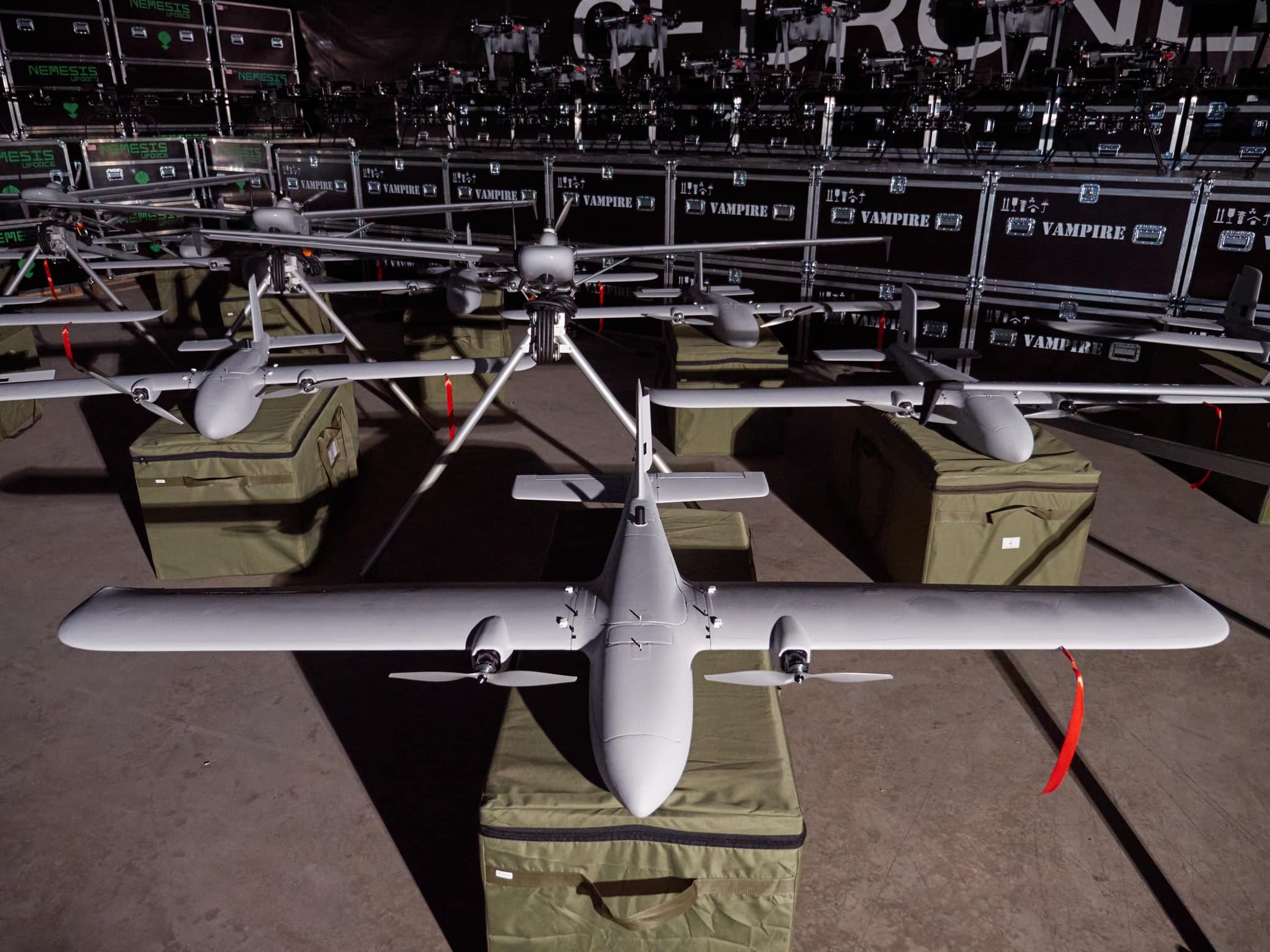
The European Commission disbursed €1.24 billion to Ukraine on October 7, 2026, under the defense component of the €90 billion Ukraine Support Loan, directing the money to drones, drone interceptors, drone ammunition and missiles manufactured by Ukrainian entities. It is the fifth payment drawn from the loan’s defense window since June 30, 2026.
The tranche lands as Russia keeps up long-range drone and missile strikes that Commission President Ursula von der Leyen described as a deliberate campaign to make daily life unbearable for Ukrainians. The loan rests on Regulation (EU) 2026/467, adopted on February 24, 2026, which splits the envelope into an indicative €60 billion for defense and €30 billion for budget support across 2026 and 2027. A Council implementing decision adopted on April 23, 2026, set the 2026 allocation at up to €45 billion, including €28.3 billion for Ukraine’s defense industrial capacity.
Ukraine Support Loan Defense Window: Five Payments Since June
The October 7 transfer extends a schedule that opened on June 30 with €3.9 billion, the first payment under an initial tranche of roughly €6 billion for drone procurement. A €1.1 billion payment followed on July 15. On July 30, the Commission paid €3.47 billion covering additional drones, including long-range jet-powered models, missiles, air defense systems and Saab Gripen fighters. The fourth payment, €3.3 billion for drones and missiles, came on September 18, a week after the Commission approved €6.1 billion for air and missile defense needs that include PAC-3 interceptors for Patriot systems.
The five payments total about €13 billion. By the Commission’s own accounting, €15.4 billion of the 2026 defense allocation remains to be disbursed, alongside €12.7 billion in budget support under the loan and €4.4 billion left under the earlier Ukraine Facility, for €32.5 billion in total EU financing still open to Kyiv this year. Budget support stays conditional on the reforms set out in the Ukraine Plan and the accompanying Memorandum of Understanding.
Andrius Kubilius, the EU’s commissioner for defense and space, said every euro of the latest payment would be converted into drones, interceptors and missiles, and argued that five payments show the instrument doing what it was built to do.
Henna Virkkunen, the Commission’s executive vice-president for tech sovereignty, security and democracy, said the investment in new drones and interceptors would help Ukraine protect its sky and its citizens from Russia’s continuing aggression.
Drone Interceptors and Missiles: Ukraine’s Domestic Production Base
The Commission did not name the manufacturers, systems or quantities covered, nor how the €1.24 billion splits across the four product categories. The operational demand behind them is public. Interceptor drones now form a central layer of Ukraine’s defense against Russia’s Geran-series one-way attack drones, locally built derivatives of Iranian Shahed designs. Ukraine’s Ministry of Defense recorded 8,150 Shahed, Gerbera, Italmas and other drone launches in May 2026 and reported 7,476 intercepted by all means, a 91.73% rate. Defense ministry adviser Hanna Hvozdiar said in April that Ukrainian interceptor drones cost up to $3,000 on average, against up to $50,000 for a Shahed and $20,000 to $30,000 for a low-cost surface-to-air missile.
Russia has responded by fielding jet-powered Geran-3, Geran-4 and Geran-5 variants whose speed challenges slower propeller-driven interceptors. In August 2026, Ukraine’s Ministry of Defense added the Alexa Spatium, described as the country’s first domestically developed jet-powered drone interceptor, to the Defense Forces’ inventory. The ministry lists a turbojet engine, a footprint of roughly 1.5 by 1.7 meters, catapult launch, television and infrared targeting, interchangeable fragmentation, shaped-charge or thermobaric warheads, and recovery for reuse if no target is engaged.
Ukraine’s missile output is growing from a low base. President Volodymyr Zelensky announced the first combat use of Fire Point’s FP-7 tactical ballistic missile on October 1, 2026; the manufacturer claims a range of up to 250 kilometers and a warhead of about 200 kilograms. Whether any of the October 7 funding reaches the FP-7 or other missile programs has not been disclosed.
Component Derogations and Integration Into Europe’s Defense Industrial Base
Under Regulation (EU) 2026/467, defense products financed by the loan must in principle come from companies in the EU, Ukraine or the EEA-EFTA states of Iceland, Liechtenstein and Norway, with targeted derogations when an urgently needed product is unavailable from that pool. The first defense product schedule, focused on drones, used that mechanism immediately: on April 1, 2026, the Commission validated Ukraine’s request to buy drones in which more than 35% of the value comes from components originating outside the EU, EEA-EFTA states and Ukraine. The Commission checks the contracts Ukraine submits in support of each payment request.
The financing structure is also atypical. The loan is funded through EU market borrowing under enhanced cooperation among 24 member states, with Czechia, Hungary and Slovakia carrying no financial obligations. Ukraine repays the principal only once Russia pays war reparations, and Russian central bank assets stay immobilized until then. Since 2022, the EU and its member states have provided €228.7 billion in overall support to Ukraine, including €3.8 billion from the proceeds of immobilized Russian assets.
Analysis: The €1.24 billion payment is small next to the €3 billion-plus tranches of June, July and September, but it exposes the pacing problem Brussels now faces. The Commission has paid about €13 billion in defense funds in just over three months, roughly €4 billion a month. Clearing the remaining €15.4 billion by December 31 requires about €5.5 billion a month, which puts pressure on contract verification and on the derogation regime. Each exemption that keeps Ukrainian drone lines supplied with non-European components cuts against the loan’s goal of anchoring Ukrainian production inside Europe’s supply chain. France has reportedly pressed to limit how long such exemptions last, while defense ministers from nine member states urged pragmatic use of the derogation in a July letter.
The Commission says further 2026 defense disbursements will follow in the coming weeks. It has not said which approved product schedules the October 7 payment draws on, and the remaining half of the €90 billion loan is earmarked for 2027. The recipient companies, quantities and product mix behind each tranche remain undisclosed.