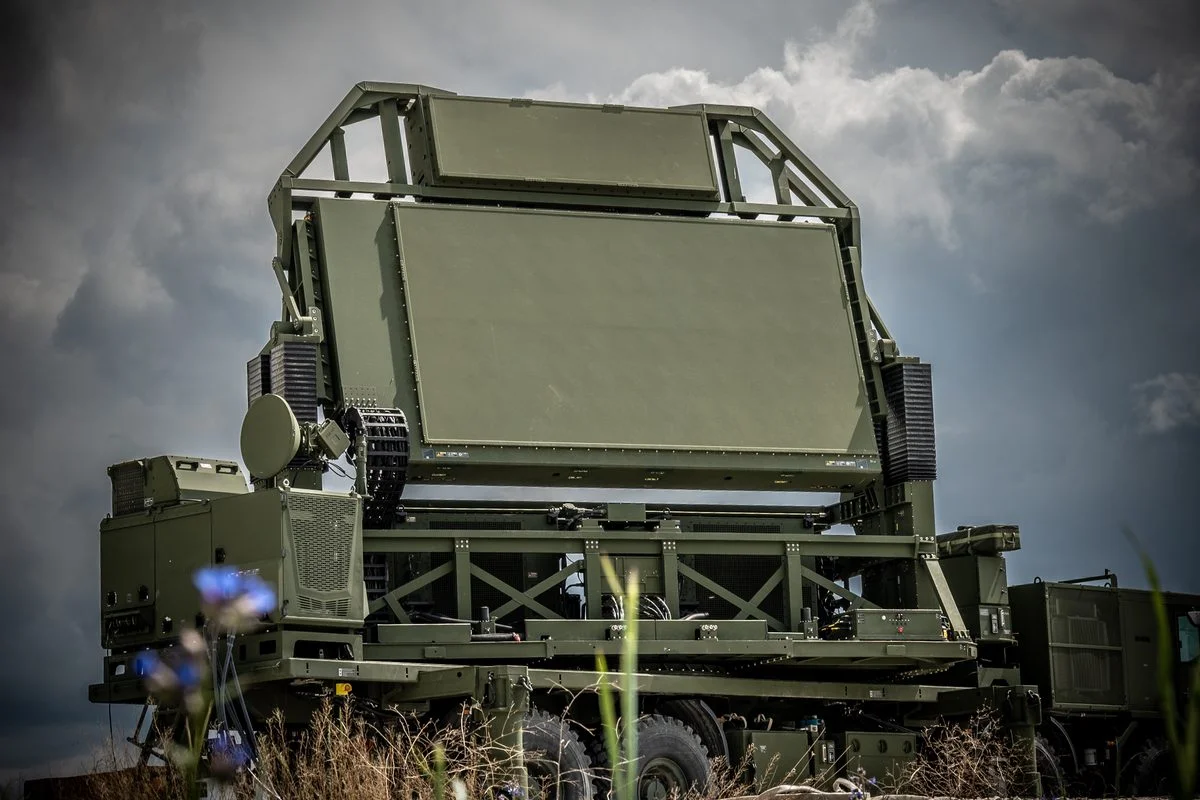
ASELSAN has signed a $195 million contract with Türkiye’s Secretariat of Defence Industries (SSB) for the procurement of radar systems, the company disclosed to the Public Disclosure Platform (KAP) on October 7, 2026. The filing does not identify the radar types, quantities, end user or delivery schedule.
The award caps a week in which ASELSAN booked nearly €3.47 billion in domestic air defense work. On October 1, the company disclosed €1.0085 billion in additional contracts covering ongoing serial production of long-range air defense systems; on October 5, it signed €2.46 billion in contracts for hybrid air defense systems. Both categories map onto layers of Steel Dome (Çelik Kubbe), the integrated air and missile defense architecture approved by Türkiye’s Defence Industry Executive Committee on August 6, 2024, for which ASELSAN serves as lead contractor.
ASELSAN Radar Contract Terms and the Steel Dome Order Wave
The disclosure is unusually sparse. It lists October 7, 2026, as the start date of the business relationship, leaves the field for significant contract terms blank, and states only that the award will have a positive impact on revenue. It also restates SSB’s weight in ASELSAN’s books: the agency accounts for 30.6% of net sales in the company’s latest disclosed income statement and 37.8% of trade receivables.
The wording matters. The filing refers to “Radar Systems,” not “Air Defense Radar Systems,” the label ASELSAN used on December 27, 2024, when it disclosed a contract worth $170,970,527 plus TRY 1,954,398,891 with deliveries running from 2026 to 2031. Earlier radar notices also carried delivery windows: a $107.48 million next-generation radar award in March 2025 runs from 2026 to 2030, and $271.45 million in radar and public security communications contracts signed in June 2026 run to 2033. This filing carries none, so it cannot be established whether the order extends an existing program or opens a new one.
Steel Dome remains the most probable destination, though neither ASELSAN nor SSB has confirmed it. The architecture is sensor-heavy by design. ASELSAN officials have described a battalion template built around one large surveillance radar and one command-and-control station controlling three fire units, with each fire unit running a fire-control radar for three launchers. The network is managed through the HAKİM airspace command-and-control system and linked over T-Link, a tactical datalink built for Turkish air defense. Every new battery SSB orders therefore generates a matching sensor requirement.
ALP 300-G and ALP 100-G: The Likely Sensor Candidates
ASELSAN’s ALP-G radar family forms Steel Dome’s sensor backbone and was part of the first 47-element, $460 million tranche delivered to the Turkish Armed Forces on August 27, 2025. Two members are the most plausible candidates for a contract of this size.
The ALP 300-G, formerly designated ERALP, is a transportable S-band early warning radar built on an active electronically scanned array (AESA) antenna with digital beamforming and gallium nitride (GaN) transmit/receive modules. According to SSB President Haluk Görgün, the array carries more than 4,000 transmit/receive modules and the system deploys in 30 minutes. The antenna rides on an 8×8 tactical truck and integrates a Mode 5 identification friend or foe (IFF) interrogator. ASELSAN markets it against air-breathing targets, ballistic missiles, anti-radiation missiles and low-observable aircraft, with connectivity to NATO air command-and-control systems. The first unit was delivered on May 20, 2024. ASELSAN has not published an instrumented range; Turkish open-source estimates place detection beyond 470 km, a figure that remains unconfirmed. The operational value lies in the multi-beam architecture: a single radar can maintain wide-area surveillance while holding ballistic tracks, cueing SİPER long-range interceptors without a dedicated second sensor. That places it in the same functional class as Israel’s S-band ELM-2084 multi-mission radar.
The ALP 100-G is the low-altitude gap-filler. Mounted on an 8×8 tactical vehicle, it entered Turkish service with a first delivery on April 8, 2025, and Turkish sources credit it with a range exceeding 100 nautical miles. It also offers a weapon-locating mode that plots the launch and impact points of hostile artillery and rockets. That dual role matters for Steel Dome’s lower tier, where terrain-masked approaches by cruise missiles and drones defeat long-range sensors sited for wide-area coverage. Fire-control radars for new HİSAR or hybrid gun-missile batteries are a third possibility. Undisclosed unit pricing prevents converting the $195 million into quantities.
Analysis: The dollar value is modest beside the euro-denominated effector awards, but sensors pace Steel Dome’s expansion. A battalion template that ties three fire units to a single surveillance radar and command node means interceptor orders without matching radar orders yield batteries that cannot fight as a networked unit. A radar award two days after the €2.46 billion hybrid air defense contract fits that sequencing. For NATO, a domestic S-band sensor layer with Mode 5 IFF and alliance command-and-control connectivity gives Ankara a route to feed the allied air picture from Turkish-built radars rather than legacy US-origin sets such as the AN/FPS-117.
ASELSAN’s recent air defense filings have not named systems, and the August 2025 Steel Dome tranche was itemized only at its delivery ceremony, so the radar types may not surface until hardware is handed over. The next data point is ASELSAN’s third-quarter 2026 results, which will show this week’s orders against the $23.2 billion backlog reported at the end of June. Further out, the planned ALP 500-G and ALP 600-G long-range variants, along with a UHF anti-stealth radar in development, would shape the next radar procurement cycle.