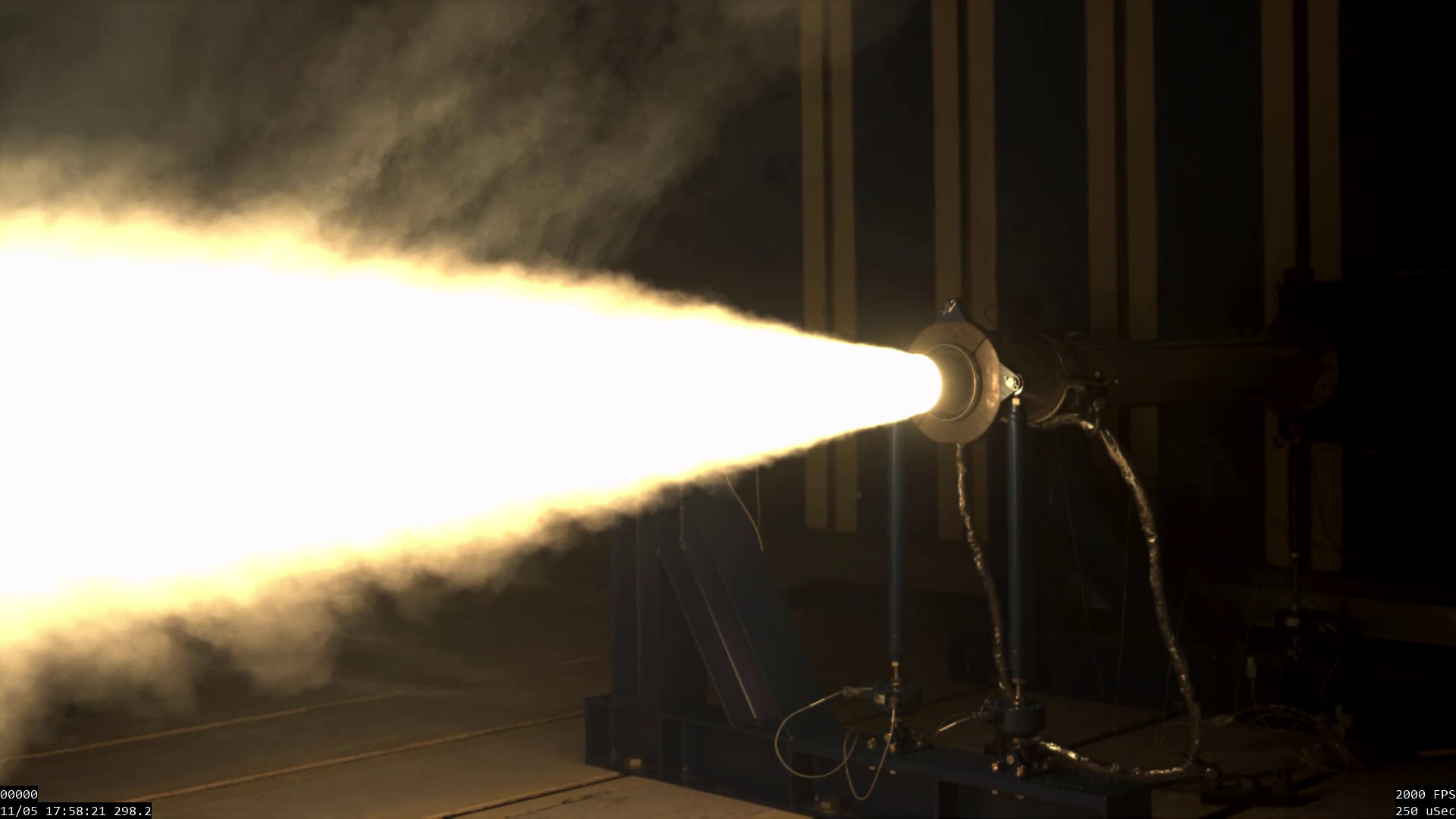
X-Bow Systems has won a prototype agreement worth up to $69.7 million to develop and qualify a solid rocket motor (SRM) booster for a next-generation U.S. Navy interceptor, the Albuquerque, New Mexico-based company announced on October 7, 2026. The agreement also funds rate tooling for a production line in Luling, Texas, sized for up to 500 motors per year.
The award comes as the Navy moves to replace single-purpose interceptors with a common, modular architecture and as the Pentagon tries to widen a propulsion base long dominated by Northrop Grumman and L3Harris’ Aerojet Rocketdyne. X-Bow says the contract is its sixth new propulsion program of 2026, across the Navy, the Army, and the Missile Defense Agency (MDA). It did not name the weapon the booster will power.
Inside the $69.7M Navy Interceptor Booster Agreement
U.S. Army Contracting Command at Rock Island Arsenal, Illinois, administers the agreement. Its $69.7 million potential value splits into a $50.4 million Phase 1 development effort and a $19.3 million Phase 2 qualification option. The government obligated $50 million at award to fund the 12-month Phase 1 incrementally, putting the end of development around October 2027 if the schedule holds.
Phase 1 pays for design and development. Qualification, where a motor must demonstrate repeatable performance across temperature extremes, environmental stress, and safety testing before entering a weapon’s production baseline, sits in an unexercised option. The Navy has committed to a booster design effort, not yet to a qualified supplier.
X-Bow will execute the work across facilities in California, New Mexico, and Texas, using what it calls Modular Motor Architecture. The rate tooling goes to Luling, where the company installed a full production version of its additive propellant manufacturing system in November 2025 and earned certification for full production operations in May 2026 through the Air Force Research Laboratory (AFRL) Rapid Energetics and Advanced Rocket Manufacturing (RE-ARM) program.
Key parameters remain undisclosed: the booster’s diameter, length, propellant formulation, total impulse, and target variant, which will determine whether the motor serves a single-cell round or a multi-packed one.
How the Naval Modular Missile Architecture Shapes Booster Demand
X-Bow’s program description, a common architecture replacing single-purpose interceptors with variants that pack more rounds into each launch system, closely tracks the Navy’s Naval Modular Missile (NMM) effort. Navy solicitation documents set the same early fiscal year (FY) 2031 initial capability target for NMM, with full capability two years later. Neither X-Bow nor the Navy has publicly tied this award to NMM.
NMM centers on a common Terminal Stage Interceptor (TSI), a 10-inch-diameter round built from five modules: seeker assembly, lethality, command, terminal-stage rocket motor, and control actuation. Different booster stacks and canisters would turn that TSI into at least four all-up rounds. A Long-Range variant loads one per cell in the Mk 41 Vertical Launching System (VLS) and leverages Navy investment in a 21-inch rocket motor, the diameter of the SM-3 Block IIA. Dual-packed Extended-Range and quad-packed Medium-Range variants fit two and four rounds per Mk 41 cell. An ER-S variant would arm Virginia-class attack submarines fitted with the Virginia Payload Module (VPM), loading through a seven-cell Multiple All-Up-Round Canister.
The booster is where those variants diverge. Because every round shares one terminal stage, propulsion sets range, packing density, and launch platform, making booster output the main production lever for magazine depth. The Evolved Sea Sparrow Missile (ESSM) is the only Navy surface-to-air interceptor that can be multi-packed in a Mk 41 cell; SM-2, SM-3, and SM-6 load one per cell.
Scale drives the rest. Navy solicitation documents target 1,000 interceptors per year within five years of contract award, and the Navy requested $311 million for NMM as an FY2027 new start.
How X-Bow Is Building a Third Solid Rocket Motor Source
X-Bow’s pitch rests on Advanced Manufacturing of Solid Propellant (AMSP), which builds propellant grains under digital control rather than through conventional batch casting. Luling hosts a fixed industrial line and a containerized Rocket Factory in a Box unit.
The Navy is not a new customer. In June 2024, it awarded X-Bow development agreements for new Mk 72 booster and Mk 104 dual-thrust rocket motor designs, the first- and second-stage propulsion of the Standard Missile family; X-Bow has not announced qualification of either. The Air Force Test Center followed in September 2025 with a $191.3 million firm-fixed-price contract for advanced integrated motor manufacturing running through April 30, 2029. On July 2, 2026, MDA awarded $10.98 million to develop a high-performance SRM, citing the need to broaden the motor industrial base.
X-Bow also says it recently completed its first major production contract, delivering more than 2,100 combat-ready rocket motors, without identifying the program. Its most visible 2026 production work involved rocket-assisted takeoff motors for AEVEX’s Disruptor drone, which differ sharply from an interceptor booster in size, propellant mass, and qualification burden. Founder and chief executive Jason Hundley said the award shows the Pentagon is investing in advanced manufacturing to clear a solid rocket motor production bottleneck he described as decades old.
Analysis: The award fits a Navy acquisition logic that treats propulsion as a separately competed module rather than a subsystem buried inside a prime contractor’s missile. If booster stacks are interchangeable beneath a common TSI, the Navy can qualify several motor suppliers, compete them on cost and rate, and reduce the supplier concentration that has constrained interceptor replenishment. A 500-motor annual line against a 1,000-interceptor annual target implies either a single-variant role for X-Bow or a deliberate split with other suppliers. Until the Navy funds qualification, X-Bow holds a development position, not a production one.
Phase 1 runs to roughly October 2027, when the Navy decides whether to exercise the $19.3 million qualification option. If the booster supports NMM, the TSI prototype selection, FY2027 appropriations, and any parallel booster awards to other motor makers will show where X-Bow’s design fits. With early FY2031 beginning in October 2030, the program has about four years to develop, qualify, and integrate a booster on a new interceptor.