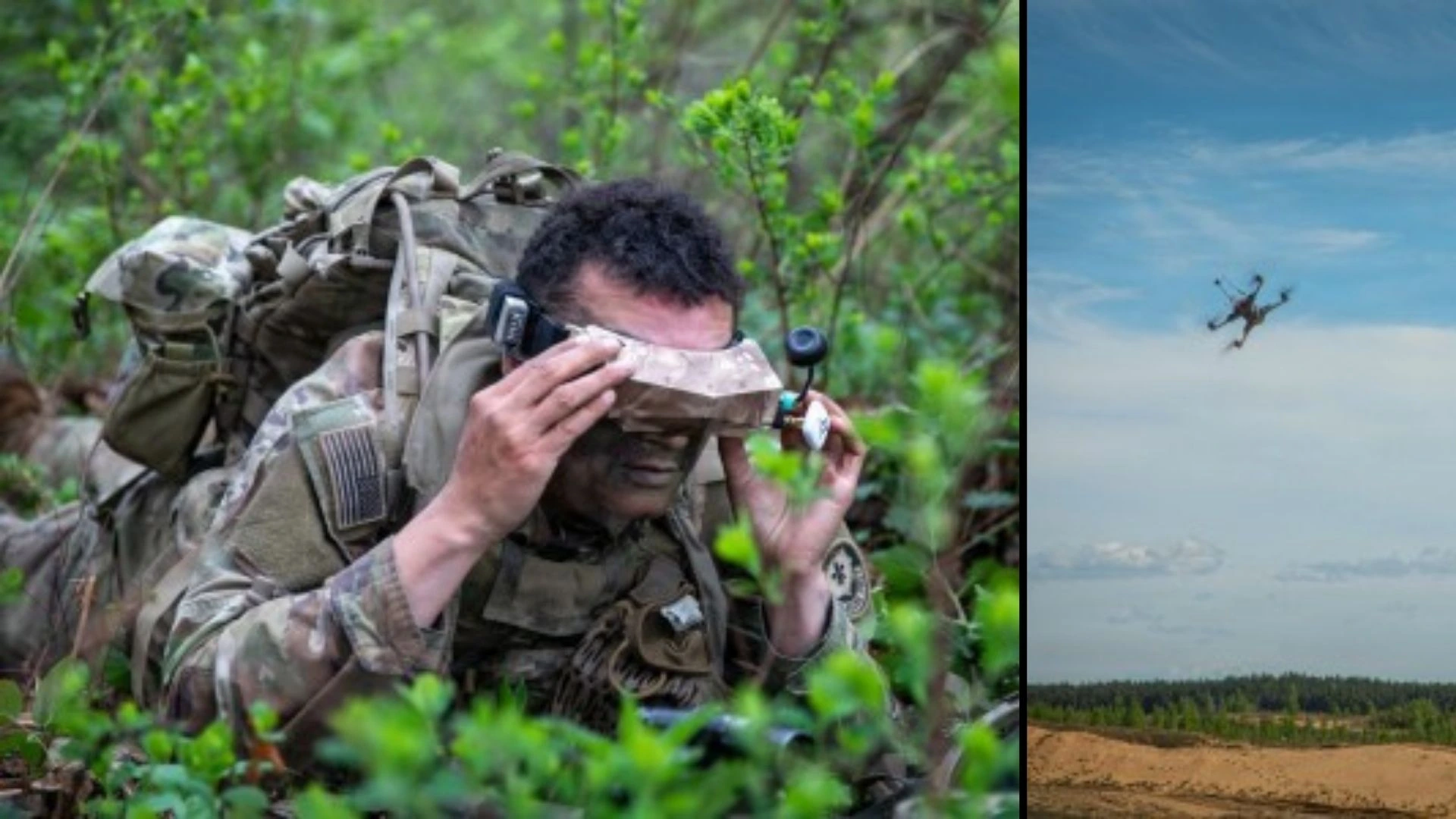
The U.S. Army’s 2d Cavalry Regiment (2CR) will move Project Flytrap from small-unit field trials to a battalion-level operational capability in fiscal 2027, fielding a full counter-unmanned aircraft systems (C-UAS) and electronic warfare (EW) equipment set to at least one maneuver squadron, according to an Army release dated October 13, 2026. The Phase II effort is designed to give the Stryker regiment a validated method for breaking through drone-saturated defenses on NATO’s Eastern Flank, with a squadron-level breach scheduled for spring 2027.
Project Flytrap, led by 2CR alongside British military partners, differs from other joint strategic initiatives in one respect: it targets brigade- and battalion-level maneuver units. The goal is to let frontline combat elements conduct offensive maneuver inside heavily jammed and persistently surveilled battlespace. The program draws on two years of tactical evaluations informed by combat data from Ukraine and from U.S. Central Command’s area of responsibility.
Project Flytrap Trials From Hohenfels to the Baltic Flank
Project Flytrap began in June 2025 during platoon situational training exercises at the Joint Multinational Readiness Center in Hohenfels, Germany. Planners concluded that small unmanned aircraft systems (sUAS) cannot be defeated with single-weapon solutions. They settled on an automated, layered defense, to prevent tactical leaders from suffering cognitive overload under continuous aerial surveillance. That design choice matters: a platoon leader who must personally detect, classify, and engage every drone stops maneuvering.
Force-on-force engagements in Poland in August 2025 tested the concept under live conditions. Troops defeated commercial and military-grade small drones primarily with dedicated EW systems, while shotguns and 5.56 mm rifles fitted with Smartshooter fire-control optics served as last-resort kinetic tools at 50 to 150 meters. The short engagement band confirms the hierarchy: EW carries the defensive load, and kinetic fire handles leakers at close range. The trials also exposed acute difficulty deconflicting friendly radio frequencies in a congested electromagnetic spectrum.
The regiment expanded testing in May 2026 across training areas in Poland and Lithuania, including Pabradė Training Area, as part of a linked series running from April 27 to May 31, 2026, alongside Sword 26, Saber Strike, Immediate Response, and Swift Response. Over 90 hours of continuous live-fire and force-on-force maneuver, troops employed more than 50 counter-drone, unmanned aircraft, and unmanned ground vehicle (UGV) systems. The main friction point shifted from defeating targets to data integration. Commanders struggled to consolidate situational feeds into a single common operational picture (COP) across four separate battle management networks, what 2CR leaders call the “multi-COP swivel chair” problem. The Army has not identified those networks or the systems tested.
Phase II Squadron Fielding and the Adapted SOSRA Breach
Phase II targets those command gaps. Beginning in fall 2026, the regiment will run a command post exercise to deploy a unified network and field a complete “sense-decide-act” equipment set to at least one operational squadron, 2CR’s battalion equivalent. By winter 2027, troopers will move through C-UAS individual weapons training, progressing from single-operator tasks to platoon-level maneuver, as the regiment codifies individual and collective gunnery tables. 2CR plans to acquire squadron-level UGV sets and EW hardware through prize-challenge contracting mechanisms managed by the Assistant Secretary of the Army for Acquisition, Logistics and Technology (ASA(ALT)). Quantities and costs remain undisclosed.
Doctrinally, 2CR is adapting the Army’s obstacle breaching fundamentals, Suppress, Obscure, Secure, Reduce, and Assault (SOSRA), to defeat electronic and aerial reconnaissance screens:
- Suppress: sUAS conduct organic EW jamming and strikes against enemy observer nodes, supported by one-way attack (OWA) drones and mortar fires.
- Obscure: Electromagnetic signature management, multispectral camouflage, and decoy emitters deny targeting data.
- Secure: Dismounted C-UAS platforms establish a localized air superiority umbrella at the point of penetration.
- Reduce: UGVs and kinetic sUAS destroy command and control nodes and drone ground control stations, opening a non-transparent corridor.
- Assault: Mounted and dismounted formations flow through the EW and spectral breach corridor to regain offensive maneuver.
The Reduce step treats enemy drone ground control stations as obstacles to destroy, targeting the operators and links that generate battlefield transparency rather than the aircraft alone.
Analysis: Flytrap’s most consequential finding is not kinetic. Once EW and close-in fires proved able to defeat small drones, the limiting factor became the commander’s ability to see one coherent picture, an integration and software problem. By forcing several tactical software suites into a single interface and buying minimum viable hardware through prize challenges, 2CR is building soldier proficiency ahead of formal equipment authorizations. Col. Timothy Price, the regiment’s commander, framed it directly: counter-UAS, he said, “cannot remain tied to static defense.” The approach carries risk, from sustaining non-program-of-record kit to spectrum deconfliction at squadron scale, but it gives the Army a forward-stationed formation generating repetitions on terrain where the threat would actually be met.
Three milestones now define the program: the fall 2026 command post exercise, winter 2027 counter-UAS weapons training, and the spring 2027 combined multidomain obstacle breach that will validate battalion-level proficiency across EW, drone, and counter-drone missions. If it succeeds, 2CR intends to hand the wider Army a combat-ready blueprint for maneuver brigades. Open questions remain on which systems will equip the squadron, what the hardware will cost, and whether Army leadership will formally adopt the model beyond Europe.