Türkiye will increase appropriations for weapons, ammunition, weapons systems and other defense equipment in the Ministry of National Defense (MoND) budget by 229% in 2027, Vice President Cevdet Yılmaz told Parliament’s Planning and Budget Commission on October 21, 2026. Total allocations under the Türkiye defense budget and internal security lines will reach TL 3.45 trillion ($69.64 billion), including resources earmarked for the Defense Industry Support Fund (SSDF), or 12.7% of central government spending.
The hearing opened parliamentary debate on a TL 27.28 trillion ($550.8 billion) spending plan that Yılmaz called a “budget of resilience, prosperity and transformation.” The 229% figure first surfaced on September 6, 2026, when Yılmaz presented the 2027-2029 Medium-Term Program (MTP), and Treasury and Finance Minister Mehmet Şimşek repeated it on October 8. Both statements presented it as a rise in defense spending. At the budget’s formal presentation in Ankara on October 16, Yılmaz specified that the increase applies to MoND procurement appropriations, not the overall defense budget.
Türkiye Defense Budget Breakdown: Where the TL 3.45 Trillion Goes
Of that total, TL 2.206 trillion ($44.5 billion) goes to defense and TL 1.248 trillion (about $25.2 billion) to internal security, the budget function that funds the police, gendarmerie and coast guard. Dollar values reflect the exchange rate implied by the budget presentation, roughly TL 49.5 to the dollar.
The 2026 budget allocated TL 2.155 trillion to the same two lines: TL 1.202 trillion for defense and TL 953 billion for internal security, or 11.4% of TL 18.93 trillion in planned outlays. On that basis, defense rises 84% year on year, internal security 31% and the combined envelope 60%. Ankara’s 2025 and 2027 totals both include SSDF resources, but the 2026 announcement did not say whether its total did, so the comparison assumes a consistent convention. The government has not disclosed the SSDF share for 2027.
Inflation absorbs part of the headline. The government expects consumer price inflation to end 2026 at 28.4% and targets 21% by the end of 2027. Deflated by the 28.4% year-end 2026 rate, the defense line still grows about 43% in real terms. On the same basis, the procurement line, if executed as appropriated, would expand roughly two and a half times.
What remains undisclosed is the procurement baseline. Officials have given the rate of increase but not the lira value of the 2027 appropriation or its 2026 starting point. Those figures should surface when the MoND defends its own budget before the commission in the coming weeks. Until then, the 229% headline describes a growth rate, not a sum.
Steel Dome, KAAN and Kızılelma Anchor the 2027 Procurement Pipeline
Yılmaz did not tie the increase to individual programs, but signed contracts show where payments fall due. The largest is Steel Dome (Çelik Kubbe), the integrated multilayer air and missile defense architecture approved by the Defense Industry Executive Committee in August 2024. It places the HİSAR family in the medium layer and SİPER in the upper layer, with ASELSAN’s HAKİM software coordinating sensors and shooters. The Presidency of Defense Industries (SSB) signed contracts worth about $6.5 billion with ASELSAN and Roketsan on November 25, 2025, for serial production of air defense and strike systems, and ASELSAN added a €780 million air defense supply contract on June 16, 2026. Serial production contracts of that scale convert into milestone payments spread across several budget years, which is where the procurement line absorbs them.
The KAAN fifth-generation fighter is the second pillar. Turkish Aerospace (TUSAŞ) holds a contract for a first batch of 20 Block 10 aircraft, with deliveries scheduled between 2028 and 2030, which places 2027 inside the production ramp-up. The initial jets will fly on twin General Electric F110-GE-129 engines until a domestic powerplant is ready, leaving part of the program dependent on US export approvals.
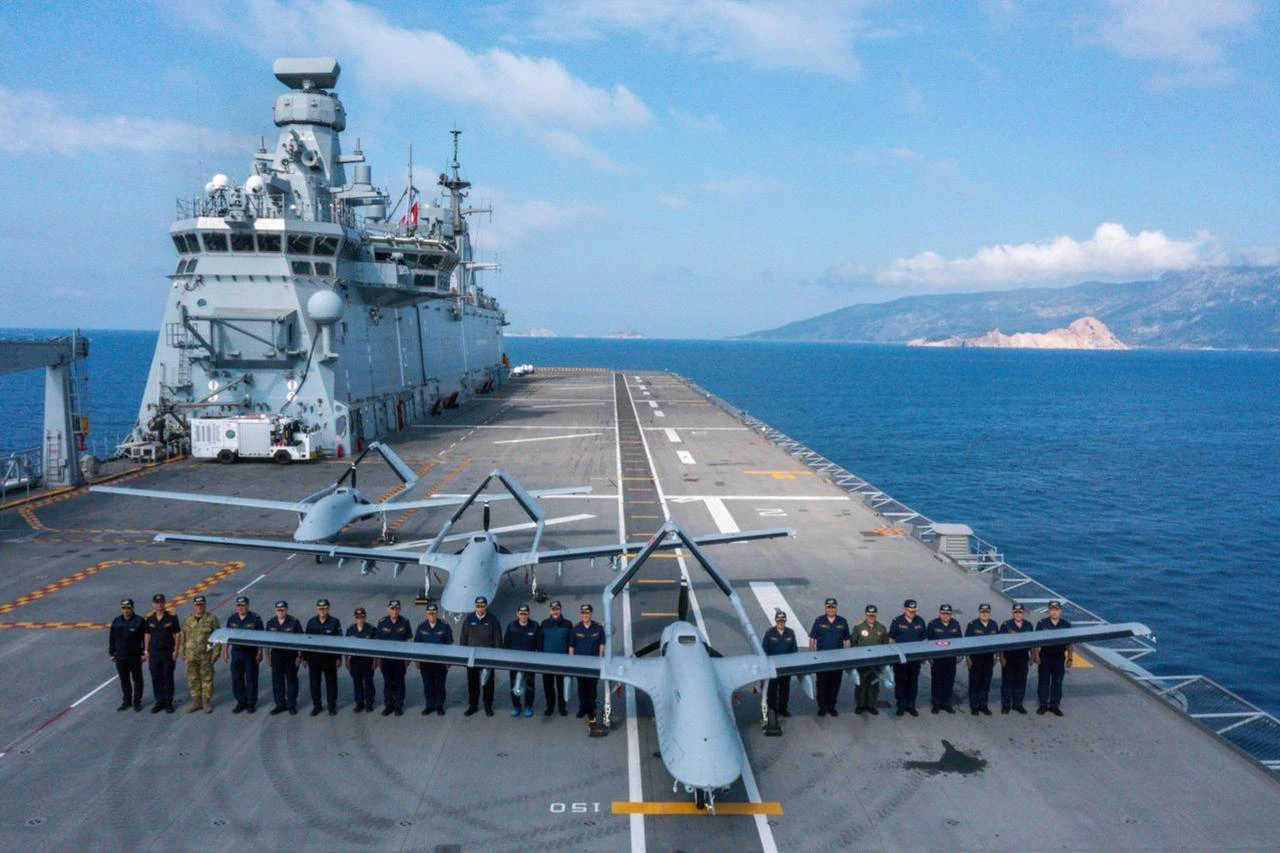
Unmanned systems form the third line. Baykar has said series-production Kızılelma unmanned fighters would begin entering Turkish Air Force service in 2026, and a Bayraktar TB3 landed on the amphibious assault ship TCG Anadolu during a NATO drill off Vlorë, Albania, on October 19, 2026. Both programs imply recurring buys of airframes and munitions rather than one-time platform purchases.
Fiscal Limits and Industrial Stakes Behind the 229% Procurement Jump
Analysis: The composition of the 2027 budget matters more than its topline. A 60% rise in the combined envelope amounts to inflation plus moderate real growth, but a 229% jump in MoND procurement shifts the weight of new money toward equipment. Fiscal limits remain: interest payments, projected at TL 3.97 trillion, exceed the entire defense and security allocation, and the 2027 deficit is forecast at 3.5% of GDP. Finance Ministry projections released in January put defense spending at 2.83% of GDP in 2027 and 3.2% in 2028, on a path toward the 3.5% core target allies set at The Hague in June 2025 for 2035. With officials putting the sector’s domestic content above 85%, most new procurement lira will flow to ASELSAN, Roketsan, TUSAŞ and Baykar, making the budget an industrial policy instrument as much as a force-structure plan.
Commission review continues before the General Assembly vote, which came in late December for the 2026 budget. The MoND hearing should reveal the absolute procurement figure and the SSDF contribution. Execution will hinge on the lira’s exchange rate, which sets the cost of imported components, on whether inflation falls toward 21%, and on whether industry can deliver Steel Dome batteries and the first KAAN Block 10 airframes at the pace the appropriation assumes.