The U.S. Air Force’s senior leaders adopted a “wartime sufficiency first” approach to force management, ordered enforceable manpower floors across the service and approved the USAF Force Design 2026 during the semiannual CORONA conference, held September 29 through October 3, 2026, at the U.S. Air Force Academy, Colorado, the service said October 23.
CORONA dates to a February 1944 meeting hosted by Gen. Henry H. “Hap” Arnold at Maxwell Field and was formalized by Gen. Curtis LeMay in 1961. The fall session was the third under Chief of Staff of the Air Force (CSAF) Gen. Ken Wilsbach, in office since November 2025, and followed a year shaped by Operation Epic Fury, the U.S.-Israeli campaign against Iran launched February 28, 2026.
Air Force CORONA Puts Wartime Sufficiency at the Center of Manpower
Leaders approved the wartime sufficiency approach for the service’s force-management processes and systems. According to the Air Force, the policy gives priority to the people and capability required to generate, sustain and employ forces in high-end conflict, and it establishes a recurring review of wartime sufficiency across the enterprise.
The most concrete element is a mandate to establish and enforce manpower floors service-wide. The CSAF will direct those floors to reduce risk at the enterprise level, giving units a service-level baseline of the manpower required to meet wartime demands. The stated objective is the right mix of trained and ready Airmen to win a future conflict. In practice, a floor works as a protective minimum rather than a cap: it sets a level below which wartime-critical units cannot be thinned out by efficiency drives, reorganizations or competing priorities.
The Air Force has not released the numeric floors, the career fields or units they cover, whether they extend to the Air National Guard and Air Force Reserve, or how often the sufficiency review will run. The decision lands as the service stands up a point defense career field that Wilsbach said in September would be operational within two years, a new manpower demand driven by Iranian missile and drone attacks on U.S. bases in the Middle East.
“Readiness is built through the choices we make now,” Wilsbach said in the Air Force’s announcement.
How USAF Force Design 2026 Links Requirements to Acquisition
Wilsbach approved the USAF Force Design 2026 to align modernization with future operational requirements and create unity of purpose and effort across the service. The Air Force said the design supports the National Defense Strategy, issued in January 2026, while preserving the service’s ability to deliver its core functions.
The document succeeds the classified One Force Design signed by then-CSAF Gen. David Allvin on October 4, 2024, which committed the service to refreshing its force design guidance every year as budgets and technology change. The Air Force has not published an unclassified summary of the 2026 version, so its force-structure targets, divestment choices and capability priorities remain undisclosed.
To tighten accountability, Portfolio Acquisition Executives (PAEs) will serve as single points of responsibility for the acquisition of new platforms. The decision builds on the Air Force’s July 2026 conversion of its Program Executive Officers into PAEs across all 17 acquisition portfolios, a shift tied to the Pentagon’s Warfighting Acquisition System.
The Air Force says the arrangement will connect operational requirements, force design and acquisition execution as it works with Congress and industry to field new capabilities. Some of the service’s largest programs, however, report to a Pentagon-level Direct Reporting Portfolio Manager for Critical Major Weapons Systems rather than to an Air Force PAE.
CCA Integration Forces a Rethink of the Statutory Fighter Floor
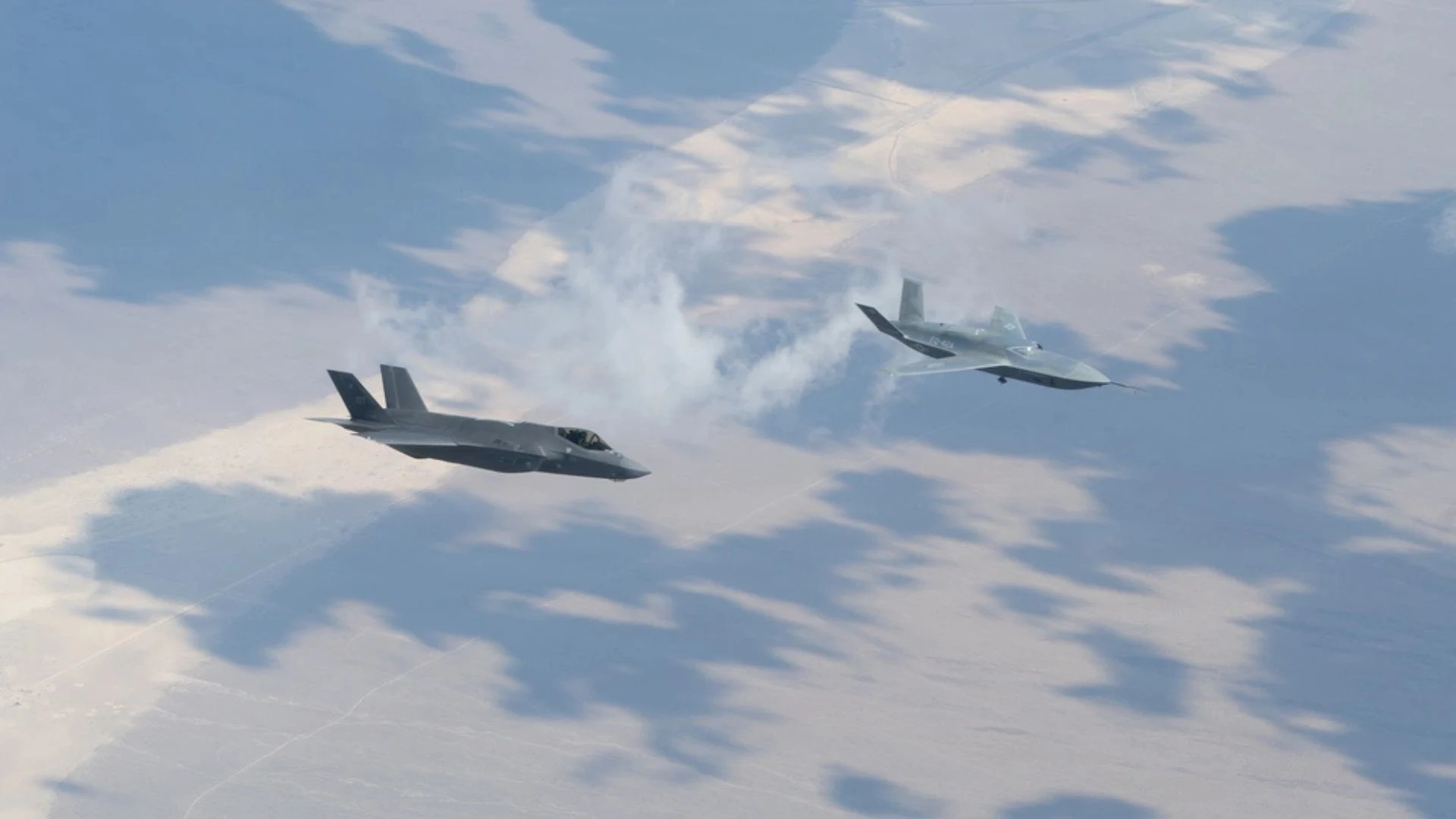
As Collaborative Combat Aircraft (CCA) join the fighter force, the Air Force will assess how crewed and uncrewed platforms should be counted in force-structure planning. The service frames CCAs as additional options for sensing, survivability and combat employment alongside crewed fighters.
The Air Force entered Increment 1 production in June 2026 for 150 aircraft covering the General Atomics FQ-42A Vengeance and the Anduril FQ-44A Fury, names announced September 14. The service plans 500 combat-ready CCAs by 2032 within an eventual fleet of about 1,000. A YFQ-44A prototype completed an end-to-end, beyond-line-of-sight live-fire shot with an inert AIM-120 against a simulated target, and both types flew in an Agile Combat Employment exercise at Creech Air Force Base, Nevada, in July 2026.
Title 10, Section 9062 of the U.S. Code required the Air Force to keep at least 1,800 fighters in total inventory and 1,145 in its combat-coded primary mission aircraft inventory (PMAI), defining a fighter as an F- or A-designated aircraft manned by one or two crewmembers. That definition excludes FQ-designated CCAs. On May 5, 2026, Meink notified Congress that PMAI stood at 1,098 fighters, 47 below the floor.
The floor’s statutory window ran through October 1, 2026. The House-passed and Senate Armed Services Committee versions of the FY2027 National Defense Authorization Act (NDAA) would extend the 1,800-aircraft requirement to 2035 and set a combat-coded floor of 1,369 fighters by December 31, 2030; both keep CCAs out of the count. Congress has not enacted the bill.
Analysis: Each CORONA decision targets the gap between the force the Air Force owns on paper and the force it can generate in a high-end war. Manpower floors protect the people behind every sortie; Force Design 2026 and PAEs bind requirements to delivery; a CCA-inclusive metric would let fighter capacity reflect uncrewed mass. That last item carries the most political risk. Lawmakers could read CCA credit as cover for retiring crewed jets faster than F-35A and F-15EX deliveries replace them, the concern behind repeated limits on A-10, F-22 and F-15E retirements.
The FY2027 NDAA, still unenacted and on Congress’s post-election year-end agenda, will settle how the fighter floor is defined. Numeric manpower floors and an unclassified Force Design 2026 summary remain unpublished, while Increment 1 deliveries will test whether CCAs earn a place in the count.