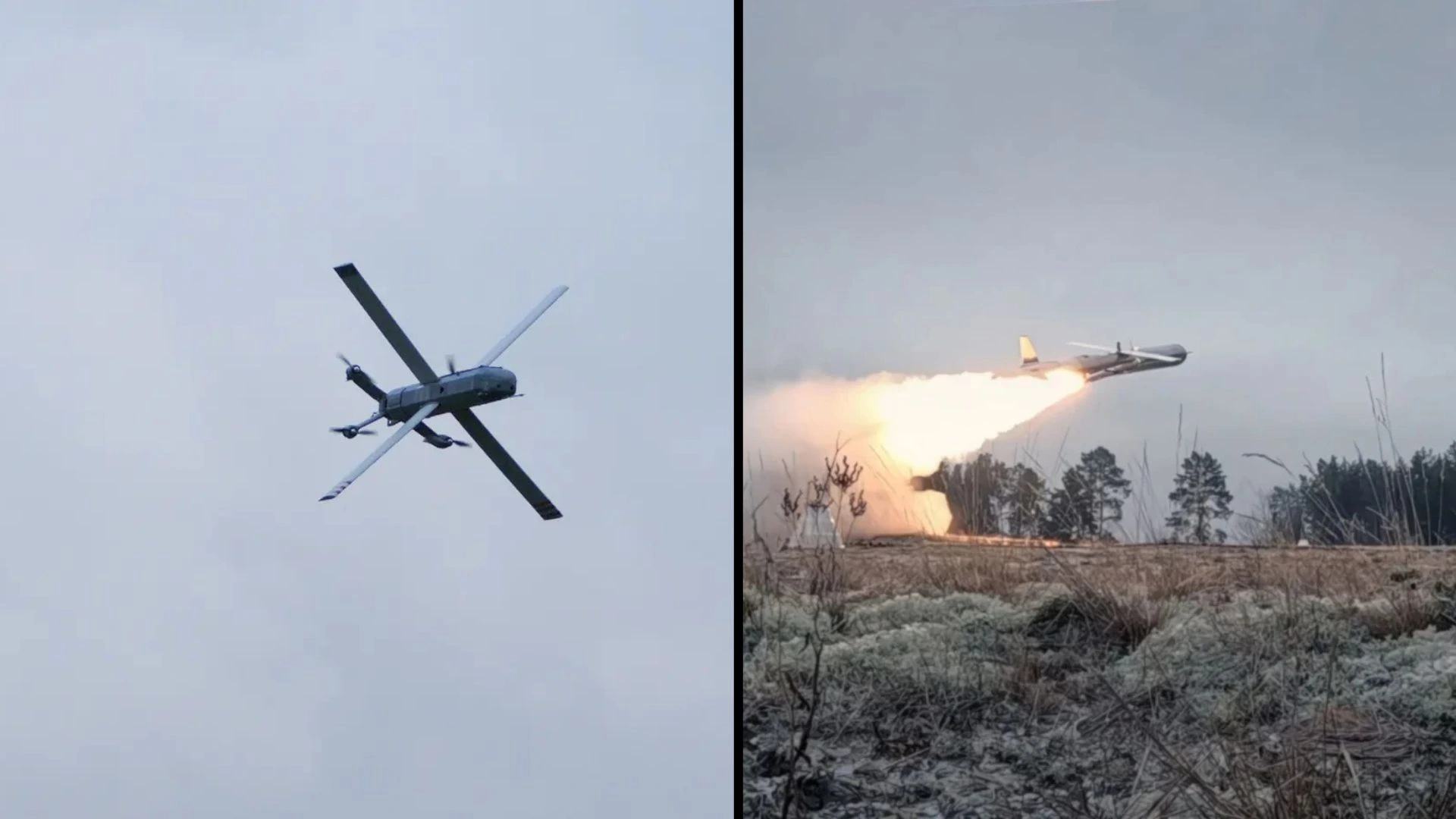
Munich-based military artificial intelligence company Helsing and Netherlands-based strike and air defense manufacturer Destinus announced a commercial partnership on October 20, 2026, to offer joint solutions to NATO and allied armed forces. As part of the agreement, Helsing will participate in Destinus’ latest funding round alongside other investors.
The deal links two of Europe’s fastest-scaling defense startups as ministries prioritize precision munitions that can be produced in volume. According to the joint announcement, the partnership will combine both companies’ technology and industrial-scale manufacturing to create scalable mass. Neither company disclosed the size of Helsing’s investment, the stake it will hold, the total value of the round or Destinus’ valuation. Media reports citing people familiar with the talks put Destinus’ valuation at around €6 billion ($6.7 billion) and described Helsing’s position as a minority stake; neither company has confirmed those figures.
Inside the Helsing Destinus Partnership: Complementary Strike Portfolios
The announcement does not name which systems will be integrated or offered jointly. The two product lines, however, overlap little. Helsing’s flagship hardware is the HX-2, an AI-enabled strike drone launched in December 2024 and ordered in the thousands for Ukraine, including a batch of 6,000 announced in February 2025. Helsing lists a mass of 12 kg, a top speed of 220 km/h and a range of up to 100 km, with onboard AI designed to resist electronic warfare and swarm coordination under a single human operator. Helsing’s wider portfolio includes the CA-1 Europa uncrewed combat aircraft and the SG-1 underwater glider.
Destinus operates further out. Its Ruta Block 1 cruise missile is in serial production in the Netherlands and has been used in Ukraine. Ruta Block 2, tested with support from Ukraine’s Brave1 defense innovation cluster, completed a flight test in April 2026; Destinus lists a range above 700 km and a 250 kg warhead. Ruta Block 3, accelerated with Rheinmetall, targets more than 2,000 km with a warhead of up to 250 kg. The company also builds the container-launched Hornet counter-drone interceptor, and the Dutch Ministry of Defence has contracted it under a concept development and evaluation program to deliver Hornet Block 2 and integrate it aboard several Royal Netherlands Navy warships, with completion scheduled for the second quarter of 2027.
Resilience Factories Meet Ruta Serial Production in Europe
Manufacturing capacity is the second pillar of the deal. Helsing produces the HX-2 in what it calls Resilience Factories: a site in southern Germany completed in February 2025 with a capacity of 1,000 drones per month, a maritime facility in Plymouth, United Kingdom, that builds the SG-1 Fathom glider, and a plant in West Virginia, announced on July 14, 2026, designed to exceed 2,000 HX-2 per month at full operation. Helsing closed a $1.8 billion Series E round on July 13, 2026, at an $18 billion valuation.
Destinus keeps its headquarters in the Netherlands and already produces more than 2,000 cruise missile systems a year in Europe, according to its April 2026 joint venture announcement with Rheinmetall. That venture, Rheinmetall Destinus Strike Systems, is seated in Unterlüß, Germany, with Rheinmetall holding 51 percent; joint production starts with the Kryla cruise missile and Ruta Block 2, with initial delivery readiness planned for 2026. Destinus secured a €50 million bank facility from Commerzbank in December 2025, and reports in May 2026 said it was seeking about €200 million at a valuation above €5 billion ahead of a possible Amsterdam listing.
Analysis: The partnership reflects a convergence in European defense technology. Software-first firms are moving deeper into hardware, while munitions builders seek autonomy and targeting layers, and both are chasing budgets that reward volume over exquisite capability. On paper, Helsing and Destinus together span tactical strike under 100 km, deep strike out to 2,000 km and counter-drone interception, all with European production footprints. The arrangement is commercial, however, not contractual: no government order is attached. Destinus has also previously announced plans to integrate Shield AI’s Hivemind autonomy software on Ruta and Hornet, and how Helsing’s software would sit alongside that work remains unclear.
Key markers to watch include disclosure of the round’s size and Helsing’s stake, the first named joint product or bid to a NATO customer, initial Ruta Block 2 deliveries from the Rheinmetall joint venture, planned for 2026, and the build-up of production in Unterlüß. The Hornet Block 2 evaluation program with the Royal Netherlands Navy, due to conclude in mid-2027, will test Destinus’ air defense line in parallel.