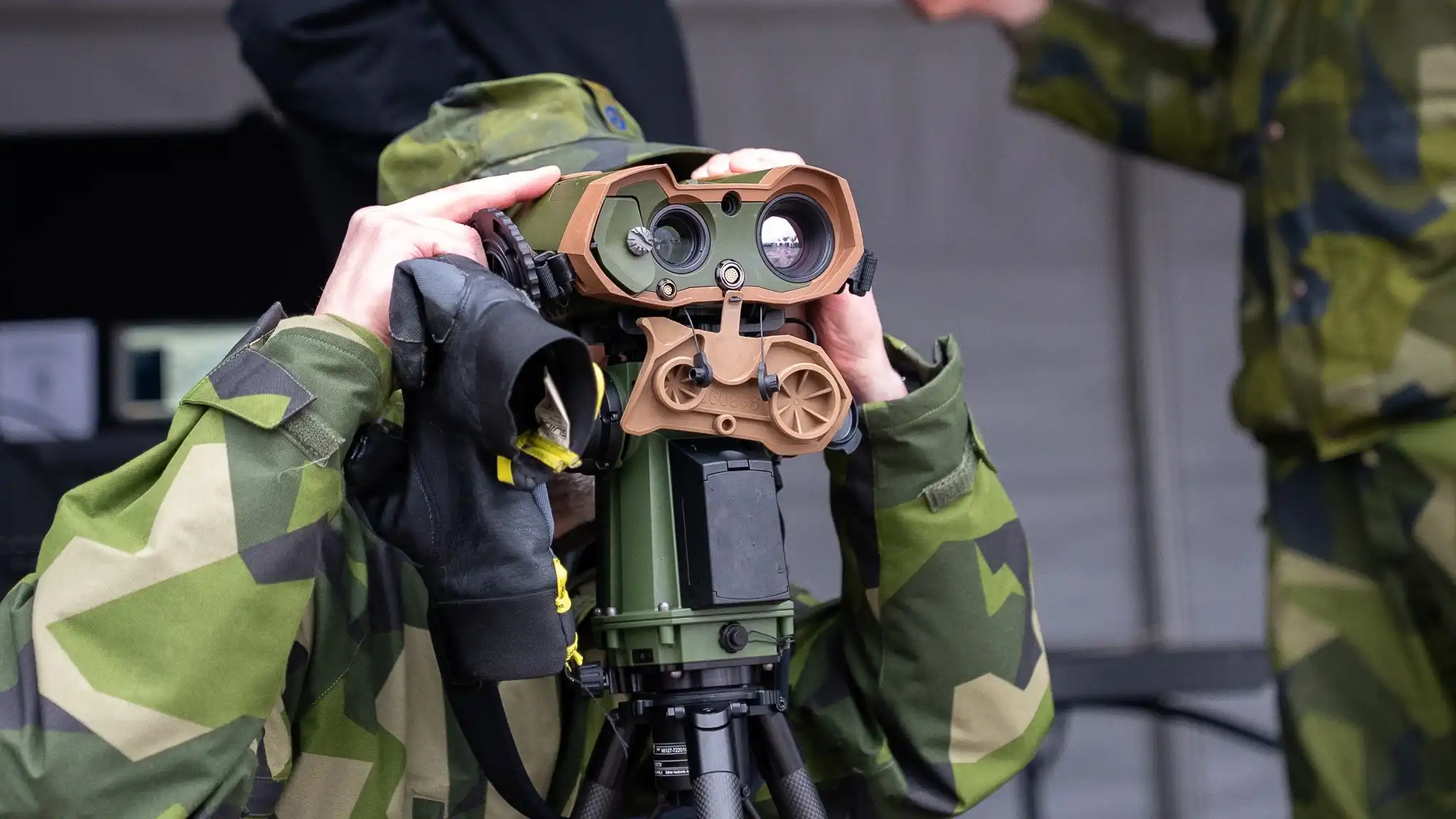
Sweden’s Defence Materiel Administration (Försvarets materielverk, FMV) has handed over a new fire control instrument built by Safran Electronics & Defense to the Swedish Armed Forces, giving forward observer teams a lighter, networked tool to locate targets and direct indirect fire. FMV announced the handover on October 23, 2026, with 205 instrument cases delivered in a first step out of 260 ordered.
FMV signed the contract with the French supplier in September 2025 for approximately SEK 488 million (about €45 million), according to the agency. The instruments are assigned to fire control teams in the Army, the Navy and the Home Guard, and arrive as the Swedish Army grows. “This is a substantial improvement over previous systems, and a long-awaited capability that the Armed Forces can start using immediately,” said Claes Tamm, FMV project manager for fire control systems.
Swedish Fire Control System: Optronics, Software and North-Seeking Gyro
The core of the system is an electro-optical binocular fitted with an infrared imaging camera, a laser rangefinder, a compass and a Global Navigation Satellite System (GNSS) receiver. The software suite includes digital map support, image fusion and additional support functions. FMV says it covers target observation, classification, location, fire adjustment and fire direction.
Target data passes through interfaces with command and transmission systems to firing units, supporting the planning, execution and evaluation of indirect fire missions, according to John Olofsson, FMV product representative for fire control. FMV has not specified which Swedish command and control systems the instrument is integrated with.
For teams with higher precision requirements, FMV is also delivering a north-seeking gyro on which the binocular can be mounted. The gyro determines bearing by sensing the Earth’s rotation, removing reliance on magnetic compass readings and GNSS signals.
FMV has not named the model, but the architecture matches Safran’s JIM Compact multifunction binocular paired with the company’s Sterna north finder. Publicly available specifications for JIM Compact indicate a weight of about 2 kilograms, a cooled 640 x 480 thermal imager with up to 28x hybrid zoom and a low-light channel. Tamm said the new instrument weighs roughly 10 kilograms less than the system it replaces.
260 Instruments, Organic Maintenance and Deliveries Through 2028
The order covers 260 instruments plus test and repair equipment and spare parts, so the Armed Forces can maintain and repair them in-house. After the first 205 cases, deliveries continue on a rolling basis until 2028. The split among Army, Navy and Home Guard units is undisclosed.
“Thanks to good cooperation with the supplier and the Armed Forces, we have managed to deliver an important technical system in a short time, one that will become a significant piece of the puzzle in the Army’s growth,” Tamm said.
Analysis: The observer sets the accuracy ceiling of any fires chain: precision-guided rounds only deliver their accuracy if the coordinates feeding them carry a small location error, and a laser-ranged, gyro-referenced fix enables first-round effects without adjustment fire. The north-seeking gyro is the more consequential element for a NATO frontline state operating in a Baltic environment where GNSS interference is widespread: it keeps bearing accuracy intact when satellite signals are degraded. FMV handed over the first instruments about 13 months after the contract was announced, a timeline Tamm described as short.
Next steps are crew training and the remaining deliveries through 2028. Open questions include the official product designation, the depth of integration with Swedish and NATO digital fire support networks, and whether follow-on orders will come as the Army stands up new artillery units.