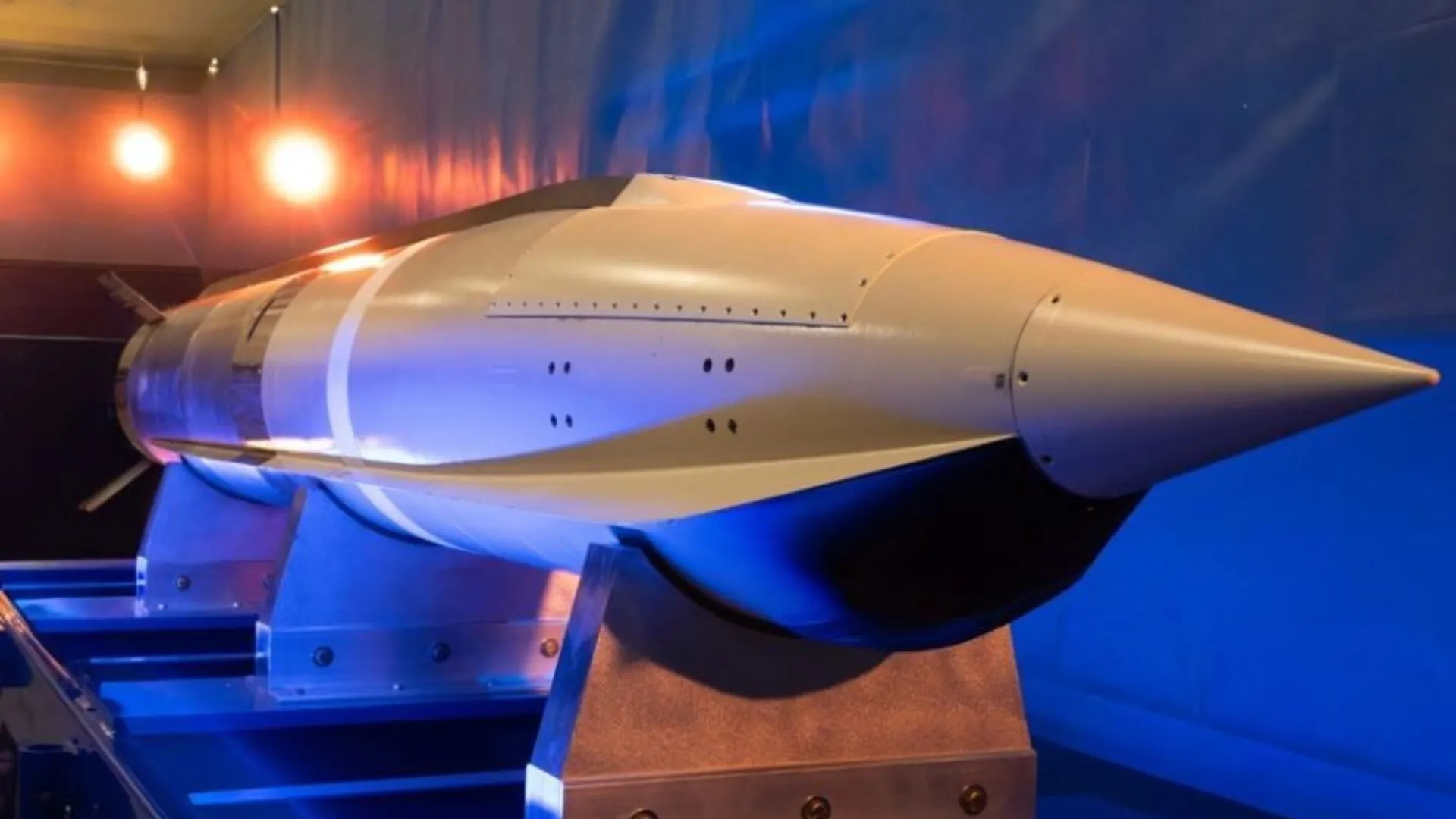
Lockheed Martin is developing a ramjet-powered Precision Strike Missile (PrSM) Increment 4 prototype designed to strike moving ships and relocatable land targets at 1,000 km or more from a High Mobility Artillery Rocket System (HIMARS) launcher, the company said on October 26, 2026. The design pairs an L3Harris Technologies propulsion system with existing PrSM guidance subsystems and now heads into US Army competitive flyoffs scheduled for 2027 and 2028.
Lockheed frames the step as a down-select, but it shares the field with four rivals. On September 29, 2026, the Army signed separate Other Transaction Authority (OTA) agreements with Anduril, Castelion, Lockheed Martin Missiles and Fire Control, Mach Industries and RTX, reopening a competition first launched in 2023 with awards to Lockheed and an RTX-Northrop Grumman team. The awards followed a $1.21 billion contract to Lockheed in mid-September for the Increment 2 Early Operational Capability, and came six months after PrSM Increment 1 saw its first combat use in March 2026 during operations against Iran.
How Lockheed’s PrSM Increment 4 Ramjet Targets 1,000 km Range
Propulsion is the defining change. Increment 1 flies on a solid rocket motor and covers 60 km to more than 499 km, according to Lockheed’s published specifications. Increment 4 adopts a boost-sustain architecture: a solid rocket booster accelerates the missile to supersonic speed, then an air-breathing ramjet takes over and burns fuel with atmospheric oxygen during cruise. Carrying no oxidizer for cruise frees internal volume for fuel, the basis of Lockheed’s claim of roughly double the baseline standoff range.
The booster-to-ramjet handoff is the critical event. The inlet must open, booster exhaust must clear, and the ramjet must ignite and sustain combustion within milliseconds under rapidly changing aerodynamic loads. Lockheed and L3Harris reported a successful direct-connect transition test of that sequence at an L3Harris facility in June 2026, with a flight test announced for later in the year. Whether that flight has occurred, and at what range, has not been disclosed.
Guidance builds on existing PrSM guidance and control subsystems. Lockheed says it has invested $250 million to date in its Strigo Product Center, which develops radio frequency sensors, missile datalinks and seekers, and that this work informs the Increment 4 guidance package. Army budget documents indicate Increment 4 will reuse the multimode seeker developed for Increment 2, the Land-Based Anti-Ship Missile variant. Lockheed has not detailed how off-board targeting data will reach the missile in flight against a maneuvering ship at 1,000 km.
Increment 4 keeps the Increment 1 transport container and fire control interface, so it can fire from existing M142 HIMARS and M270A2 Multiple Launch Rocket System launchers without new training or logistics changes. Lockheed has not said whether the ramjet airframe preserves the two-missiles-per-pod loadout of Increment 1, which sets magazine depth per launcher.
Five Vendors, Two Flyoffs: Lockheed’s Industrial Case for Increment 4
The Army’s timeline is compressed. Under the OTA structure, initial prototype work culminates in a competitive flyoff and down-select in fiscal year 2027, after which vendors with mature designs become eligible for follow-on agreements and a final flyoff in fiscal year 2028. RTX previously teamed with Northrop Grumman on an Increment 4 concept, while Mach Industries has described its Pike design as a rocket-assisted launch transitioning to sustained jet-powered flight, an air-breathing concept that competes head-on with Lockheed’s. Anduril and Castelion have disclosed fewer design details. The OTA vehicle also matters beyond speed: a prototype project completed successfully can transition to follow-on production without a new full and open competition, so the 2028 winner could move quickly toward low-rate initial production.
Lockheed’s case rests on production readiness as much as performance. The company says it has invested more than $300 million with industry partners to mature extended-range propulsion, and that a $300 million additive manufacturing and automation line is now operational for airframe and propulsion components that must hold the tight tolerances ramjet performance demands. Its Camden, Arkansas, facility already builds Increments 1 and 2 and can absorb Increment 4 to spread economies of scale across the family, according to Lockheed, while an ongoing expansion adds robotics to support a ramp from low-rate to full-rate production.
“Warfighters need precision strike capabilities that can reach farther and give them more options,” said Randy Crites, vice president of Lockheed Martin Advanced Programs, who added that the company is pairing a proven missile foundation with an established industrial base to field prototypes quickly.
Analysis: Increment 4 is the variant that gives Army long-range fires real weight in a Western Pacific sea-denial campaign. At roughly 500 km, Increment 2 can cover a strait from a nearby island; at 1,000 km, a dispersed HIMARS battery can hold maritime approaches at risk across a far wider arc while remaining mobile. The Army has said Increment 4 is intended primarily for the Indo-Pacific, and Australia, a PrSM program partner since 2021, has a direct stake in the outcome. Lockheed’s edge is integration and production depth, not exclusivity. Reopening the competition to five vendors suggests unit cost and production capacity will weigh as heavily as range in the 2027 down-select.
The next public marker is the flight test Lockheed and L3Harris announced after the June ground test, the first hard evidence of range performance. The fiscal 2027 flyoff will then narrow the field. Unit cost, pod loadout, the targeting architecture for moving ships and Army procurement quantities all remain undisclosed.