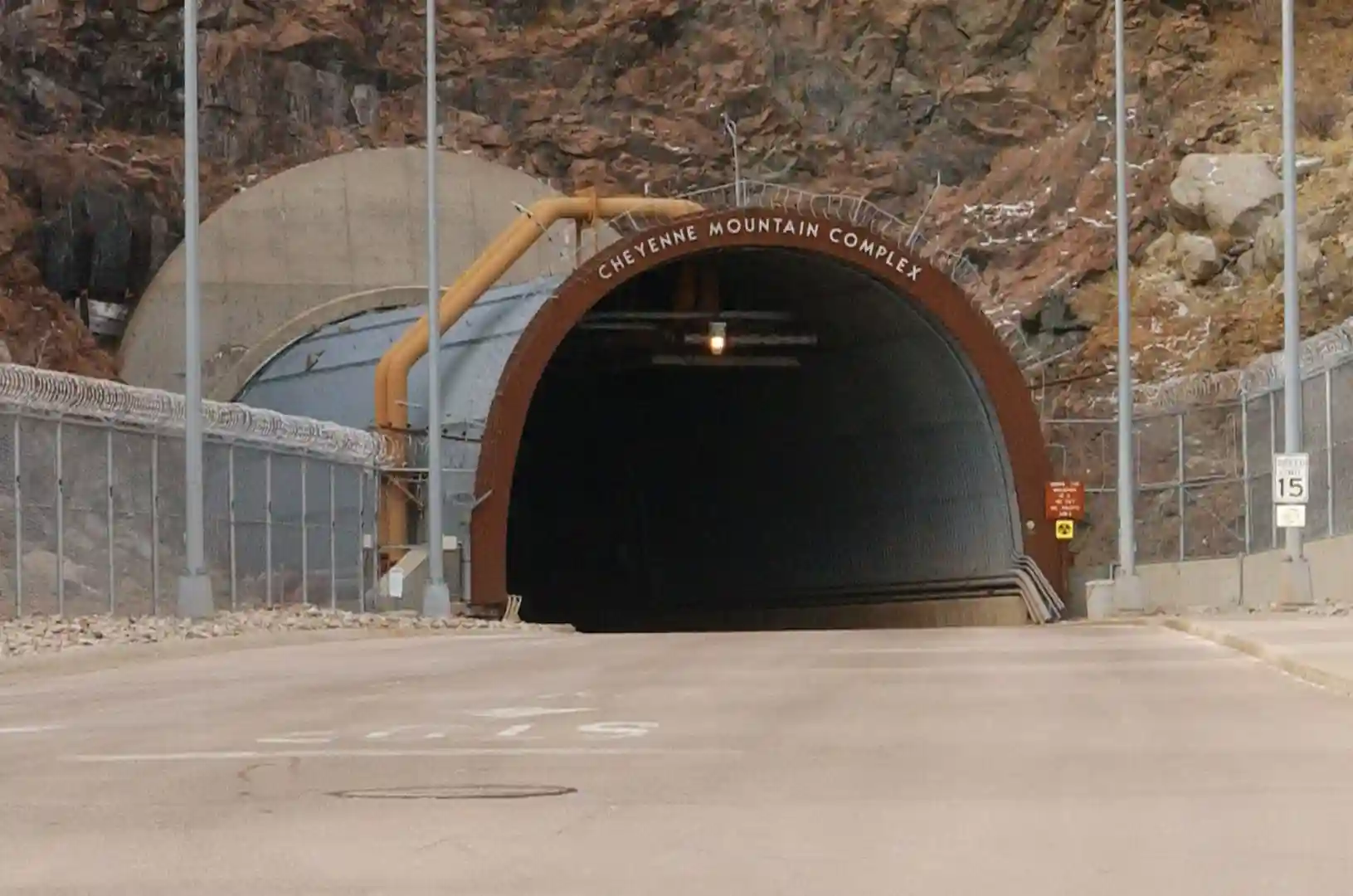
Space Systems Command awarded Amentum Technology Inc. of Tullahoma, Tennessee, a $16,390,078 sole-source definitive contract on October 27, 2026, to run a System Integration Laboratory supporting the North American Aerospace Defense Command (NORAD) Cheyenne Mountain Complex-Integrated Tactical Warning/Attack Assessment (NCMC-ITW/AA) missile warning system. The contract, FA8723-27-C-B001, covers secure access for government and contractor users, cybersecurity infrastructure, and facility security for teams that develop, test, and integrate software connected to the NCMC-ITW/AA Integration and Development Environment. Work will be performed primarily in Colorado Springs, Colorado, through October 31, 2030.
The award follows Amentum’s September 2026 win of a seven-year, $572.4 million contract to operate and maintain the same warning enterprise, covering system administration, vulnerability management, maintenance, and test support. Together, the two awards place Amentum on both the operational and the developmental side of the system that tells US and Canadian leaders whether North America is under air, missile, or space attack. That system now sits at the center of homeland defense planning: the Golden Dome for America architecture is designed to build on existing sensors and command-and-control networks rather than replace them, and program director Gen. Michael Guetlein has said the shield will field some operational capability in 2028.
Inside the NORAD Missile Warning Software Integration Pipeline
ITW/AA is a system of systems rather than a single platform. It combines ballistic missile, space, and atmospheric warning sensors, intelligence centers, and dedicated communications into a correlated assessment delivered to national leadership, with Cheyenne Mountain serving as the main correlation center. Publicly available descriptions indicate that sensor feeds from space-based infrared satellites and ground-based early warning radars are processed within the Combatant Commanders Integrated Command and Control System (CCIC2S), the enterprise that builds the strategic missile warning picture.
The System Integration Laboratory is the controlled environment where software changes are built and verified before they reach that operational chain. The Pentagon’s description emphasizes access and security rather than new capability. In a mission tied directly to nuclear command, control, and communications (NC3), that gatekeeping role carries operational weight: a false warning or a corrupted attack assessment has strategic consequences, so every software release must be tested against a faithful replica of the mission environment.
The laboratory serves two customers: the NCMC-ITW/AA program office and the Legacy Space Command and Control Program Office, which sustains older space surveillance and C2 software while the Space Force migrates to newer systems. That migration has been uneven. The Joint Mission System, an earlier effort to replace the Space Defense Operations Center (SPADOC), was halted in 2018 three years behind schedule and about $139 million over budget, keeping legacy code in service longer than planned.
The funding profile points to sustainment, not development. The $3,930,588 obligated at award comes from fiscal 2027 operation and maintenance accounts, about 24% of the contract value. Spread across a period of performance of roughly four years, the award averages about $4.1 million per year. The Pentagon has not published the justification for the sole-source decision.
From 427M to CCIC2S: Four Decades of ITW/AA Modernization
NORAD’s automated warning architecture has a long record of difficult upgrades. The 427M system became operational inside Cheyenne Mountain in 1979. In 1981, the Air Force launched five separate acquisitions to replace its aging computers, an approach later consolidated into the Cheyenne Mountain Upgrade (CMU) program after government auditors reported in 1991 and 1992 that modernization costs were significantly understated and that the absence of a system architecture had contributed to major problems.
Current work centers on data. In 2024, Space Systems Command awarded Leidos a $51.4 million contract, running through July 1, 2029, to enhance CCIC2S missile warning and to process high-fidelity data from non-traditional sources. A November 2024 sources-sought notice from the program office described a requirement to correlate and fuse tracks from traditional ITW/AA sensors, from non-ITW/AA systems such as the Missile Defense Agency’s Command and Control, Battle Management, and Communications (C2BMC) network, and from non-persistent sources.
Every added sensor, data format, or fusion algorithm must be validated against existing warning logic without degrading timeliness, which is precisely the workload an integration laboratory absorbs. Canada adds another interface: its C$38.6 billion, 20-year NORAD modernization plan includes support for NORAD’s Cloud-Based Command and Control system, formerly known as Pathfinder, alongside Arctic and Polar Over-the-Horizon Radars.
Analysis: The dollar figure is modest, but the contract governs the infrastructure through which changes to North America’s strategic warning software must pass. Golden Dome’s reliance on existing sensors and command networks means ITW/AA will have to absorb new data streams while its core software environment remains in sustainment mode. Consolidating operations, maintenance, and integration-lab access under one contractor reduces handoff friction and preserves institutional knowledge on a classified, highly specialized system. It also narrows the government’s competitive leverage and deepens dependence on a single provider at the moment the warning architecture is expected to change fastest.
The next decision points are budgetary and architectural. Funding beyond the initial obligation depends on fiscal 2028 through 2030 appropriations, and the Pentagon has not said whether the laboratory will host integration work for Golden Dome command-and-control software or for the CCIC2S correlation and fusion upgrades. Open questions include how ITW/AA data will feed Golden Dome fire-control software ahead of the 2028 capability target, and how NORAD’s binational structure will be reflected as Canada weighs its own contribution.