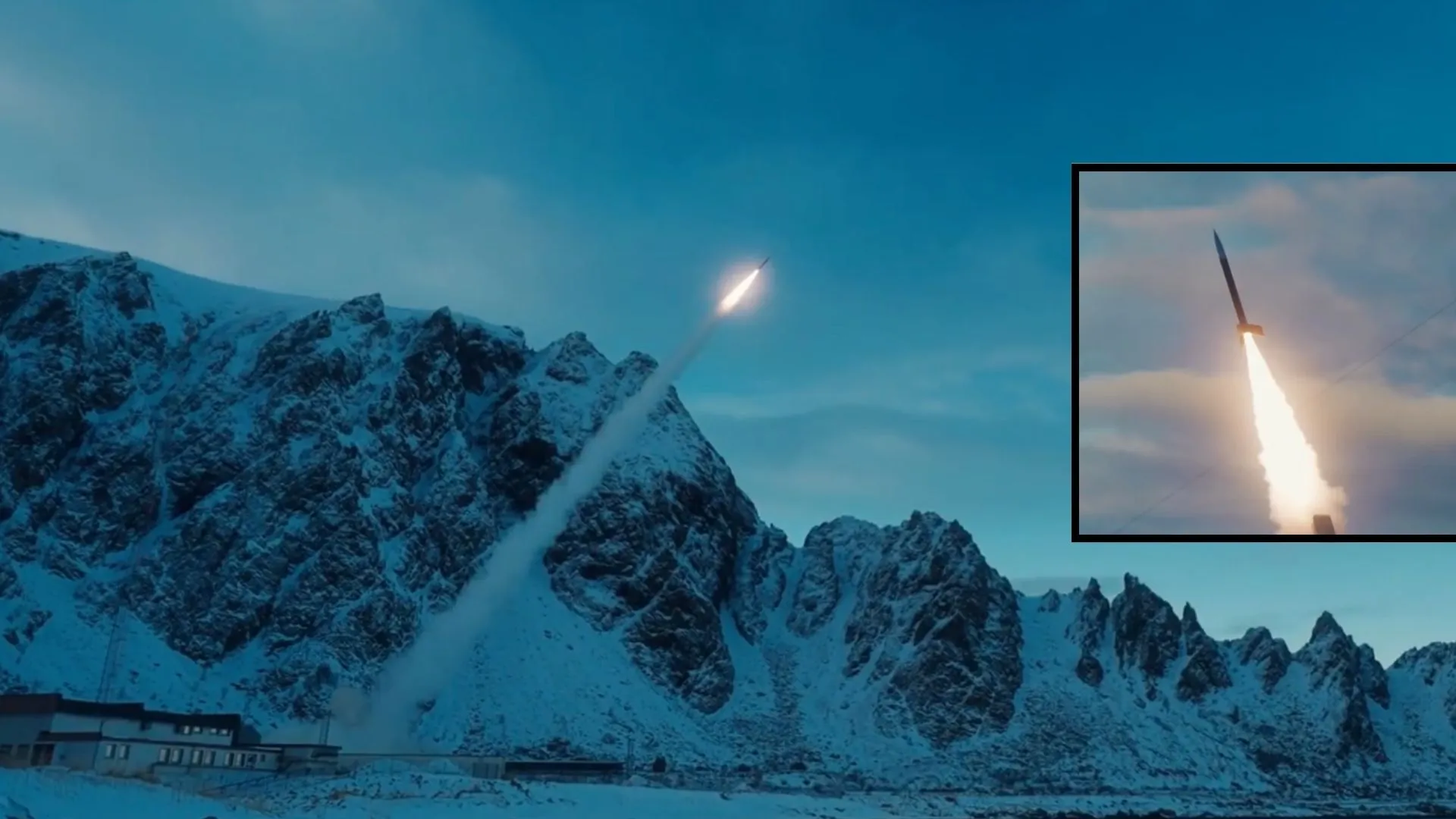
Hypersonica, the British-German start-up developing hypersonic deep-strike weapons for Europe and its allies, has closed a €100 million Series B round co-led by Silicon Valley venture firms Lightspeed and General Catalyst, the company announced on November 2, 2026. The Munich- and London-based firm said the capital will accelerate development, raise its flight-test cadence and expand operations across Europe. The round reportedly values the company at roughly €700 million.
The raise lands as European capitals race to close a long-range strike gap that Washington no longer promises to fill. On May 1, 2026, the Pentagon cancelled the planned deployment to Germany of the U.S. Army’s 3rd Battalion, 12th Field Artillery Regiment, the long-range fires unit slated to rotate Tomahawk, SM-6 and developmental hypersonic missiles through Europe under a July 2024 U.S.-German commitment. That decision removed the American bridge capability Berlin had counted on while Europe developed its own.
Hypersonica Series B Builds on the HS-1 Mach 6 Flight
The new round follows a €23.3 million Series A, led by London-based Plural and announced in February, in which Germany’s Federal Agency for Breakthrough Innovation (SPRIND) also took part. Plural and 201 Ventures returned for the Series B, and the company says Europeans retain majority ownership. Co-founders Dr. Philipp Kerth, the chief executive, and Dr. Marc Ewenz, the chief technology officer, framed the round as a shift from demonstration to delivery, arguing that the European debate over the requirement is settled. “The challenge now is delivery,” they said.
That claim rests on a single flight. The SCOOTER HS-1 prototype launched from Andøya Space in northern Norway on February 3, 2026. The single-stage vehicle exceeded Mach 6 and covered more than 300 km before splashing down in the designated range area, making Hypersonica the first privately funded European defense company to fly at hypersonic speed. The company says it took the campaign from concept to launch, including procurement, integration, ground testing and export-control clearance, in nine months, and claims its development model cuts costs by more than 80 percent against conventional programs. Neither figure has been independently verified.
HS-1 is a technology demonstrator, not a weapon. Hypersonica has not disclosed the propulsion, guidance, warhead or airframe configuration of its intended strike system. Its roadmap relies on successive flight tests to prove control at hypersonic speed and complex maneuvering, with operational capability targeted for 2029. The firm also stresses that its technology is designed, owned and controlled in Europe and free of International Traffic in Arms Regulations (ITAR) restrictions, which give Washington a say over where weapons containing U.S. components can go and how they are used.
Trinity House Deep Precision Strike and the 2,000 km Requirement
The funding positions Hypersonica inside the flagship strike effort of the Trinity House Agreement, signed by the United Kingdom and Germany on October 23, 2024. In May 2025, the two defense ministers confirmed that the Deep Precision Strike capability would exceed 2,000 km in range, far beyond the low hundreds of kilometers reached by the air-launched Storm Shadow and SCALP. The program envisages two weapon types, an advanced cruise missile and a hypersonic glide vehicle, starting with ground-launched variants. Hypersonica and MBDA are both involved, and the effort remains conceptual, with development scheduled to begin in 2027.
Government money is following. The UK Defence Investment Plan allocates an initial £770 million over four years to the U.K.-German program, and a multinational initiative announced in July envisages roughly £37 billion ($50 billion) for deep precision strike over the next decade. In parallel, the European Long-range Strike Approach (ELSA) groups France, Germany, Italy, Poland, the United Kingdom, the Netherlands and Sweden. France has also sought to join the Trinity House strike effort. Ground-launched systems of this reach left European arsenals under the Intermediate-Range Nuclear Forces Treaty.
Analysis: The Series B shows venture capital is now front-loading European strike development ahead of firm government contracts, a pattern already established in the United States, where Lightspeed and General Catalyst also back Castelion. The scale gap remains stark: Hypersonica has raised about €123 million across its Series A and Series B, while Castelion closed a $1 billion Series C in August at a reported $13 billion valuation. The harder gap is technical. A single-stage Mach 6 flight over 300 km is a long way from a maneuvering 2,000 km glide vehicle with a seeker, warhead and production line, and Hypersonica must still win a defined role alongside MBDA.
The next indicators are concrete: the cadence and profile of follow-on flight tests, whether London and Berlin award Hypersonica a development contract before the 2027 program start, and whether France formally joins. Until a government customer commits, the 2029 delivery target remains a company ambition rather than a program milestone.