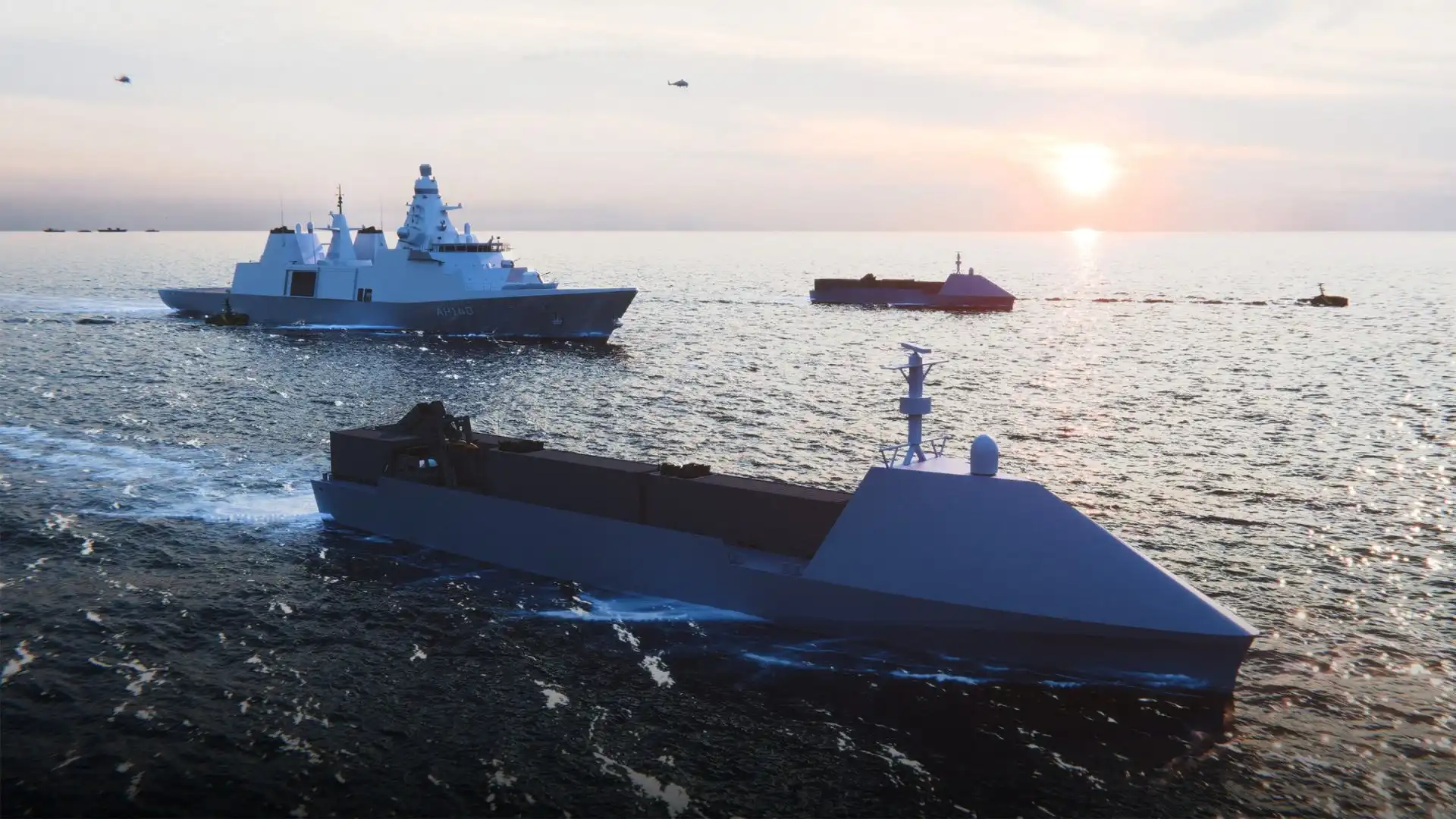
Seven technology and defense firms have joined the Babcock ARMOR Force framework, Babcock International announced on November 4, 2026, at the Euronaval exhibition in Paris. CUBEDIN, Exail, Hensoldt, Kraken Technology Group, SH Defence, Stormborn and Thales join an open-architecture ecosystem designed to combine crewed, lean-crewed and uncrewed naval systems, with Babcock acting as the single accountable integrator for navies building hybrid fleets.
The expansion gives industrial depth to a concept Babcock unveiled on December 8, 2025, as a proposal for the Royal Navy. ARMOR Force, short for Autonomous and Remote Maritime Operational Response Force, was built around the Type 31 frigate serving as a Common Command Vessel (CCV) for large uncrewed surface vessels (USVs) from Huntington Ingalls Industries (HII), with UK-founded Arondite supplying the Cobalt mission orchestration software. Babcock has since offered the Royal Navy an early demonstration in 2027 using HMS Venturer, the lead Type 31, and an HII vessel. No contract has been confirmed.
How the Babcock ARMOR Force Architecture Links Crewed and Uncrewed Ships
The original ARMOR Force design rests on three layers. The Type 31 CCV carries the command function, directing a dispersed group of large USVs that can operate autonomously or under remote control. HII’s ROMULUS family provides the uncrewed hulls. HII describes the line as engineered for rapid, repeatable production and long endurance, and equips it with its ODYSSEY autonomy software, which the company says has been demonstrated on more than 35 USV platforms. Mission payloads travel in containerised Persistent Operational Deployment Systems (PODS), and Babcock is designing the handling system that embarks and disembarks those modules on ROMULUS vessels.
Cobalt sits across all three layers as the autonomy and mission orchestration operating system, integrating crewed and uncrewed platforms into a single fleet that can be commanded from sea or shore. Babcock said Cobalt will integrate the new partners’ technologies on ARMOR Force vessels. The architecture follows open commercial and NATO standards, a choice intended to keep it interoperable with allied navies.
Babcock frames the doctrine behind the system as commanded autonomy, in which operators retain responsibility for operational intent, authority and accountability while uncrewed assets extend reach. “The future Hybrid Navy will not be built from individual technologies operating in isolation,” said Sir Nick Hine, Babcock’s chief growth officer and chief executive of its Marine sector. The company’s Rosyth and Devonport sites will host development, integration, simulation, testing and through-life support.
Seven Partners Add Sensors, Payloads and Danish Industrial Ties
Babcock said the newcomers cover autonomous platforms, sensors, payloads, communications and mission systems, but it did not assign specific products to each firm or disclose financial terms. Publicly available company portfolios indicate the likely contributions. Thales is a major supplier of naval sonar, combat management and mine countermeasure systems. Hensoldt builds naval surveillance radars, including the TRS-4D family. Exail produces uncrewed maritime systems, including the DriX USV and underwater drones used in mine warfare.
Kraken Technology Group already supplies the Royal Navy, which is buying 20 of its uncrewed vessels under Project Beehive. That gives ARMOR Force a partner whose platforms are already on order in the UK procurement pipeline.
Three of the seven, CUBEDIN, SH Defence and Stormborn, are Danish. Babcock signed memoranda of understanding with Stormborn, CUBEDIN and SH Defence’s parent SH Group at DALO Industry Days in August 2026, as it pitches its Arrowhead 140 design, the parent platform of the Type 31, for Denmark’s future frigate requirement. SH Defence’s The Cube system packages mission capabilities in standardized containerised modules, a close fit for the PODS concept. SH Defence also signed a memorandum with Naval Group in October 2026 covering containerised mission modules and launch and recovery systems for drones, in support of the French shipbuilder’s rival FDI frigate offer.
Analysis: Babcock is selling integration and assurance rather than hulls or software, and the partner list shows why that matters. Navies adopting uncrewed systems face certification, testing and through-life support burdens that individual vendors rarely carry; a prime contractor that owns those obligations lowers program risk for the customer. The trade-off is concentration. ARMOR Force promises to avoid dependence on any single platform or supplier, yet it channels everything through one integrator and one orchestration layer. SH Defence’s parallel Naval Group agreement shows partner commitments are non-exclusive; the framework’s value depends on whether Babcock converts its Royal Navy and Danish pitches into funded programs.
The next markers are a Royal Navy decision on the proposed 2027 HMS Venturer demonstration and Denmark’s frigate selection, where the Arrowhead 140 faces Naval Group’s FDI. Babcock has not disclosed a launch customer, partner work shares or a timeline for integrating the new members’ systems on Cobalt. Those details will determine whether ARMOR Force moves from industrial framework to operational capability.