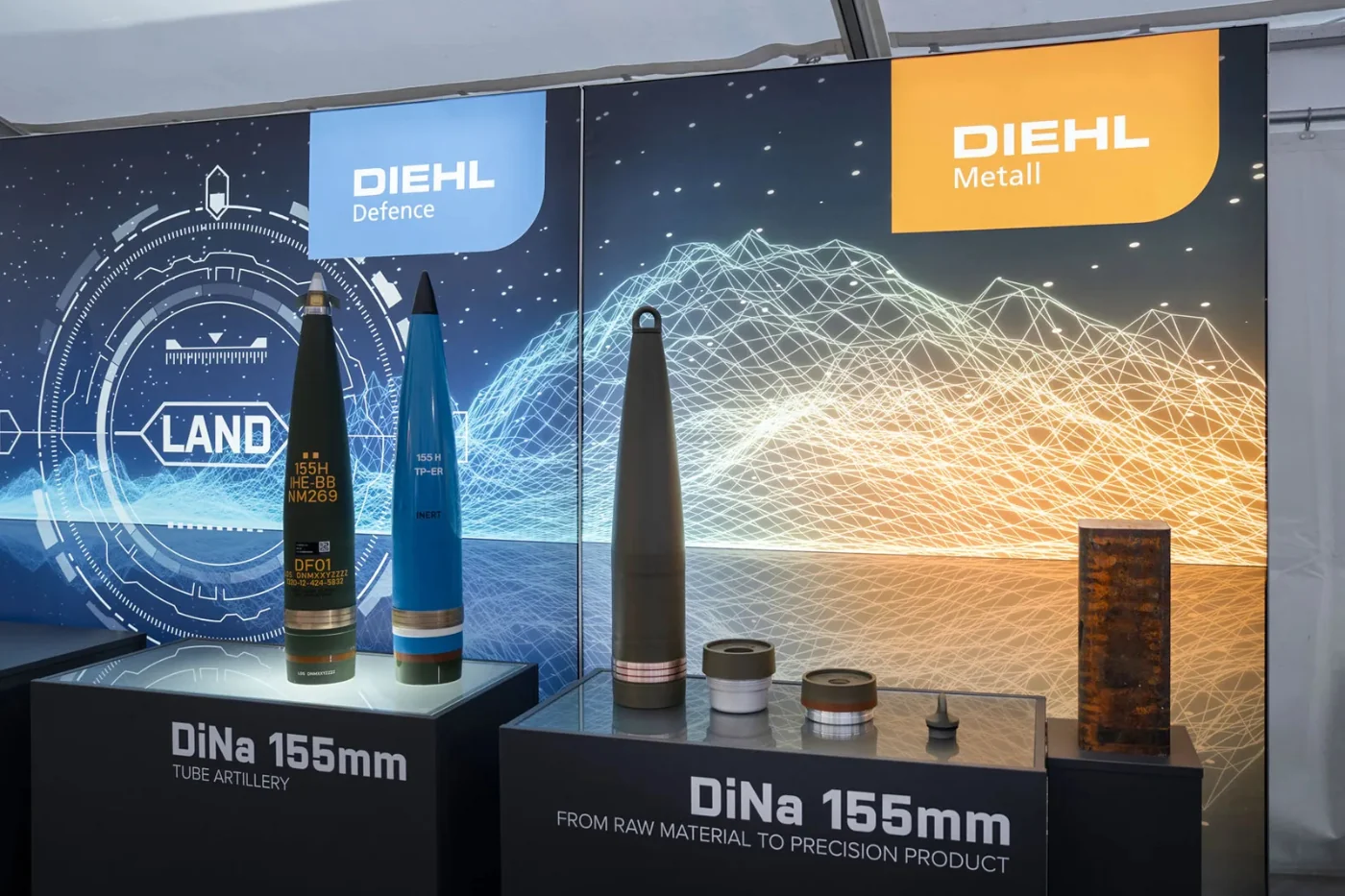
Diehl Metall and Diehl Defence inaugurated a new production line for DiNa 155mm artillery shell bodies at Röthenbach an der Pegnitz, Bavaria, on November 10, 2026, adding a German-built source of high-explosive projectiles for the Bundeswehr and allied customers. The line was set up with Norway’s Nammo AS, which developed the round, and pilot-series production started in October 2026.
The facility is the industrial answer to an order placed in July 2024, which Diehl Defence describes as the largest artillery ammunition order in its history. The Federal Office of Bundeswehr Equipment, Information Technology and In-Service Support (BAAINBw) signed that contract with ARGE DiNa (Arbeitsgemeinschaft Diehl-Nammo), substantially expanding a framework agreement first concluded in July 2023 that covers up to 350,000 shells. Neither the value nor the quantity of the 2024 call-off has been disclosed. Germany has been rebuilding 155mm stocks drawn down by deliveries to Ukraine, and DiNa gives it a second domestic shell supplier alongside Rheinmetall, which signed a framework contract worth up to €8.5 billion in June 2024.
Inside the DiNa 155mm Shell Line at Röthenbach an der Pegnitz
Work began in June 2024 with a brownfield conversion of an existing production hall covering some 7,000 square meters. Diehl puts the investment in the mid double-digit millions of euros and has not published annual output figures. The installed process chain covers forming, welding, machining, surface treatment and testing, built around two new forging presses that shape the shell bodies.
The division of labor is explicit. Diehl Metall forges and finishes the shell bodies across the full value chain, drawing on its materials and series-production experience. Diehl Defence sets quality, functional and integration requirements, then carries the bodies into downstream ammunition production, while traceability systems document each step. Nammo contributes the design, technology transfer and production know-how. ARGE DiNa has operated since 2019 with a focus on the German market.
The site also marks a civil-to-defense conversion. Most of its workforce previously produced synchronizer rings, a gearbox component for the automotive sector, and is being requalified alongside new skilled hires. Existing production capacity at Röthenbach remains in use. “What counts is the coordinated interaction of all partners,” Diehl Defence CEO Helmut Rauch said at the opening.
DiNa 155mm Range, Fuze Options and the Explosives Bottleneck
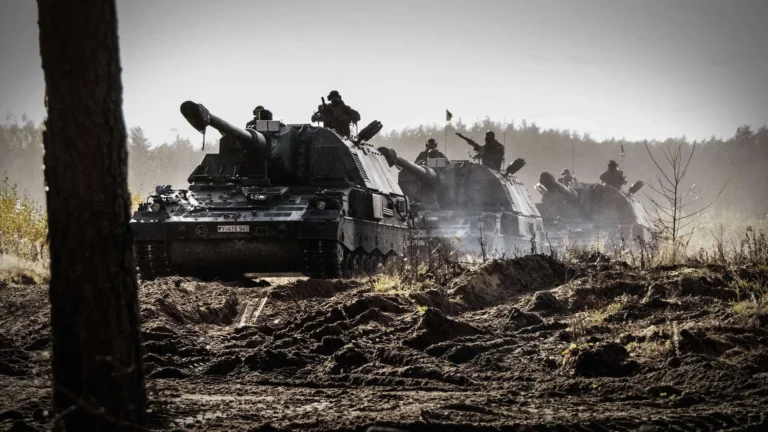
Diehl and Nammo have released few performance figures for DiNa itself. Open-source reporting credits it with insensitive munition (IM) characteristics and a maximum range of about 41 km from an L52 barrel, the length fitted to the Bundeswehr’s PzH 2000 self-propelled howitzer. Those figures match Nammo’s published data for its 155mm IM High Explosive Extended Range (IM HE-ER) projectile, which weighs 44.4 kg with fuze, leaves an L52 barrel at 935 m/s and reaches 41 km with a base bleed unit or 32 km with a hollow base. From L39 guns, Nammo lists 30 km and 24 km respectively. Neither company has publicly confirmed that the German round is identical to the Norwegian design.
DiNa can also take the 2DGMArt course correction fuze, which adds precision to an otherwise unguided shell. The round completes Diehl’s artillery portfolio alongside the Vulcano guided munition family, developed with Leonardo, and the SMArt 155 sensor-fuzed munition, produced with Rheinmetall.
Energetics remain the constraint that metalwork alone cannot solve. ARGE DiNa secured explosives through Chemring Nobel and Dynamit Nobel Defence, and Chemring Nobel is the qualified supplier of the MCX fill used in Nammo’s 155mm designs. Existing framework agreements also allow Germany and partner nations to call off complete rounds or components for a full ammunition load.
Analysis: The Röthenbach line matters less for its size, which Diehl has not quantified, than for what it adds to Europe’s 155mm supply chain: a second German shell-body source with its own forging capacity, an IM design from outside the Rheinmetall ecosystem, and a workforce drawn from a contracting automotive supplier base. Converting existing metalworking plants rather than building greenfield sites is faster and cheaper, and it gives the Bundeswehr redundancy in a market long concentrated around one national prime. The limit is the one facing every European producer: forged steel is only one input, and deliveries will track explosive and propellant availability more closely than press capacity.
The next milestones are the move from pilot series to full-rate production and the first call-offs filled with Röthenbach-made bodies, neither of which Diehl has dated. Annual output, the share of capacity reserved for partner nations, and whether Norway or other users will draw on the German line remain undisclosed.