U.S. aircraft losses in Operation Epic Fury have reached 81 airframes reported lost or damaged, according to an October 5, 2026, update of a Congressional Research Service (CRS) insight. The tally spans fighters, tankers, helicopters, and drones, and nearly doubles the 42 aircraft listed in the May 13 version, driven chiefly by MQ-9 Reaper attrition.
The United States launched Operation Epic Fury against Iran in coordination with Israel on February 28, 2026. Combat slowed during an April ceasefire, but some strikes resumed within weeks.
The Department of Defense (DOD) Lead Inspector General report released September 14 assessed certain equipment losses from April 1 to June 30 only. The Congressional Budget Office (CBO) separately priced equipment losses through August 1 at $1.9 billion to $3.3 billion. CRS notes its count, drawn from news reports, DOD and U.S. Central Command (CENTCOM) statements, and the DOD Inspector General, remains subject to revision and includes damaged aircraft since returned to service.
Operation Epic Fury Aircraft Losses by Platform and Cause
Crewed aircraft account for 32 of the 81 entries, with widely varying causes. Fifteen were hit on the ground at host-nation air bases. Five KC-135 Stratotankers were reported damaged at Prince Sultan Air Base, Saudi Arabia, by March 14, and an E-3 Sentry airborne warning and control system (AWACS) aircraft was damaged there in a March 27 attack, later described as a direct hit. Reports on September 9 and 10 said an Iranian strike on Muwaffaq Salti Air Base, Jordan, lightly damaged eight F-15s, since returned to service, and severely damaged an A-10 Thunderbolt II.
Nine more were lost to friendly fire or destroyed by U.S. forces. CENTCOM reported three F-15E Strike Eagles destroyed by friendly fire over Kuwait on March 2. During the search-and-rescue effort for an F-15E that CENTCOM reported destroyed over Iran on April 5, U.S. forces deliberately destroyed two MC-130J Commando II special operations aircraft. The Lead IG separately reported that U.S. forces destroyed four AH-6 Little Bird light attack helicopters during rescue operations.
Combat losses in flight account for a smaller share: the April 5 F-15E, an A-10 that crashed after enemy fire struck it, an F-35A Lightning II reported damaged by Iranian ground fire over Iran on March 19, an AH-64 Apache shot down over the Strait of Hormuz, and an HH-60W Jolly Green II helicopter damaged during the F-15E search-and-rescue effort.
The rest are mishaps CRS does not attribute to enemy action: a March 12 incident in which one KC-135 went down in Iraq, killing all six aircrew, as a second made an emergency landing, and an MH-60 Seahawk lost over the Arabian Sea.
MQ-9 Reaper Attrition Erodes a Quarter of the Fleet
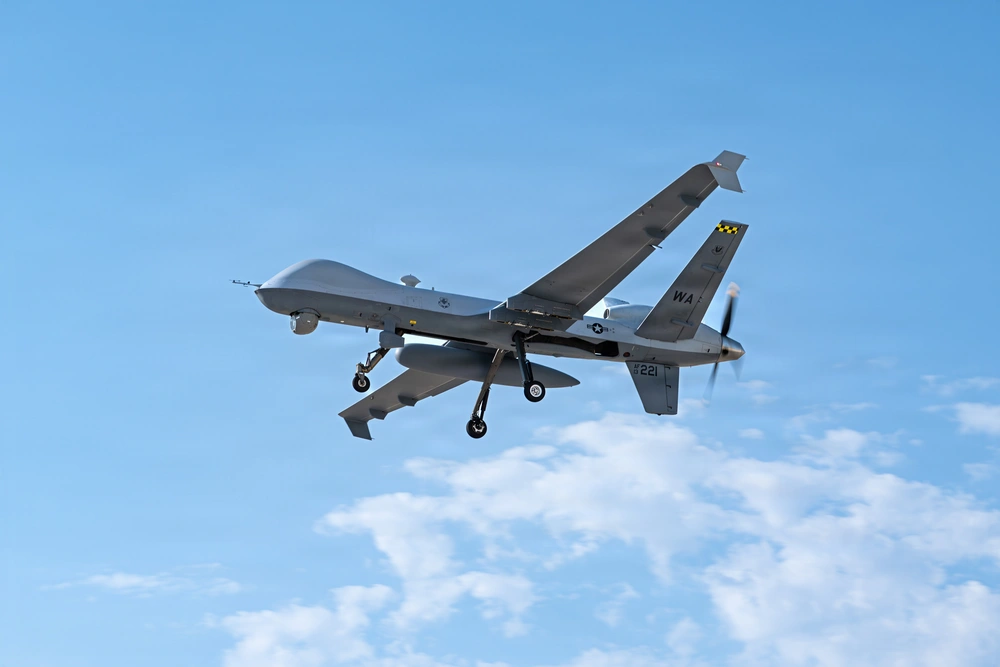
The MQ-9 Reaper dominates the 49 uncrewed entries. Three U.S. officials put Reaper losses at no fewer than 45 as of August 13, up from 24 in the May CRS tally. That amounts to roughly a quarter of the pre-war fleet, according to published estimates. Lt. Gen. David Tabor, the Air Force’s deputy chief of staff for plans and programs, told senators on May 12 that the service’s MQ-9 fleet had fallen to roughly 135 aircraft. One U.S. official has said not every Reaper was shot down; some crashed after losing their datalink.
Publicly available specifications indicate the General Atomics Aeronautical Systems MQ-9A is powered by a 900-shaft-horsepower Honeywell TPE331-10GD turboprop, with a 66-foot wingspan, a 10,500-pound maximum takeoff weight, a 3,750-pound payload, and a 1,000-nautical-mile range. It carries the Multi-Spectral Targeting System-B and a synthetic aperture radar, and employs AGM-114 Hellfire missiles, GBU-12 Paveway II bombs, and GBU-38 Joint Direct Attack Munitions.
Designed for permissive airspace and flown via satellite link, the Reaper offers persistence over the Strait of Hormuz but limited survivability against Iranian surface-to-air systems. U.S. officials value each aircraft at $30 million to $50 million depending on sensor and weapons payload. The Air Force, which had been shrinking its Reaper fleet, is now looking to buy back as many MQ-9As as it can, Tabor said.
CENTCOM reported an MQ-1 shot down on May 31, and officials cited at least two more in September without specifying the variant. The Air Force retired its MQ-1B Predators in 2018, leaving the Army’s MQ-1C Gray Eagle as the main MQ-1-series type in U.S. service. A Navy MQ-4C Triton also crashed in a mishap.
E-3 Sentry and KC-135 Losses Strain Aging Enabler Fleets
CRS singles out force sufficiency in high-demand, aging fleets, naming the E-3. The Air Force had only 16 E-3s left before the war and initially deployed six of them to the theater. Built on a Boeing 707-320B airframe with four TF33 turbofans and an AN/APY-2 radar in a 30-foot rotodome, the E-3 left production in the early 1990s.
Its designated successor, the Boeing E-7A Wedgetail, remains in prototype development after the Pentagon tried to cancel it in the fiscal 2026 budget over unit cost growth from $588 million to $724 million and survivability concerns; Congress preserved the program in the fiscal 2026 National Defense Authorization Act, and the Pentagon dropped its cancellation bid in June, moving to restore E-7 funding in its fiscal 2027 request.
Tankers follow the same pattern. The last KC-135 was delivered in 1965, so any replacement means additional Boeing KC-46A Pegasus purchases. Neither the A-10 nor the F-15E remains in production for the Air Force, leaving the F-15EX Eagle II as the nearest Strike Eagle substitute. That drives the CBO spread: the low end counts only losses DOD would change its plans to replace, the high end replacing every loss with a platform available today. CRS also asks whether foreign military sales and production constraints will slow regeneration.
Analysis: The most consequential crewed losses of Operation Epic Fury did not occur in contested airspace. Fifteen of 32 crewed aircraft were hit on the ramp at Prince Sultan and Muwaffaq Salti, including the E-3 and five tankers that sustain the air campaign. Iranian strikes reached high-value enablers at fixed, well-known bases, a vulnerability new aircraft purchases alone will not close. Hardened shelters, dispersal, and base air and missile defense belong in the same budget conversation as replacement tail counts, a link CRS draws by listing basing posture under operational risk.
The CBO estimate stops at August 1, leaving the September strike on Muwaffaq Salti and the latest MQ-1 losses unpriced. The next Lead IG quarterly report should extend the official record beyond June 30. The open question is how DOD will regenerate lost capacity, and whether Congress gets enough detail to judge it before funding decisions.