The U.S. Army on October 13, 2026, signed Statements of Intent (SOIs) with eight partner nations, expanding allied access to its online Unmanned Aircraft Systems (UAS) and Counter-UAS Marketplaces. Defense ministers and general officers from Albania, Canada, Croatia, Egypt, Japan, Kuwait, Morocco, and Panama signed at the Association of the United States Army (AUSA) Annual Meeting and Exposition in Washington, D.C., raising the number of partner signatories to 29, or 30 participating nations including the United States.
The ceremony builds on the Army’s first multinational signing at the Eurosatory exhibition in Paris on June 16, 2026, where Denmark, France, Italy, Lithuania, the Netherlands, Norway, Poland, Sweden, and the United Kingdom joined the framework. The Army then set a goal of 25 allied and partner nations by the end of summer 2026, a target the current roster now exceeds. Acting Secretary of the Army Adam R. Telle hosted the AUSA event with Brent G. Ingraham, Assistant Secretary of the Army for Acquisition, Logistics and Technology, and retired Gen. Robert B. Brown, AUSA’s president and chief executive officer.
How the Army UAS Marketplace and FMS Fast Lane Compress Sales
The framework rests on two secure online platforms. The UAS Marketplace, launched in March 2026 and built with Amazon Web Services, is the Army’s designated primary channel for procuring Group 1 to Group 3 drones, a band running from aircraft of 20 pounds or less to platforms under 1,320 pounds. It opened with 30 systems, all drawn from the Army’s project management office for UAS programs, with winners of the Pentagon’s Drone Gauntlet competitions and platforms on the Defense Contract Management Agency’s Blue List slated as later additions.
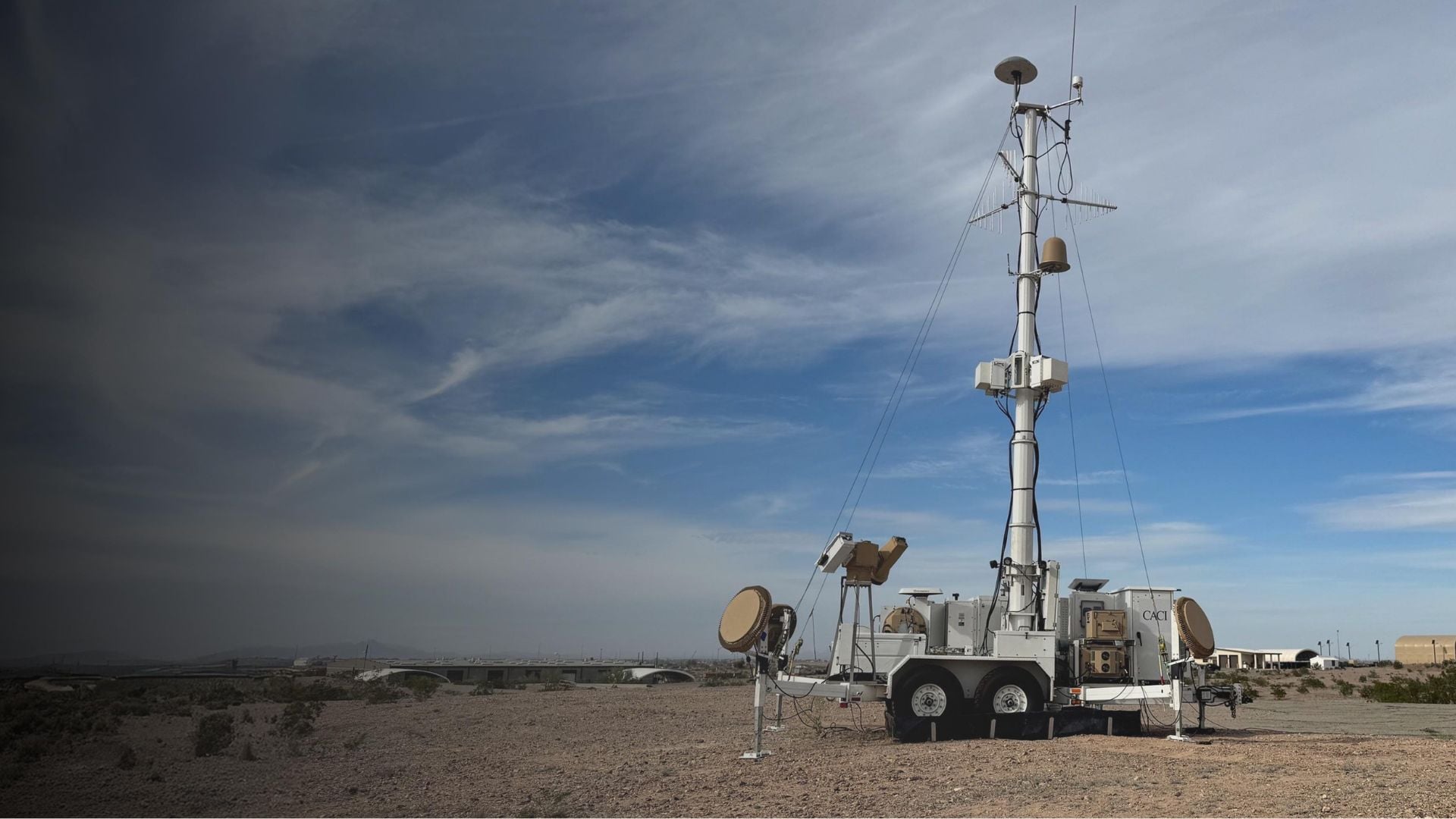
The Counter-UAS Marketplace is run by Joint Interagency Task Force 401 (JIATF-401), the Army-led organization coordinating counter-drone efforts across the Pentagon and federal agencies. It reached initial operational capability in February 2026 on the Common Hardware Systems electronic catalog, backed by an existing Army indefinite delivery, indefinite quantity contract, and subsequently logged its first four purchases, worth $13 million. In August 2026, JIATF-401 brought online a dedicated platform built by Kaizen Laboratories under a $15 million Other Transaction Agreement awarded in May. Listings span low-collateral defeat effectors, sensors, radars, and electronic warfare systems, and vendors must clear a vetting process covering their business, export controls, and product evaluation before listing.
Foreign access runs through a Foreign Military Sales (FMS) pathway the Army calls FMS Fast Lane. Partner nations order pre-cleared, standard-configuration drone and counter-drone systems directly through pre-established contracts. The Army completed the exportability work in advance, including technology transfer approvals, marketing licenses, and foreign disclosure clearances, which normally gate each FMS case. Letters of Offer and Acceptance are standardized and auto-generated. According to the Army, the approach compresses FMS case development from months to days. “With standardized auto-generated Letters of Offer and Acceptance and pre-negotiated contract vehicles, allied partners can now move from request to purchase in days rather than months,” Ingraham said.
Common Data Standards Anchor a 29-Nation Counter-UAS Buyer Pool
Technical entry rules matter as much as the contracting shortcuts. A March 2026 joint declaration between the United States and the United Kingdom established common counter-UAS data standards, and compliance is now an entry requirement for every system listed in the marketplace. For allied operators, a radar bought by one partner and an effector bought by another are expected to share data through common formats rather than bespoke post-delivery integration, a recurring friction point in layered counter-drone architectures.
The signatory roster spans the Indo-Pacific, European, and Central Command areas and the Western Hemisphere. It includes 16 NATO members: Albania, Canada, Croatia, Denmark, Estonia, Finland, France, Italy, Latvia, Lithuania, the Netherlands, Norway, Poland, Romania, Sweden, and the United Kingdom. Indo-Pacific participants are Australia, Japan, Singapore, South Korea, Taiwan, and Thailand. Egypt, Kuwait, Morocco, and the United Arab Emirates represent the Middle East and North Africa, while Argentina, Mexico, and Panama round out the Western Hemisphere. Twelve of the 29 partners, including Australia, South Korea, and Taiwan, joined outside the Paris and Washington ceremonies. Germany, Spain, and Türkiye are not among the signatories. Taiwan’s inclusion places Taipei on the same pre-cleared purchasing channel as treaty allies, a notable step given the policy sensitivity surrounding U.S. arms transfers to the island.
The platforms are designed to run in both directions, opening the U.S. market to allied vendors as well as allied buyers to U.S. vendors. “We are building open architecture at the tactical systems level and open architecture at the strategic national level,” Telle said.
Analysis: The marketplace model converts fragmented national counter-drone purchasing into aggregated demand for validated, data-compatible hardware. That gives U.S. and allied manufacturers a steadier order signal and gives coalition planners a baseline of interoperable sensors and effectors. Its limits are equally clear. FMS Fast Lane removes administrative lead time, not production lead time; interceptor and sensor output still governs delivery dates. Sales above Arms Export Control Act thresholds still require congressional notification, and an SOI records intent to participate, not a purchase commitment. The framework’s value will be measured in completed allied cases, not signatures.
The Army has not disclosed the value of allied orders placed through FMS Fast Lane, which systems are pre-cleared for which partners, or whether every signatory accesses both marketplaces on identical terms. The next markers are the first allied cases executed through the pathway, further SOI signings, and growth of the JIATF-401 catalog as additional systems clear validation.