Australia, the United Kingdom and the United States are staging their largest demonstration to date of interoperable maritime autonomous systems, testing more than 40 government and industry technologies off Southern California under the AUKUS Pillar 2 Maritime Big Play initiative. The event, designated Maritime Big Play Pacific, runs from October 5 to October 25, 2026, in the US Navy’s Southern California operating area near San Diego.
The demonstration comes as Pillar 2, the advanced capabilities line of the trilateral pact, faces pressure to show results alongside the Pillar 1 effort to deliver nuclear-powered attack submarines to Australia. Earlier in 2026, the House of Commons Defence Committee warned that Pillar 2 had yet to deliver on its promise. Since then, the partners have launched a first Pillar 2 Signature Project, fired a US torpedo from a British uncrewed submarine and opened industry engagement on a Royal Navy extra-large uncrewed underwater vehicle.
AUKUS Maritime Big Play Pacific: Four Mission Areas Under Test
The demonstration is organized around four mission areas: anti-submarine warfare (ASW), including tracking and surveillance with crewed and autonomous assets; lethality, focused on how systems fight as integrated forces; contested resupply, aimed at sustaining logistics under attack; and subsea and seabed warfare. According to the US Navy, the program includes live-fire testing tied to strike operations.
The UK leads the ASW strand, contributing uncrewed surface vessels, underwater gliders, aerial drones and subsea vehicles. Neither the Royal Navy nor the US Navy has identified the individual platforms involved or the number of vessels at sea, which limits independent assessment of what is being demonstrated.
The event builds on three years of trilateral work on shared command and control (C2) and secure “stratosphere to seabed” communications linking airborne, surface and undersea nodes. The US lead for the program, Gerry Tighe, described the objective as removing the technical barriers that keep allied autonomous systems out of operational fleets. The Royal Navy set two priorities for 2026: a common autonomy baseline across the three nations and an AUKUS test and reference environment to simulate real-world operations. Remote cross-control has already been shown: during Exercise Talisman Sabre in July 2025, personnel in Australia operated an extra-large uncrewed underwater vehicle located in the UK.
Second Sea Lord Vice-Admiral Paul Beattie, attending alongside Sir Stephen Lovegrove, the Prime Minister’s Special Representative on AUKUS, said: “Maritime Big Play demonstrates the real, tangible progress we are making with our AUKUS partners to deliver cutting-edge autonomous capability at sea.” He added that the goal was “proving that our forces can operate together seamlessly, sharing data and combining assets to stay ahead of future threats.”
Ghost Shark Sea Mines and Altius Drones Join Maritime Big Play
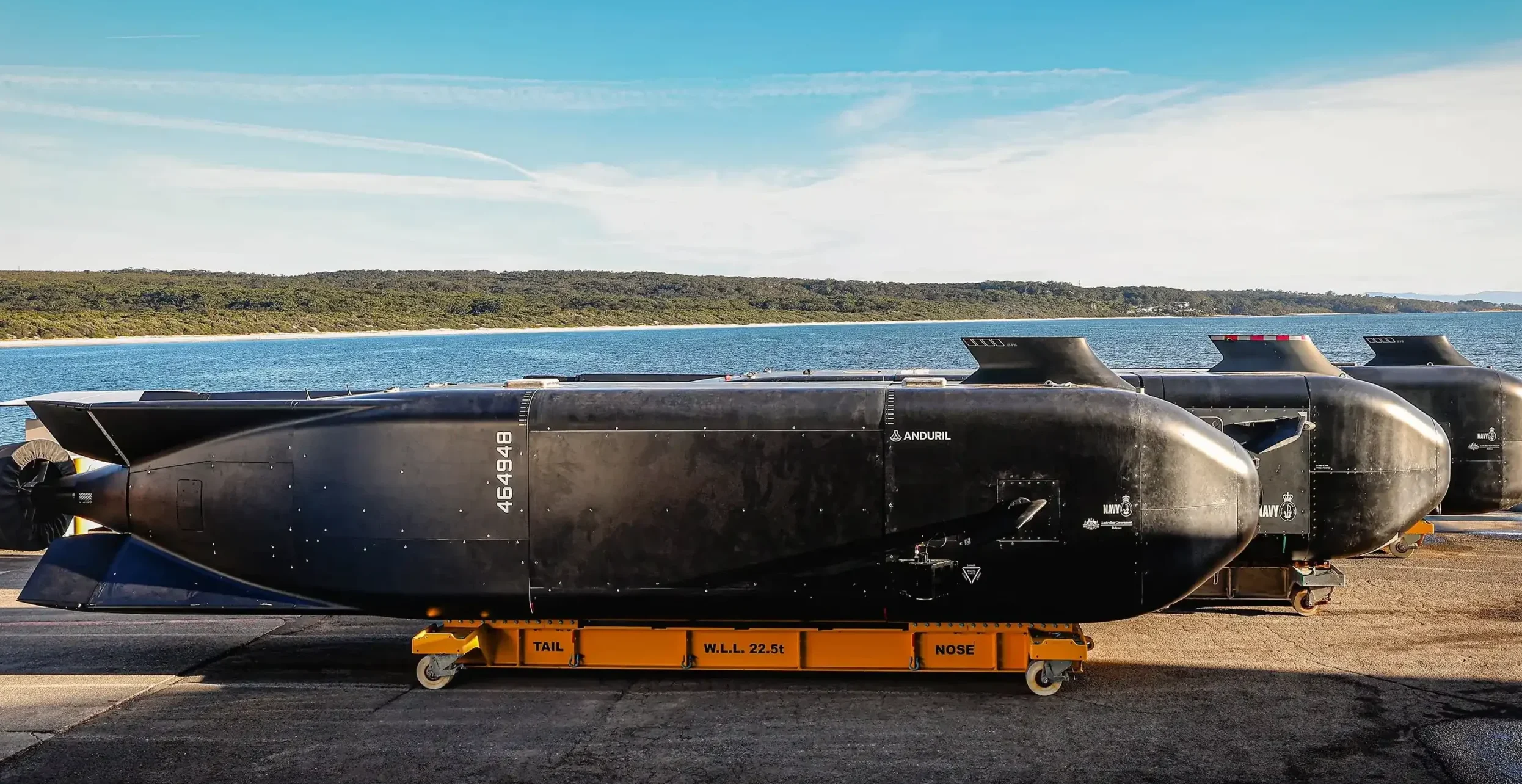
Australia is bringing new payloads to the event. The Australian Department of Defence announced on October 19, 2026, that mission payloads have been integrated into the Ghost Shark extra-large autonomous undersea vehicle (XL-AUV), the Speartooth large uncrewed underwater vehicle (LUUV) and the Bluebottle uncrewed surface vessel, and that some will be demonstrated at Maritime Big Play Pacific.
Defence Industry Minister Pat Conroy said Ghost Shark can lay up to 12 sea mines at a time, launch multiple Anduril Altius tube-launched drones for intelligence, surveillance and reconnaissance (ISR) or strike missions, and carry logistics caches developed by the Defence Science and Technology Group (DSTG). The vehicle can be deployed from a shipping container or craned off the back of a small vessel. Conroy also said Bluebottle will carry a thin-line towed array sonar to detect submarines. Defence has not disclosed which Altius variants Ghost Shark can carry.
The payloads cover three of the four mission areas under test at San Diego: sea mines for seabed warfare, supply caches for contested resupply and towed sonar for anti-submarine warfare. They also advance the first Pillar 2 Signature Project. Under its 2026 National Defence Strategy, Canberra plans to invest up to A$5.8 billion over the decade in autonomous and uncrewed undersea warfare, including A$1.7 billion for a Royal Australian Navy Ghost Shark fleet. Chief of Navy Vice Admiral Matthew Buckley said the service needs to “deliver capability at the speed of relevance.”
XV Excalibur Mk 48 Firing Validates US-UK Weapon Integration
The San Diego event follows the September 13, 2026, launch of an inert, recoverable US Navy Mk 48 heavyweight torpedo from the Royal Navy’s XV Excalibur at the British Underwater Test and Evaluation Centre (BUTEC) near the Kyle of Lochalsh in northwest Scotland. Designated Broadsword by the US Navy and Trial Iron by the UK, the three-week experiment tested mechanical, electrical and software integration between a US weapon and a British autonomous vehicle. It marked the first torpedo launch by either navy from an uncrewed undersea vessel rather than a crewed submarine.
Excalibur is a 12-meter, 19-tonne extra-large uncrewed underwater vehicle (XLUUV) with a diameter of about 2 meters, built by Plymouth-based MSubs under Project Cetus and transferred to the Royal Navy in December 2025. It has no conventional torpedo tubes; a central mission bay accepts trial payloads, and the government has not disclosed how the Mk 48 was carried or released. The vessel serves as a testbed in the Fleet Experimentation Squadron and is not planned for operational service.
The firing showed that an XLUUV can carry and release a heavyweight weapon. It did not demonstrate autonomous target selection or an operational capability. The US-initiated trial series is designed to grow in complexity toward a live firing against a target.
Type 93 XLUUV Engagement Opens Industrial Path for Undersea Payloads
On October 12, 2026, the Ministry of Defence published a preliminary market engagement notice for the Type 93 capability, extra-large uncrewed underwater vessels intended to work alongside crewed hunter-killer submarines to find and destroy enemy submarines. The notice also covers the AUKUS Signature Payload Programme and seeks suppliers of XLUUV platforms, payloads, autonomy software and mission management systems. It does not commit the Royal Navy to a procurement.
Type 93 sits within Atlantic Bastion, the Royal Navy’s layered North Atlantic ASW construct under its Hybrid Navy strategy. In a written parliamentary answer on July 15, 2026, the Ministry of Defence said platform numbers and construction schedules had not been determined.
The payload work feeds the first Pillar 2 Signature Project, announced by AUKUS defense ministers in Singapore on May 30, 2026. It commits the three nations to jointly develop sensors and weapons deployable across each partner’s uncrewed underwater vehicles, with first capabilities expected in service by 2027.
Analysis: The common thread running through Maritime Big Play, the Excalibur firing and the Signature Project is interoperability at the payload and C2 layer rather than the platform level. Each nation fields its own vehicles, but if a US weapon can be launched from a British hull and managed through shared software, the three fleets start to function as a single pool of undersea mass. For the Royal Navy, leading the ASW strand ties AUKUS experimentation directly to the Russian submarine threat in the North Atlantic, while the same tools serve US and Australian requirements in the Indo-Pacific. Pillar 2’s credibility now depends on converting experimentation into funded, fielded capability on the 2027 timeline.
Maritime Big Play Pacific concludes on October 25. Pending milestones include any release of results from the San Diego event, including the Australian payload demonstrations, the next Excalibur serials leading to a live shot against a target, industry responses to the Type 93 notice and delivery of the first Signature Project payloads in 2027. Funding levels and fleet numbers for the uncrewed undersea programs remain undisclosed.