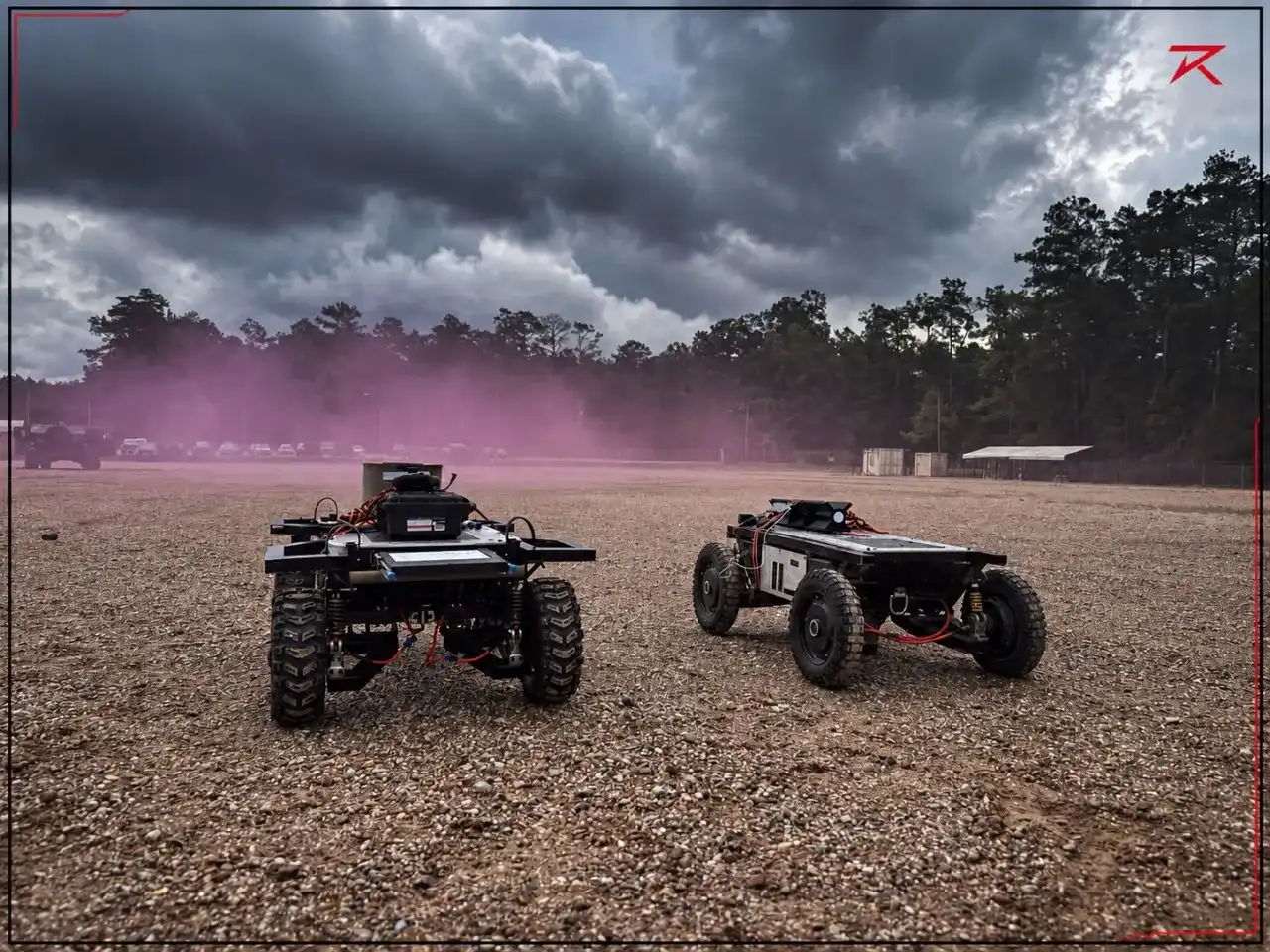
The U.S. Army will put nine autonomous ground and air delivery systems in the hands of Soldiers at the Joint Pacific Multinational Readiness Center (JPMRC) in Hawaii from November 4 to 15, 2026, in the live phase of a prize competition built to resupply forces dispersed across contested Pacific island chains. Each finalist in the G-TEAD USARPAC ACE 27-01: Autonomous Sustainment competition has been awarded $25,000, will receive another $25,000 if its system is successfully integrated into the exercise, and is competing for up to five final awards of $150,000.
The event is run by the Global Tactical Edge Acquisition Directorate (G-TEAD) with U.S. Army Pacific (USARPAC) and the Army FUZE xTech program. The Army’s problem statement is direct: intra-theater resupply in the Pacific relies on high-value crewed ships and aircraft that face severe risk in contested waters, while moving supplies ashore places heavy physical and cognitive loads on Soldiers. The service wants unmanned systems, managed by distribution software, that synchronize autonomous swarms, automate supply routing and significantly reduce human workload.
G-TEAD Autonomous Resupply Finalists: Eight Ground Systems, One Drone
Eight of the nine finalists compete in the ground delivery category. They are Ark Robotics’ M4 unmanned ground vehicle (UGV) running the company’s Frontier System autonomy; BlueSky Innovations’ Jekyll US; Cyborg’s modular autonomous tracked UGV; Dataspeed’s TWEEDLE, an attritable tactical wheeled dolly; Hypercraft’s Razorback, offered for both ground resupply and tactical power; Raptor Defense Company’s PIT VIPER personal combat vehicle; Stridar’s Siderunner Pro; and Swarmbotics AI’s FIREANT, designed for attritable last tactical mile resupply. Phenix Solutions is the only air finalist, entering its Ultra 2XL heavy-lift unmanned aircraft system.
The competition covered three capability areas: attritable air delivery systems, attritable autonomous surface vessels able to carry one to four twenty-foot equivalent units (TEUs), and uncrewed ground delivery systems. No surface vessel appears among the finalists, although the request for information (RFI) folded long-range autonomous surface vessels, carrying heavy cargo across contested open ocean under multi-domain attack, into what it called a critical requirement for integrated unmanned sustainment systems. The Army filled nine of up to 15 available finalist slots.
The Army has not released payload, range, speed or unit cost data for any finalist system, and the published RFI does not state a minimum delivery distance for air platforms.
GPS-Denied Autonomy and Network Integration Requirements for JPMRC Trials
Every system had to reach Technology Readiness Level (TRL) 6 or higher, be fieldable within 180 days of contract award and keep operating in denied, degraded, intermittent and limited (DDIL) GPS and communications conditions. Entrants also had to demonstrate cyber resilience, assured control in contested environments, obstacle detection and avoidance, emergency stop behavior in remote, teleoperated and autonomous modes, and onboard diagnostics that flag sensor or software faults to the operator.
For ground entries, the RFI lists among its desired characteristics more than 85 percent reliability in connectivity and route completion under DDIL conditions, using onboard sensing, alternative navigation and resilient control pathways. It envisions fully autonomous on-road driving, limited-supervision off-road operation with a human in the loop, and teleoperation as a fallback. UGVs should identify the correct load through digital manifests, visual markings and electronic tags, operate independently in low or no light and precipitation, and work as coordinated teams.
Network integration is equally detailed. Every entry had to be interoperable with the Global Command and Control System-Army (GCCS-A) for situational awareness, force tracking and tasking, and with the Global Combat Support System-Army (GCSS-A) for tactical logistics. The RFI’s desired characteristics add Mounted Mission Command Software (MMC-S) for real-time tracking and, for air platforms, the Tactical Airspace Integration System (TAIS) and the Advanced Field Artillery Tactical Data System (AFATDS), so autonomous routes deconflict with friendly fires and manned aviation corridors. Relevant NATO standardization agreements (STANAGs) cover data links, transportability and fuels such as JP-8.
Analysis: The competition functions less as a procurement than as a scouting mechanism. A $1.5 million prize pool and a follow-on Other Transaction Authority (OTA) funding pool capped at $2 million will not field a fleet; they will show USARPAC which commercial systems hold up under Soldier handling, DDIL conditions and integration with legacy mission command networks. The finalist mix is the more telling signal. The hardest sustainment problem in the Pacific is moving tonnage between islands, yet the field heading to Hawaii is weighted toward last tactical mile ground robots. Unless the surface vessel requirement is addressed through another pathway, the inter-island leg remains dependent on the crewed assets the Army itself describes as vulnerable.
Final winners are scheduled to be announced on November 15, 2026. From November 30, 2026, to March 31, 2027, up to 15 selectees may submit OTA proposals, and follow-on awards may require delivery of initial prototypes within 90 days. Finalists are encouraged to leave their kits behind after the exercise for additional end-user feedback. The Army has not disclosed which USARPAC units will participate, the exercise scenario, or whether a separate solicitation will target the surface vessel gap.