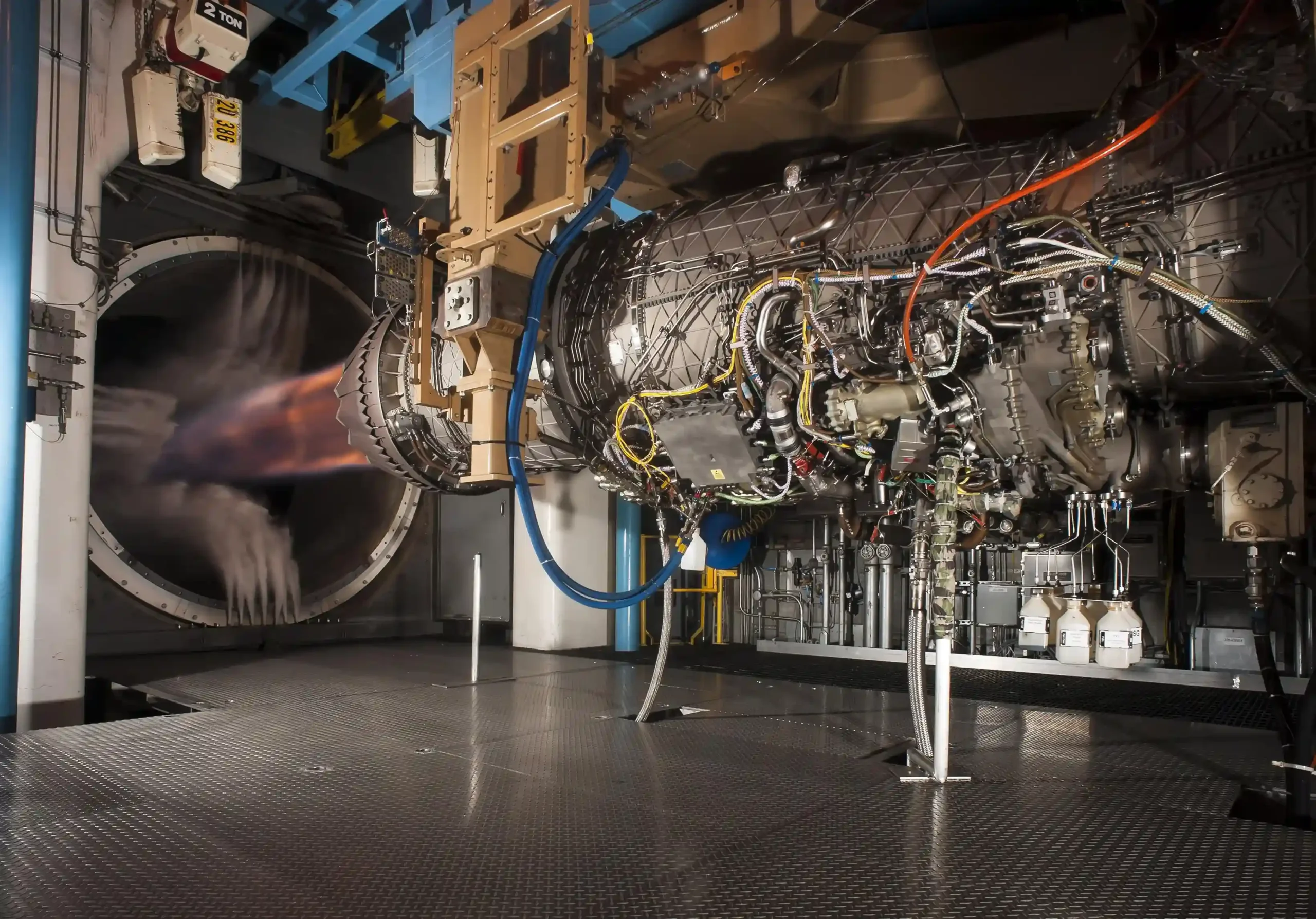
Pratt & Whitney began construction on October 23, 2026, of a $100 million (375 million zloty) facility at its plant in Rzeszów, southeastern Poland, that will introduce manufacturing of critical rotating components to meet demand for engines including the GTF commercial engine and the F135 and F100 military engines. The RTX business said the 6,500-square-meter (70,000-square-foot) building is scheduled to become operational in 2028 and will create more than 120 jobs.
The groundbreaking turns into hardware an investment first announced on April 22, 2026, and ties it directly to a parallel project in the United States. F-35 production, F135 sustainment and commercial engine overhauls now compete for the same constrained forging and machining capacity. Poland, which hosts RTX’s largest workforce and investment base outside the United States with more than 9,500 employees across Collins Aerospace, Pratt & Whitney and Raytheon, now takes on a larger share of that chain.
How Rzeszów and Columbus Forge Will Scale F135 Engine Parts Output
According to Pratt & Whitney’s April announcement, the new building will house specialized processing for isothermally forged parts, including heat treatment, sonic machining and inspection operations. The October release adds that the project introduces manufacturing of critical rotating components at the site, a step beyond its current portfolio.
Pratt & Whitney presents the Polish project as supporting a forging expansion in Georgia. In February 2026, Pratt & Whitney committed $200 million to a seventh isothermal forging press at its Columbus Forge facility, which produces compressor airfoils and compressor and turbine disks for the GTF and F135. That press is also due online in 2028. The company says the two projects together will raise output of critical parts such as rotating compressor and turbine disks by 30%.
Isothermal forging holds the die and the workpiece at the same elevated temperature, allowing nickel and titanium alloys to be shaped close to final geometry with a controlled grain structure. Compressor and turbine disks are life-limited, fracture-critical parts, and each forging must clear heat treatment and inspection before final machining. Post-forge processing capacity is therefore as much a constraint on engine deliveries as press availability, which is the gap the Rzeszów building is designed to close.
The F135 powers all three variants of the F-35 Lightning II. Pratt & Whitney reported on July 31, 2026, that it had delivered more than 1,500 F135 production engines to customers in 20 allied nations. The company has not specified which F135 or F100 components will move through the new Rzeszów line, nor how volumes will split between new production and sustainment.
Pratt & Whitney Rzeszów: From F-16 Engine Assembly to F135 Hardware
The Rzeszów plant traces its origins to 1937, when it was built as a state aero-engine factory in Poland’s Central Industrial District. It joined the former United Technologies in March 2002 and adopted the Pratt & Whitney Rzeszów name in 2015. In the mid-2000s, the site assembled and tested F100-PW-229 engines for the Polish Air Force’s F-16C/D Block 52+ fleet, acquired under the Peace Sky program.
Today the facility produces the fan drive gear system at the core of the GTF geared turbofan, F100 static structures and key F135 parts. It also builds PT6, PW200, PW500/600 and PW800 family engines for helicopters, business jets and general aviation aircraft.
“Six months ago, we were talking about this investment as a plan and an opportunity to strengthen Poland’s position as a strategic center of excellence for Pratt & Whitney,” said Piotr Owsicki, general manager of Pratt & Whitney in Rzeszów. “Today, we begin turning that plan into reality.”
The shift to rotating parts moves the plant up the criticality ladder: disks sit at the top of any engine supplier’s certification and traceability hierarchy. Poland’s own fleet adds a sovereign dimension: Warsaw flies F100-powered F-16s and ordered 32 F-35A aircraft in 2020, both dependent on Pratt & Whitney propulsion.
Analysis: The Rzeszów groundbreaking shows Pratt & Whitney treating disk capacity as a transatlantic system rather than a single US chokepoint, pairing a new press in Georgia with post-forge processing in Poland. For the F-35 enterprise, that adds European-based capacity for the most supply-constrained class of engine hardware as allied fleets grow. For NATO’s eastern flank, it deepens Poland’s industrial stake in the propulsion of aircraft Warsaw itself operates. The trade-off is a longer logistics chain for fracture-critical parts that must remain fully traceable across two continents.
Both the Columbus press and the Rzeszów building are scheduled to be operational in 2028, so the promised 30% output increase will not reach customers before then. Key unknowns remain: which F135 components are assigned to Poland, whether the work will extend to the F135 Engine Core Upgrade, and how long qualification of parts from the new line will take once equipment is installed.