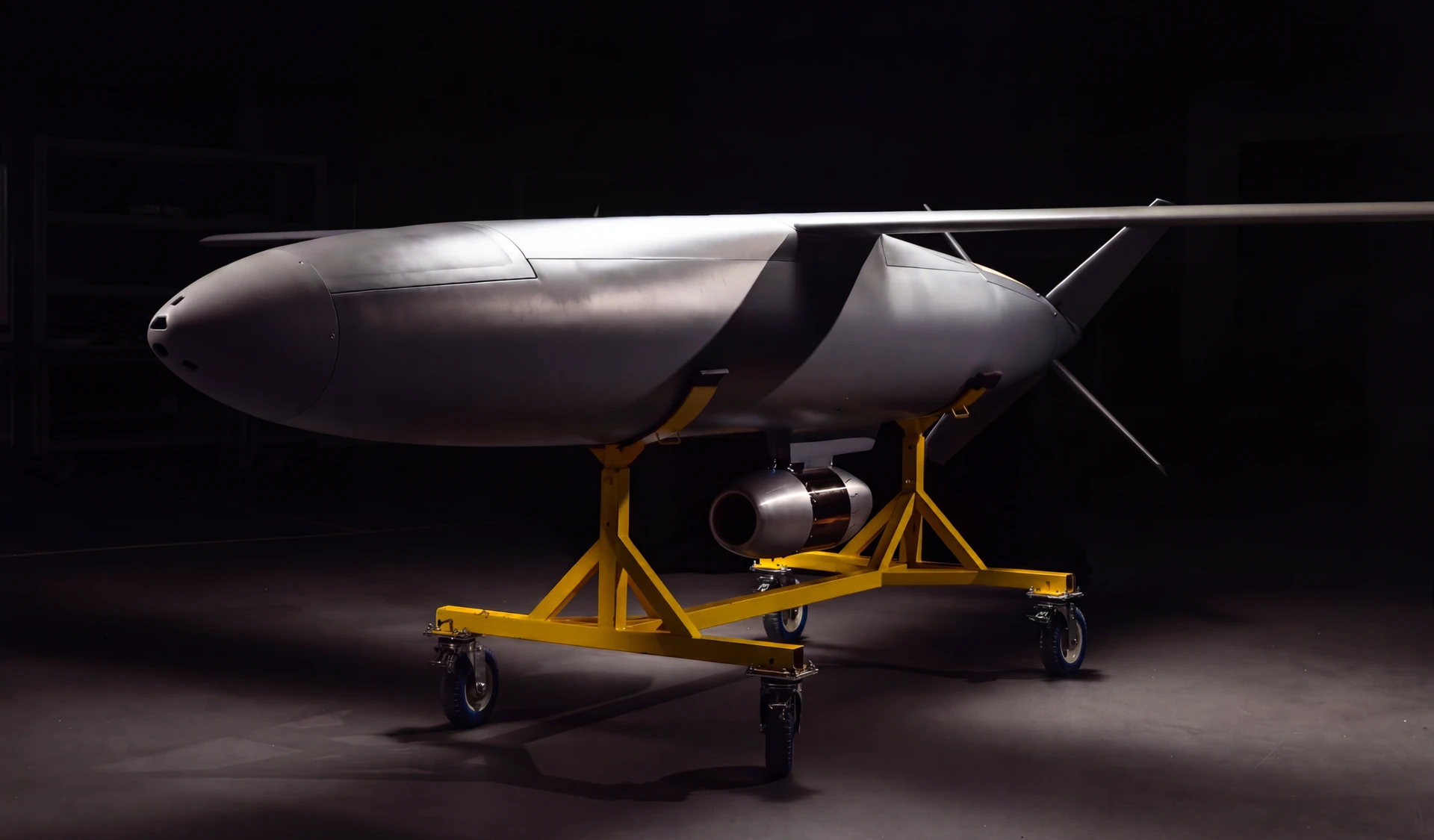
Germany’s Defense Ministry is negotiating to buy thousands of low-cost deep strike weapons from several manufacturers, led by a contract worth more than €1 billion ($1.12 billion) with US startup Covenant for its ground-launched Anthem cruise missile, people familiar with the talks told Bloomberg, which first reported the negotiations on October 23. A German official told the Kyiv Independent on October 24, 2026, that Berlin is also negotiating with Kyiv to acquire Ukraine’s Bars jet-powered missile-drone, while Destinus and Hypersonica remain in contention for further orders.
The effort targets a gap the Bundeswehr cannot close with its current arsenal. Its only long-range strike weapon is the air-launched Taurus KEPD 350, built by Taurus Systems GmbH, a joint venture of MBDA Deutschland and Saab, with a range of about 500 kilometers. Berlin’s planned purchase of the Raytheon BGM-109 Tomahawk and the Typhon ground launcher faces delays of up to five years as Washington replenishes stocks drawn down in the war against Iran. Planners now want enough inexpensive missiles to saturate an adversary’s air defenses.
Germany Deep Strike Options: Anthem, Bars, Ruta and HS1 Compared
Covenant, founded in 2024 and headquartered in Washington, emerged from stealth on September 9, 2026, after raising more than $250 million across three funding rounds. It describes Anthem as a ground-launched, heavy-payload weapon built largely from commercial off-the-shelf components; company statements put the payload at more than 200 kilograms. Covenant has published no range figure. People familiar with the program place it above 2,000 kilometers. The company targets a mid-six-figure unit price in serial production. Anthem has not been used in combat.
The Bars offers the combat record Anthem lacks. The Ukrainian missile-drone, whose manufacturer remains undisclosed, is a jet-powered design that leaves a ground launcher on a solid-fuel booster; its reported range is 1,000 kilometers at up to 700 km/h. A company representative said in September that Ukrainian forces fire around 2,000 per month at Russian refineries, power plants and substations. Defense Minister Boris Pistorius and Ukrainian Foreign Minister Andrii Sybiha signed a co-production agreement on July 8, 2026, under the Build with Ukraine initiative, with Germany financing first-phase output for Ukraine’s Defense Forces. The new talks would add rounds for the Bundeswehr itself.
Netherlands-based Destinus markets its Ruta family through Rheinmetall Destinus Strike Systems, a venture in which Rheinmetall holds 51 percent, supplies warheads and boosters, and runs final assembly in Germany. Ruta Block 2 has a stated range exceeding 450 kilometers; the turbojet-powered Ruta Block 3 targets more than 2,000 kilometers from containers carried on Rheinmetall HX trucks. Munich-based Hypersonica flew its unarmed HS1 prototype from Andøya, Norway, on February 3, 2026, reaching Mach 6 over about 300 kilometers, and aims to field a European hypersonic strike capability by 2029.
How Tomahawk Delays and Denmark’s Anthem Order Shape Bundeswehr Planning
Berlin submitted a Letter of Request in July 2025 for Typhon, the Lockheed Martin launcher that fires Tomahawk and SM-6 missiles, as a bridge to the European Long-Range Strike Approach (ELSA), which Pistorius said would take seven to ten years. Washington later canceled its plan to station Tomahawks with a US Army long-range fires battalion in Germany, and although it agreed in July 2026 to approve the German sale, deliveries now queue behind the replenishment of US stocks. MBDA Deutschland announced on December 18, 2025, a contract to prepare serial production of the Taurus Neo, but that missile remains air-launched and years from fielding.
Cost explains the pivot. The Bundeswehr bought about 600 Taurus missiles between 2005 and 2010, an inventory far too small for sustained saturation tactics. If Covenant’s sub-$1 million pricing holds, the €1 billion under negotiation would buy more than 1,100 Anthem rounds. Covenant’s Leipzig plant, a leased hall near Leipzig/Halle Airport, is slated to deliver its first missiles in early 2027, reach 1,000 units by the end of that year and climb to 5,000 per year by 2028.
Denmark reinforced the model on October 22, 2026, when Defense Minister Jeppe Bruus announced purchases of Kongsberg’s Joint Strike Missile (JSM) for Royal Danish Air Force F-35As and ground-launched Anthem missiles. Copenhagen disclosed no quantities, costs or delivery dates, but must offer NATO a long-range strike capability by 2030. Danish Anthem rounds are reportedly to be built in Germany, giving Leipzig a second NATO customer before its first missile ships.
Analysis: Berlin is building a two-tier strike force: a small, high-end layer of Taurus Neo and eventually Tomahawk, backed by a mass layer of sub-$1 million cruise missiles and missile-drones produced on German soil. That second layer trades export-license risk for maturity risk. Anthem has no combat record and its core performance figures remain unpublished, so a potential €1 billion contract with a two-year-old company rests on test data the Bundeswehr has not disclosed. Bars carries the opposite profile: proven at scale against Russian infrastructure, built by an anonymous manufacturer. A NATO army buying Ukrainian strike weapons would also reverse the arms flow that has defined the war since 2022.
Any Anthem contract needs approval from the Bundestag’s budget committee, which must clear procurements above €25 million. The next hard milestone is Leipzig’s first delivery in early 2027. Still unknown: how Germany will split quantities between Anthem, Bars, Ruta and HS1, whether Kyiv will release Bars rounds while its own strike campaign continues, and when Typhon will reach the Bundeswehr.