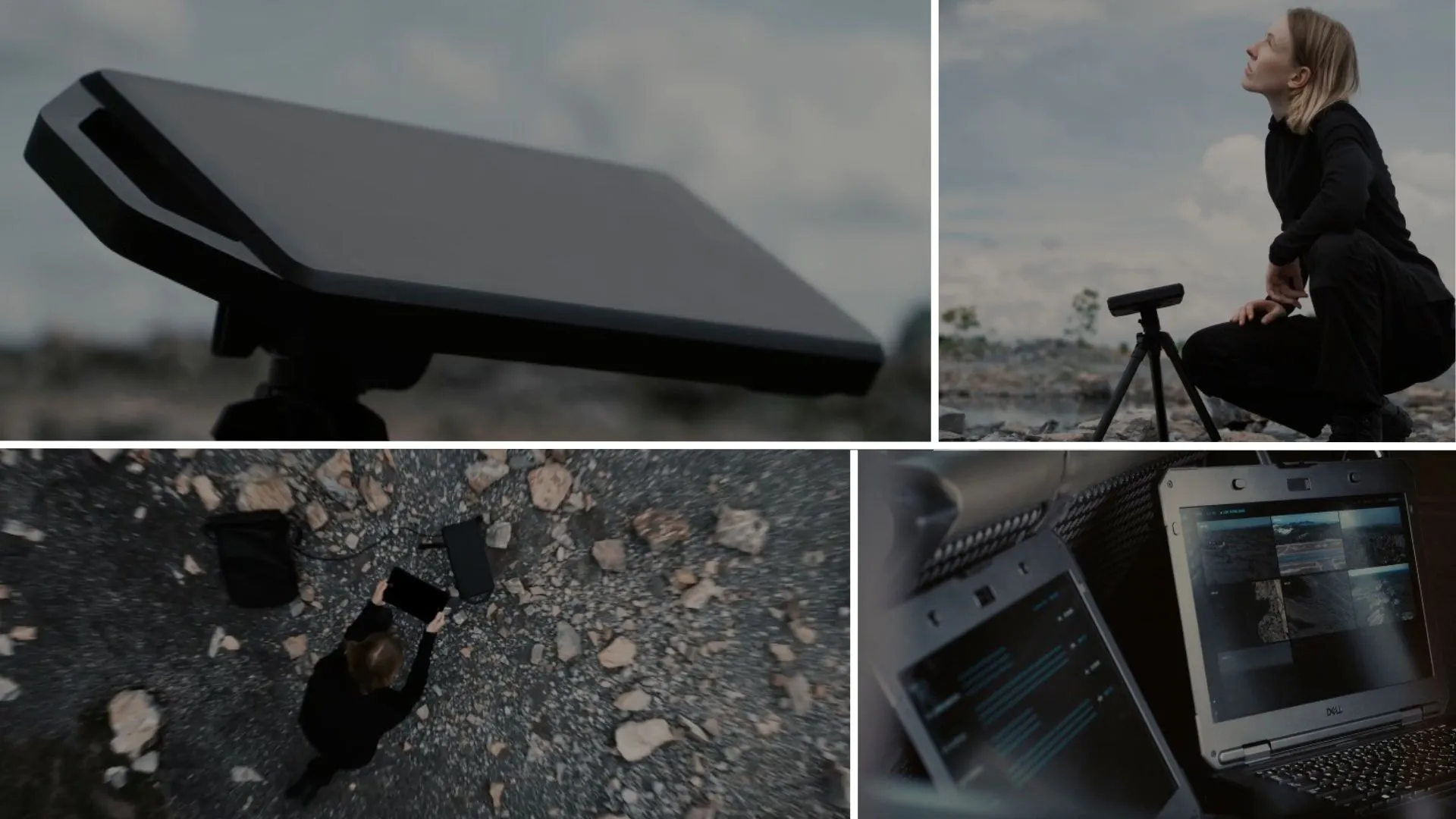
Ukraine’s Ministry of Defence signed a Letter of Intent (LoI) with Finnish space company ICEYE and Finnish telecommunications group Nokia on October 22, 2026, to explore cooperation in space aimed at supporting Ukraine’s defense capabilities, particularly by building a sovereign satellite communications (satcom) capability. The agreement was announced during the visit of Finland’s Prime Minister to Ukraine.
The signing comes three weeks after ICEYE and Nokia launched a partnership on October 1, 2026, to develop government-owned broadband satellite communications in low Earth orbit (LEO). It also lands as Kyiv works to reduce its wartime reliance on foreign-operated commercial constellations for frontline connectivity. The LoI is an exploratory framework, not a procurement contract: no value, system size, delivery schedule, or funding source has been disclosed.
What the ICEYE and Nokia Sovereign Satcom Architecture Offers
Under the October 1 partnership, ICEYE and Nokia will jointly develop broadband LEO satcom systems for governments, covering missions from defense and border security to emergency services and disaster response. The defining feature is ownership. The customer nation holds the satellites, the ground segment, and the user terminals, rather than leasing capacity from a commercial operator. ICEYE has framed the model as giving states full control of their communications without depending on a foreign operator’s terms of service.
The partnership pairs ICEYE’s track record delivering sovereign satellite missions with Nokia’s experience in secure networking technologies and its growing defense portfolio. Together, the companies will integrate satellites, ground infrastructure, and ruggedized end-user terminals, extending ICEYE’s sovereign mission model from radar imaging to communications. The companies describe the system as delivering targeted, high-throughput, low-latency connectivity over priority mission areas, designed to complement existing military and commercial networks rather than replace them.
Key technical parameters remain undisclosed. Neither company has published the planned number of satellites, orbital altitude, frequency bands, per-terminal throughput, or anti-jamming measures. The emphasis on coverage over priority mission areas points to a regionally focused design rather than a global constellation, although the architecture has not been confirmed. The first communications satellites are expected to launch in 2028, according to the companies.
ICEYE’s Ukraine Track Record Since 2022 and the Poland Precedent
ICEYE enters the satcom effort with an established operational footprint in Ukraine. In August 2022, a contract funded by the Serhiy Prytula Charity Foundation transferred the full capabilities of one of ICEYE’s in-orbit synthetic aperture radar (SAR) satellites to the Ukrainian government’s use, along with access to imagery from the wider ICEYE constellation. Ukraine’s Defence Intelligence (HUR) later reported that the satellite had captured more than 4,000 images of Russian military targets. The Ministry of Defence and ICEYE signed a remote sensing cooperation memorandum in July 2024, and a separate German-backed arrangement with Rheinmetall began delivering additional ICEYE SAR imagery to Ukraine in October 2024.
ICEYE operates what it describes as the world’s largest SAR constellation, imaging through cloud and darkness, and employs more than 1,500 people. Its sovereign mission model, in which a government acquires and operates its own constellation, is the template the company now intends to apply to communications. ICEYE cites Poland, which received a national radar satellite system from the company in under a year, as evidence it can deliver satcom on similar timelines.
Rafal Modrzewski, ICEYE’s CEO and co-founder, said: “Ukraine needs secure, sovereign and high-performance satellite communications systems that it controls. We have a proven track record of delivering sovereign missions at speed to help build that capability.”
Why Sovereign Satellite Communications Matter on Ukraine’s Front Line
Since the opening weeks of the full-scale invasion, commercial LEO terminals have carried a large share of Ukrainian tactical traffic, from drone control links and fires coordination to command posts operating where terrestrial networks were destroyed. That reliance has left continuity of service subject to decisions taken outside Kyiv’s control, a concern that has resurfaced repeatedly during the war. Russian electronic warfare adds a second layer of risk, placing a premium on links that a state can harden and manage itself.
President Volodymyr Zelenskyy framed the LoI in those terms: “Modern warfare has proven that reliable communications are a matter of national security. We must all rely on capabilities that we can control.” Mikko Hautala, Chairman of Nokia Defense, said satellite networks “extend and protect connectivity when networks on the ground are disrupted,” making them a key part of any secure communications system.
The ICEYE and Nokia track is not Kyiv’s only sovereign satcom initiative. Ukrainian operator Stetman and Danish manufacturer GomSpace are pursuing a joint venture, UASAT, publicly reported as a $1.1 billion, 360-satellite constellation at 550 kilometers altitude, with first launches targeted for 2027 and full deployment by 2030. How the two efforts would coexist, compete, or interoperate has not been addressed publicly.
Analysis: The LoI is less a capability than a signal of procurement strategy. Kyiv is building optionality across several European sovereign satcom tracks rather than betting on a single replacement for commercial service, and the ICEYE and Nokia offer pairs a proven sovereign satellite integrator with an established secure-networking and terminal supplier, both inside the NATO industrial base. The binding constraint is time. With first launches not expected before 2028, the system cannot relieve near-term dependence on commercial constellations, and its operational value will rest on terminal volume, resilience against Russian jamming, and whether a regional architecture can carry the throughput that drone-intensive warfare now demands. A further, so far unstated, opportunity lies in fusing ICEYE’s SAR sensing and a sovereign transport layer within one national architecture.
The next milestones are the conversion of the LoI into a defined program with scope, financing, and schedule, and the identification of who pays, whether Kyiv, Helsinki, or European Union instruments. Technical disclosures on constellation size, frequencies, and terminal production rates will determine whether the 2028 launch target is credible. Until then, the agreement is a framework for cooperation, not a committed acquisition.