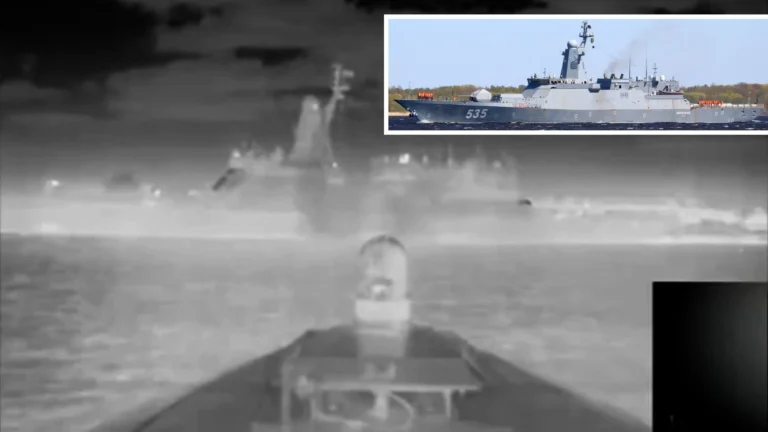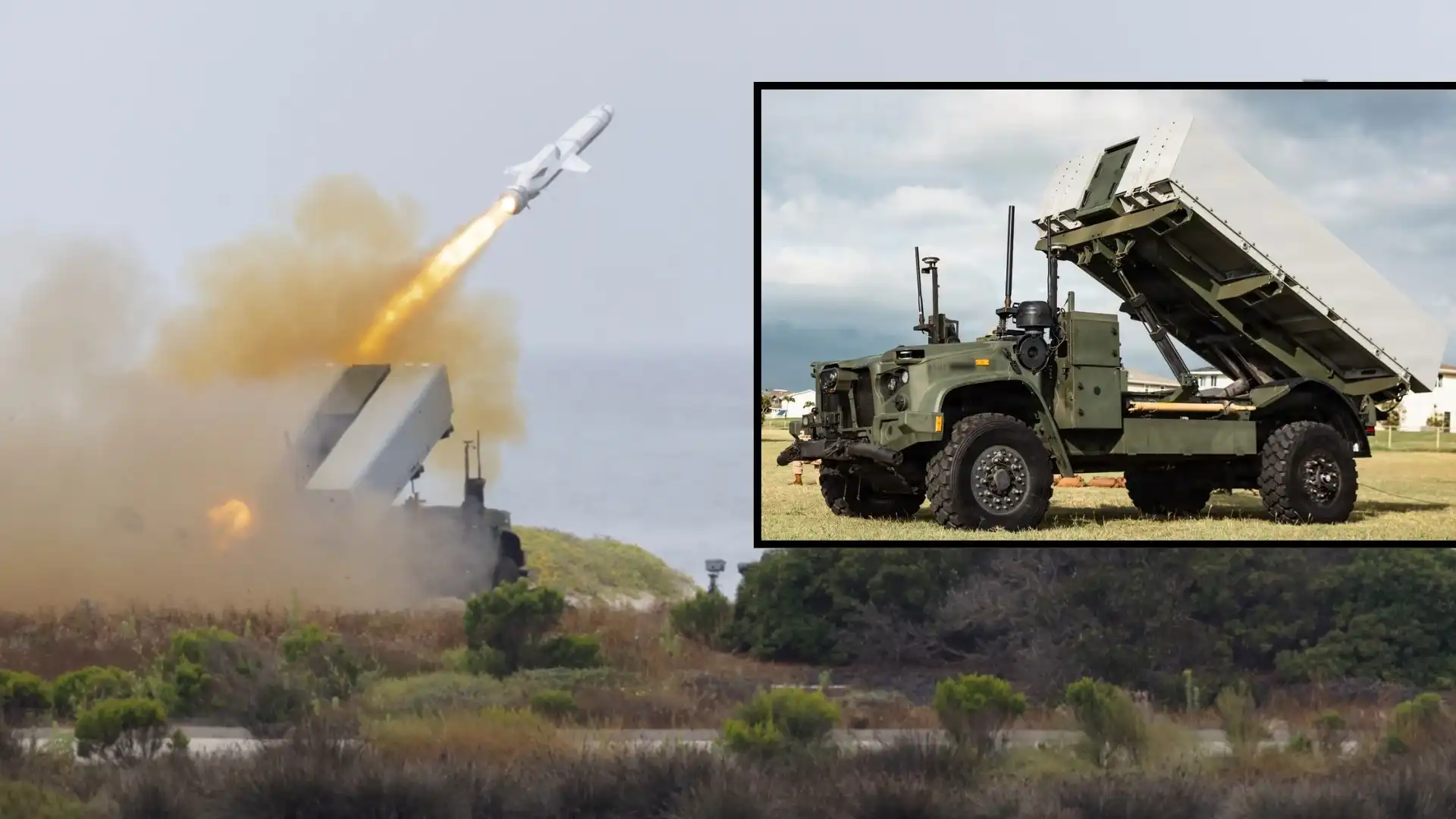
The U.S. Marine Corps is exploring ways to more than double Naval Strike Missile range for its Navy-Marine Expeditionary Ship Interdiction System (NMESIS), from 135 to 270 nautical miles or more. A Marine Corps spokesperson confirmed the effort to The War Zone (TWZ), which reported it on November 23, 2026: “The range of the Naval Strike Missile is 135 nautical miles. The Marine Corps is currently exploring opportunities to more than double the range of the NSM.”
The disclosure follows the October 9, 2026, redesignation of 1st Battalion, 10th Marine Regiment, at Camp Lejeune, North Carolina, as the Corps’ first Medium Missile (MMSL) battalion, and the first NMESIS deployment to Japan’s Yonaguni Island, about 65 nautical miles east of Taiwan, during Exercise Keen Sword from October 19 to 29. It also comes after the Corps cancelled its ground-launched Tomahawk Long Range Fires (LRF) program in the fiscal 2026 budget, leaving NMESIS as its primary ground-based anti-ship weapon. Marine Corps FY2026 budget documents already referenced completed range-extension designs, a more energy-dense fuel tested in FY2025, and test assets for upgrades meant to “increase maximum available range and weapon effectiveness.”
Naval Strike Missile Range Extension: Block 1A Baseline and Options
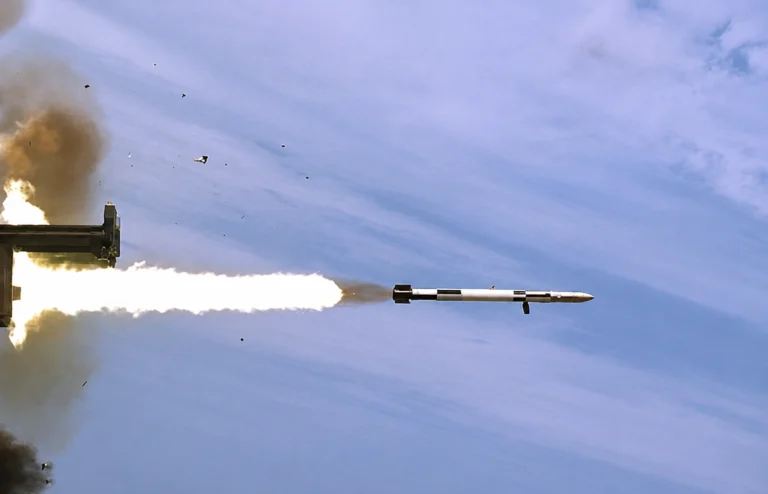
Developed by Norway’s Kongsberg in partnership with Raytheon, the Naval Strike Missile (NSM) originally carried a stated range of about 100 nautical miles. The Block 1A variant introduced in the early 2020s raised that figure to 135 nautical miles, and the Marines have said the missile can exceed it when flown on a “tactical profile.” Publicly available specifications indicate a missile about 3.96 meters long with a launch weight of about 407 kilograms, a warhead of roughly 120 kilograms, a solid rocket booster, and a Microturbo TRI 40 turbojet sustainer for high-subsonic, sea-skimming flight.
Guidance is as relevant as range. NSM reaches its target area on GPS-aided inertial navigation, then switches to a passive imaging infrared seeker for terminal homing. Because the seeker emits nothing, a target ship receives no radar warning, and the seeker is immune to radiofrequency jamming. Low-observable shaping and high-g terminal evasive maneuvers complicate point defenses. The missile retains a secondary land-attack capability.
The Corps has not disclosed how it would reach 270 nautical miles. Plausible paths include cutting gross weight, potentially through a smaller warhead, and increasing fuel capacity or efficiency, consistent with the fuel-efficient flight profiles cited in budget material. A lighter warhead would carry a lethality cost against larger surface combatants. Budget documents also mention initial analysis of a missile datalink, which becomes critical once engagement ranges outgrow organic Marine targeting.
How NMESIS Batteries Would Use Extended-Range NSM in the Pacific
NMESIS pairs NSM with the Remotely Operated Ground Unit for Expeditionary Fires (ROGUE-Fires), an uncrewed launcher derived from the 4×4 Joint Light Tactical Vehicle (JLTV) that carries two ready-to-fire canisters. An MMSL section fields three ROGUE-Fires launchers and two JLTVs, one hosting the NMESIS command and control system. A full MMSL battery comprises two platoons of three sections each, for 18 launchers.
Range translates directly into coverage. At 135 nautical miles, a single launcher holds at risk about 57,255 square nautical miles. At 270 nautical miles, that area grows fourfold to roughly 229,022 square nautical miles. A battery in the Philippines’ Batanes Islands that today can close the Luzon Strait would reach far beyond it, while launchers on Yonaguni or Ishigaki would place a much larger share of the waters around Taiwan within range. Greater standoff also lets launchers operate deeper inside an adversary’s weapons engagement zone with more room to disperse and relocate.
Analysis: A 270-nautical-mile NSM would only partially offset the loss of ground-launched Tomahawk, which can hold targets at risk roughly 1,000 miles away, so Marine units will still depend on joint fires for deep strike. The more consequential effect is on the kill chain. A missile that outranges organic Marine sensors puts a premium on over-the-horizon cueing from Navy, joint, and allied assets, which is why datalink work belongs in the same effort. Against a People’s Liberation Army Navy (PLAN) commissioning surface combatants faster than the United States and its allies, extended-range NSM lets a small number of 18-launcher batteries deny far wider sea areas from dispersed island positions without matching the PLAN ship for ship.
Key unknowns remain: the technical path, unit cost, schedule, and whether a longer-range missile requires changes to ROGUE-Fires or NMESIS fire control. FY2026 budget documents also start procurement of 36 Block II ROGUE-Fires launchers, with deliveries expected in 2028. Beyond NSM, the Corps’ M142 High Mobility Artillery Rocket System (HIMARS) could field the Precision Strike Missile (PrSM), whose anti-ship variant is in development, and the service has floated a ROGUE-Fires variant able to fire MLRS Family of Munitions pods. The Department of the Navy’s FY2027 budget request seeks 32 NMESIS launchers and 103 Naval Strike Missiles. Whether the FY2028 request moves NSM range extension from development toward procurement will signal how quickly extended-range NSM goes from exploration to fielding.