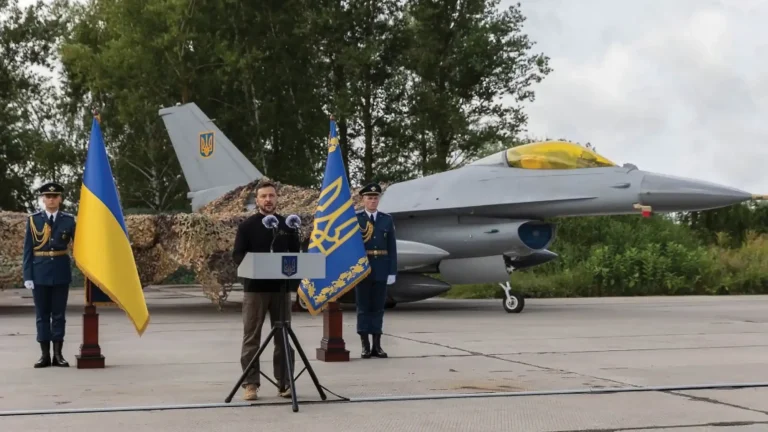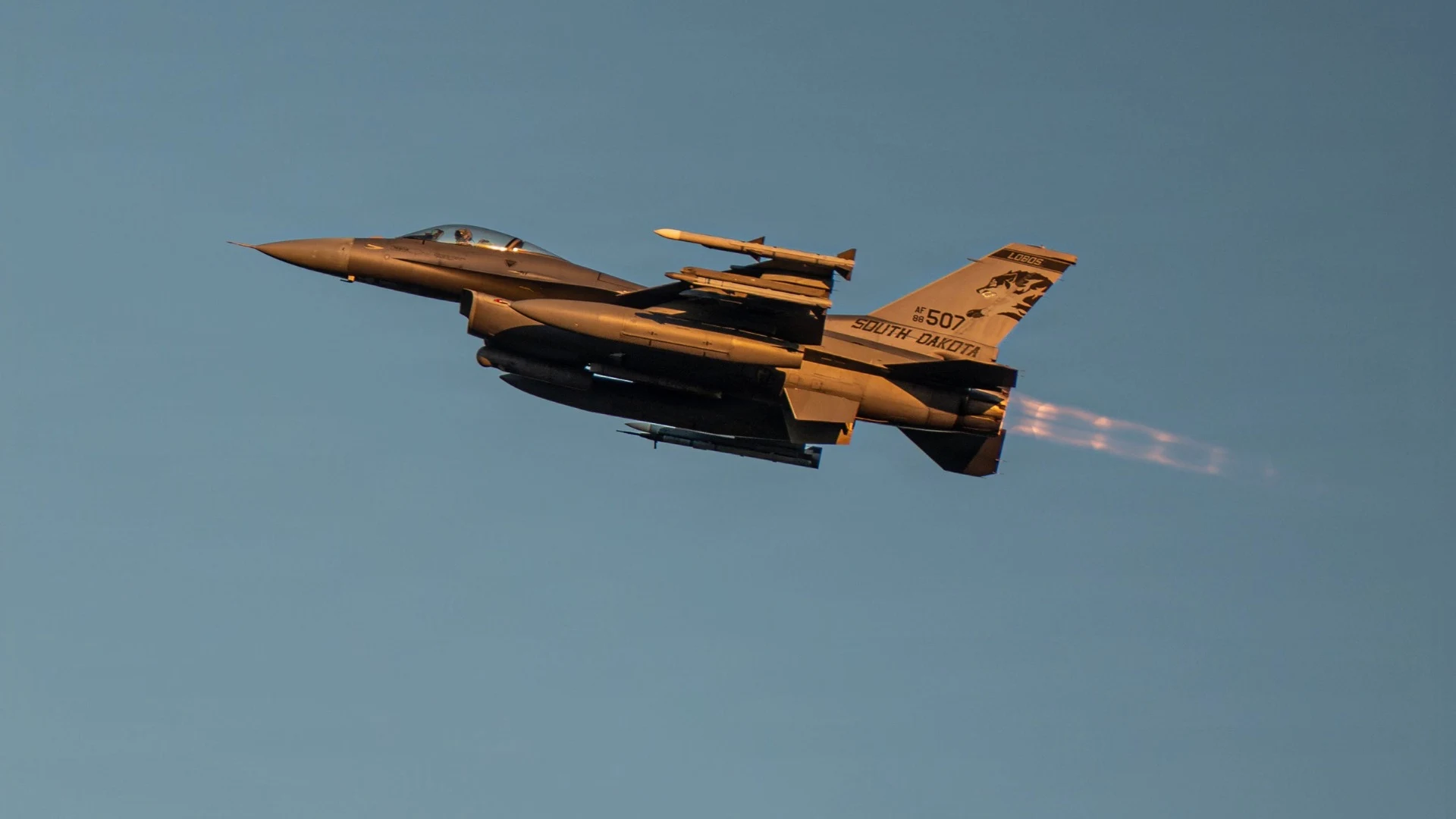
European governments are negotiating with the Pentagon to transfer U.S. Air National Guard F-16s to Ukraine to intercept Russia’s jet-powered drones, Dutch Defense State Secretary Derk Boswijk said in remarks published November 22, 2026. Boswijk, who oversees personnel and materiel at the Dutch Ministry of Defense, spoke to Politico on the sidelines of the Halifax International Security Forum in Nova Scotia. He did not specify how many aircraft are under discussion, which variants, or how a transfer would be financed.
The talks follow President Volodymyr Zelenskyy’s request at the 37th Ukraine Defense Contact Group meeting in Brussels on November 17 for 40 additional F-16s, a figure he justified by noting that much of Ukraine’s existing fleet spends more time in maintenance than in the air. Belgium used the same meeting to commit 10 F-16s by the end of 2026. The effort also unfolds under pressure from President Donald Trump, who reportedly told European allies they were wasting billions on Ukraine’s military. Three European officials told Politico that U.S. weapons deliveries to Kyiv have not been interrupted so far.
Why Ukraine Wants National Guard F-16s Against Jet Drones
The request targets a specific threat. Russia’s Geran-3, a domestically produced derivative of the Iranian Shahed-238, replaces the propeller of the Geran-2 with a small turbojet. Ukraine’s military intelligence agency, HUR, initially credited it with a speed of 550 to 600 km/h and a range of up to 2,500 km, while a later HUR teardown of a Chinese-engined series put it at 300 to 370 km/h and about 1,000 km. Even the lower figure is well above the piston-engine Geran-2, and faster Geran-4 and Geran-5 variants have since appeared. Volume is rising: Ukrainian officials say jet-drone launches rose roughly fivefold from June to July 2026, and defense technology adviser Serhii Beskrestnov put July’s total at about 1,500.
Those speeds compress engagement windows for the mobile fire teams and interceptor drones that carry much of Ukraine’s counter-Shahed mission, pushing the task toward fast jets. Ukrainian F-16s already engage drones with AIM-9 Sidewinder and AIM-120 AMRAAM missiles, the 20mm M61A1 Vulcan cannon, and APKWS II 70mm laser-guided rockets. The gun and the rockets offer a far lower cost per kill than a radar-guided missile, which is why Kyiv has sought tens of thousands of 20mm cannon rounds, according to Bloomberg.
The Air National Guard flies a large share of the U.S. Air Force’s F-16C/D inventory, and publicly available information indicates most Guard jets are Block 30, 40/42 and 50/52 airframes. Which of those would be released, and in what configuration, has not been disclosed. The Arizona Air National Guard’s 162nd Wing in Tucson began training Ukrainian F-16 pilots in 2023. Washington’s contribution to the Ukrainian fleet has so far centered on training, munitions and spare parts rather than flyable airframes. Lockheed Martin is also exploring a Ukraine-specific F-16 configuration with extended range and an AESA radar to detect low-flying drones and cruise missiles earlier, Defence Blog reported in October, citing company sources.
PURL Purchases and Bliksem EXO Define Europe’s Dual-Track Strategy
Boswijk framed the F-16 talks as one leg of a two-pronged effort, with Europe expanding its own industrial capacity while “buying what’s now on the market.” He told Politico he expects the balance to tilt further toward European suppliers within about two years.
The purchasing track runs largely through the Prioritized Ukraine Requirements List (PURL), the NATO and U.S. mechanism launched in mid-2025 under which allies fund deliveries of American-made weapons. Ukraine’s Ministry of Defense reported $6.7 billion in contributions during PURL’s first year, with the Netherlands providing $1.163 billion, second only to Norway’s $1.36 billion. Kyiv says roughly 95% of its Patriot interceptors arrive through the mechanism. Norwegian Foreign Minister Espen Barth Eide told Politico that because European taxpayers buy U.S. weapons at market price, cutting the program would hurt Lockheed Martin and Raytheon.
The building track includes the medium-range ballistic missile interceptor that Boswijk said the Netherlands backs. That description matches Bliksem EXO, a hit-to-kill exo-atmospheric interceptor led by Netherlands-based Destinus with Airbus, MBDA Deutschland, Safran and Thales under a letter of intent signed in Paris on July 14, 2026. The consortium targets medium- and intermediate-range ballistic missiles, including Russia’s Oreshnik, and plans a space test of its kill vehicle in 2027.
Analysis: Releasing Guard F-16s would shift Washington’s role from trainer and munitions supplier to aircraft donor, as the White House questions European spending on Ukraine. Europe’s pitch is deliberately narrow: fighters as counter-drone interceptors for homeland air defense, not offensive air power. The binding constraint, however, may be sustainment rather than airframes. Zelenskyy’s own case for 40 more jets rests on maintenance downtime, and older Guard airframes in mixed block configurations would add logistics and spare-parts complexity to a fleet already drawn from Dutch, Danish, Norwegian and Belgian inventories.
No timeline, aircraft count or funding arrangement has been announced, and the Pentagon’s position on the request has not been made public. Any transfer could also intersect with plans by Sens. Tim Kaine and Andy Kim, whose party takes control of Congress in January, to pass a multibillion-dollar Ukraine aid package early in 2027. Belgium’s year-end F-16 deliveries and the next Ukraine Defense Contact Group meeting will be the nearest indicators of whether Europe’s fighter pipeline to Kyiv is accelerating.