The United Kingdom will supply Ukraine with additional RapidRanger launchers for short-range air defense following a direct request from President Volodymyr Zelenskyy, the Ministry of Defence announced on November 24, 2026, as Defence Secretary Wes Streeting became the first holder of his office to visit Kharkiv, about 20 kilometers from the front line in eastern Ukraine. The Thales-built launchers are intended to shield Ukrainian civilians, cities and critical infrastructure from Russian air attacks, a role in which RapidRanger has already engaged both propeller-driven and jet-powered Shahed one-way attack drones.
The pledge comes as Russia presses its winter campaign against Ukrainian cities and energy infrastructure. It follows announcements by the Prime Minister and the Defence Secretary totaling £500 million, covering more than 1,000 long-range strike, maritime, logistics and surveillance drones and an air defense package of more than 1,000 short-range missiles and launchers plus a significant number of radars. The £240 million air defense element was unveiled on November 17 at the Ukraine Defense Contact Group in Brussels, with deliveries expected to begin in mid-December. The ministry has not disclosed how many additional RapidRanger launchers Ukraine will receive, when they will arrive, or how the new tranche will be funded.
How RapidRanger Launchers Engage Shahed Drones at Short Range
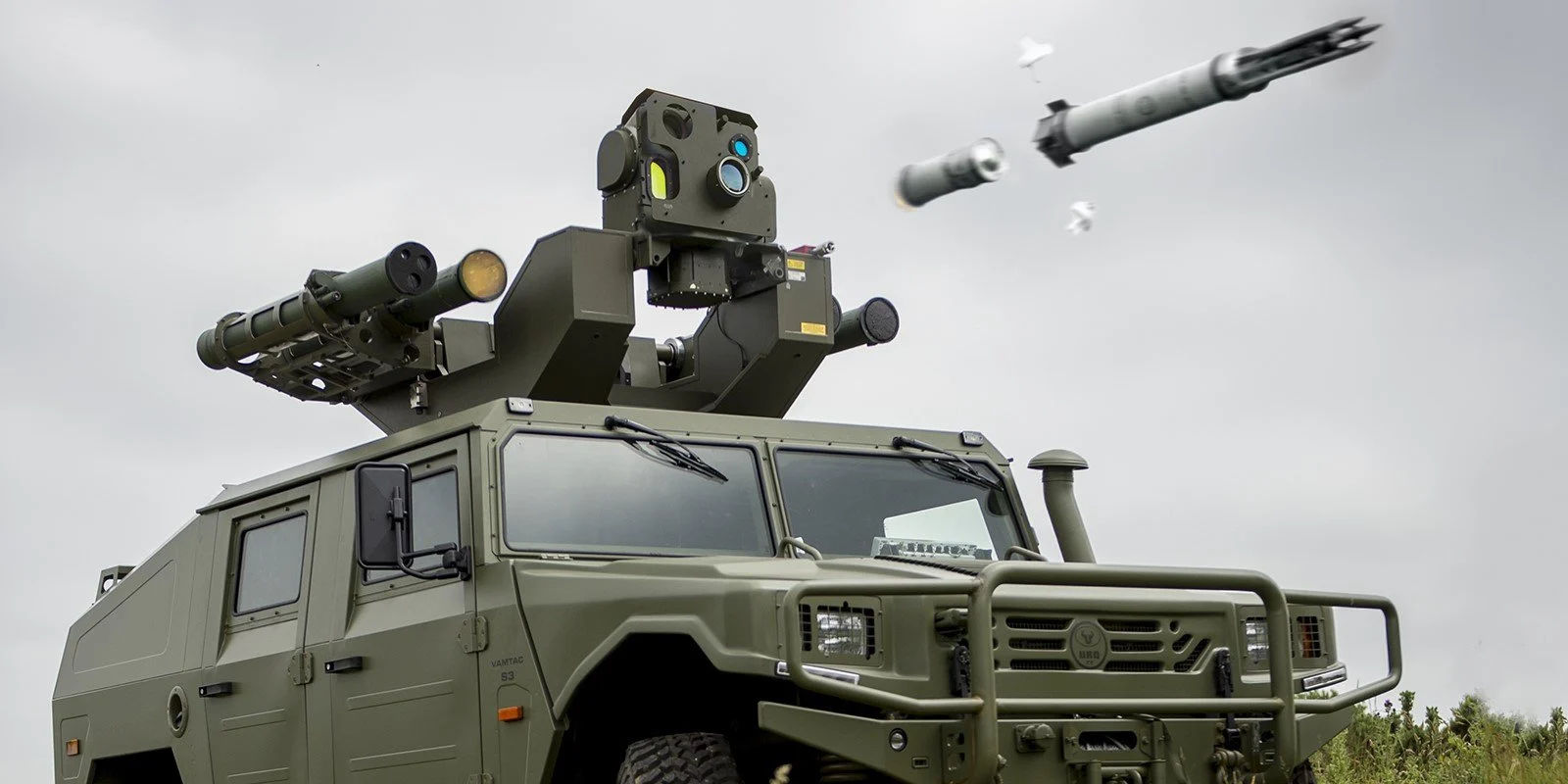
RapidRanger is a lightweight, highly automated, vehicle-mounted launcher developed by Thales UK within its ForceSHIELD air defense family. Manufacturer data put the launcher below 500 kilograms, light enough to be fitted to many types of wheeled and tracked military vehicles. Ukraine operates the system on the Spanish URO VAMTAC 4×4, and on September 2, 2026, Ukrainian forces publicly displayed it in service with the 1030th Anti-Aircraft Missile and Artillery Regiment “Aquila” of the 3rd Army Corps, after first showing it alongside mobile fire groups in March.
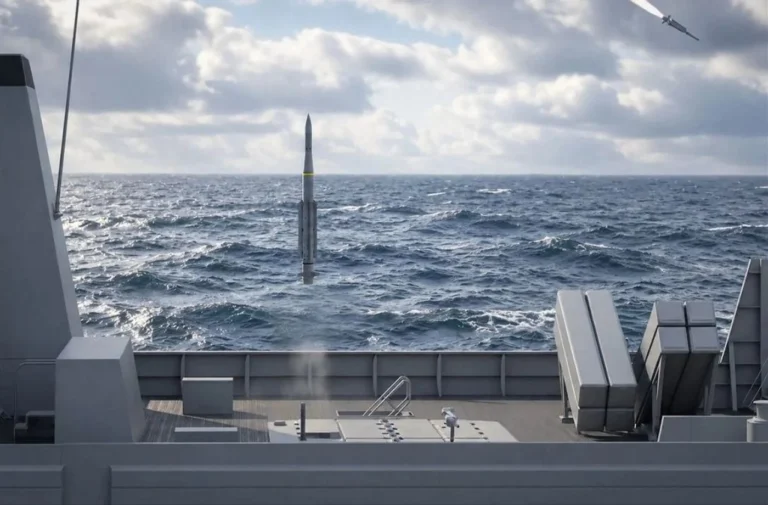
The launcher carries four ready-to-fire missiles, either Starstreak or Lightweight Multirole Missiles (LMM), in pure or mixed loads. Thales specifications cite target detection beyond 15 kilometers, an engagement range beyond 7 kilometers and a reaction time under five seconds. An electro-optical targeting sight provides automatic target tracking, and the system can be networked with early warning command and control systems.
Publicly available specifications indicate the LMM weighs 13 kilograms, flies at more than Mach 1.5 and reaches beyond 6 kilometers, using a two-stage solid-propellant motor, a triple-effect warhead and a proximity fuze. Guidance is laser beam-riding: the missile flies along a beam projected from the launcher and does not home on the target’s heat or radar signature. For Ukrainian crews, that means the same round engages a piston-engine Shahed or its faster jet-powered derivative without homing on a heat signature that flares could decoy. The trade-off is line-of-sight dependence and a point-defense envelope measured in single-digit kilometers.
Belfast LMM Production Behind the UK Air Defense Pipeline
The launchers sit on top of a missile supply chain anchored in Northern Ireland. Under a £1.6 billion UK Export Finance arrangement announced in March 2025, Defence Equipment and Support placed a contract with Thales in Belfast on Ukraine’s behalf, initially worth £1.16 billion, with the potential for a further £500 million of work with a Ukrainian industry partner to build launchers and command and control vehicles for the missiles. The deal was announced as more than 5,000 LMMs; the November 24 statement now describes the commitment as more than 6,000 missiles and associated RapidRanger launchers. It builds on a September 2024 contract for 650 missiles, and the £240 million winter package also draws on Belfast output.
Industrial cooperation is widening in parallel. During a recent meeting in Kyiv, Streeting and Zelenskyy signed agreements allowing Ukraine to establish strike drone factories in the United Kingdom to expand capacity and resilience. “We will all be weaker and we will all be more vulnerable if Putin prevails in Ukraine,” Streeting said during the Kharkiv visit.
Analysis: The new tranche addresses fire units rather than interceptors. With thousands of LMMs flowing from Belfast, the binding constraint on Ukrainian short-range air defense is the number of launchers, sensors and trained crews that can be dispersed across threatened cities. RapidRanger’s sub-five-second reaction time matters more as jet-powered Shaheds shrink the engagement window for gun-armed mobile fire groups, while its roughly 7-kilometer envelope means meaningful urban coverage requires launchers in quantity. Pairing launchers with the radars in the winter package extends cueing beyond the electro-optical sight. Missile-armed short-range systems also absorb drone traffic that would otherwise draw down scarcer medium- and long-range interceptors needed against cruise and ballistic missiles.
Key unknowns remain the launcher count, delivery timeline and funding source for the new RapidRanger tranche, along with progress on the Ukrainian industrial partnership covered by the potential £500 million extension. London has committed £3.5 billion in military assistance to Ukraine this year and at least £3 billion annually until 2030. The UK and France this month led the first major exercise of the Multinational Force Ukraine in Poland, testing how partners would move, protect and supply a force to help regenerate Ukraine’s armed forces once fighting ends.