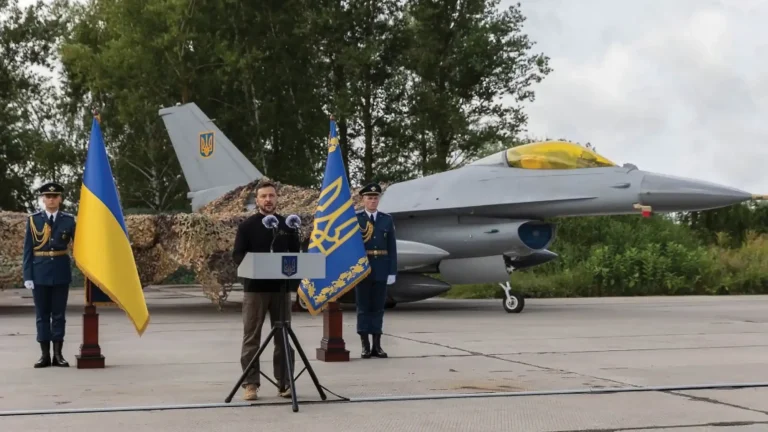
Germany will become the first country to use Ukraine’s DELTA combat system after defense ministers Evgeniy Khmara and Boris Pistorius signed a letter of intent in Berlin, Ukraine’s Defense Ministry announced on November 24, 2026. The document covers cooperation on developing, implementing, and using the system, and opens a new stage of the DELTA Lab initiative, under which partner armies could adapt the platform to their own requirements and co-develop new features.
The signing caps a year of incremental steps between Kyiv and Berlin. In April 2026, the two ministries signed Ukraine’s first memorandum on defense data exchange. On May 11, during the Kyiv visit at which the two ministers signed the Brave Germany letter of intent, Pistorius said the Bundeswehr would study DELTA in detail in the second half of the year. On November 17, Pistorius told the 37th meeting of the Ukraine Defense Contact Group that the German Army had tested DELTA during multinational exercises in October, supported by Ukrainian instructors and advisers, and that Berlin wants to evaluate its use within the Bundeswehr.
What the DELTA Combat System Brings to the Bundeswehr
DELTA was developed by the Center for Innovation and Development of Defence Technologies of the Ukrainian Ministry of Defense. According to Kyiv, it integrates tools for situational awareness, intelligence, planning, and combat mission management. Open-source reporting indicates the program traces back to 2016, matured through NATO Allied Command Transformation events such as the TIDE Hackathon and the Coalition Warrior Interoperability Exercise (CWIX), and was approved for deployment across the Armed Forces of Ukraine in February 2023.
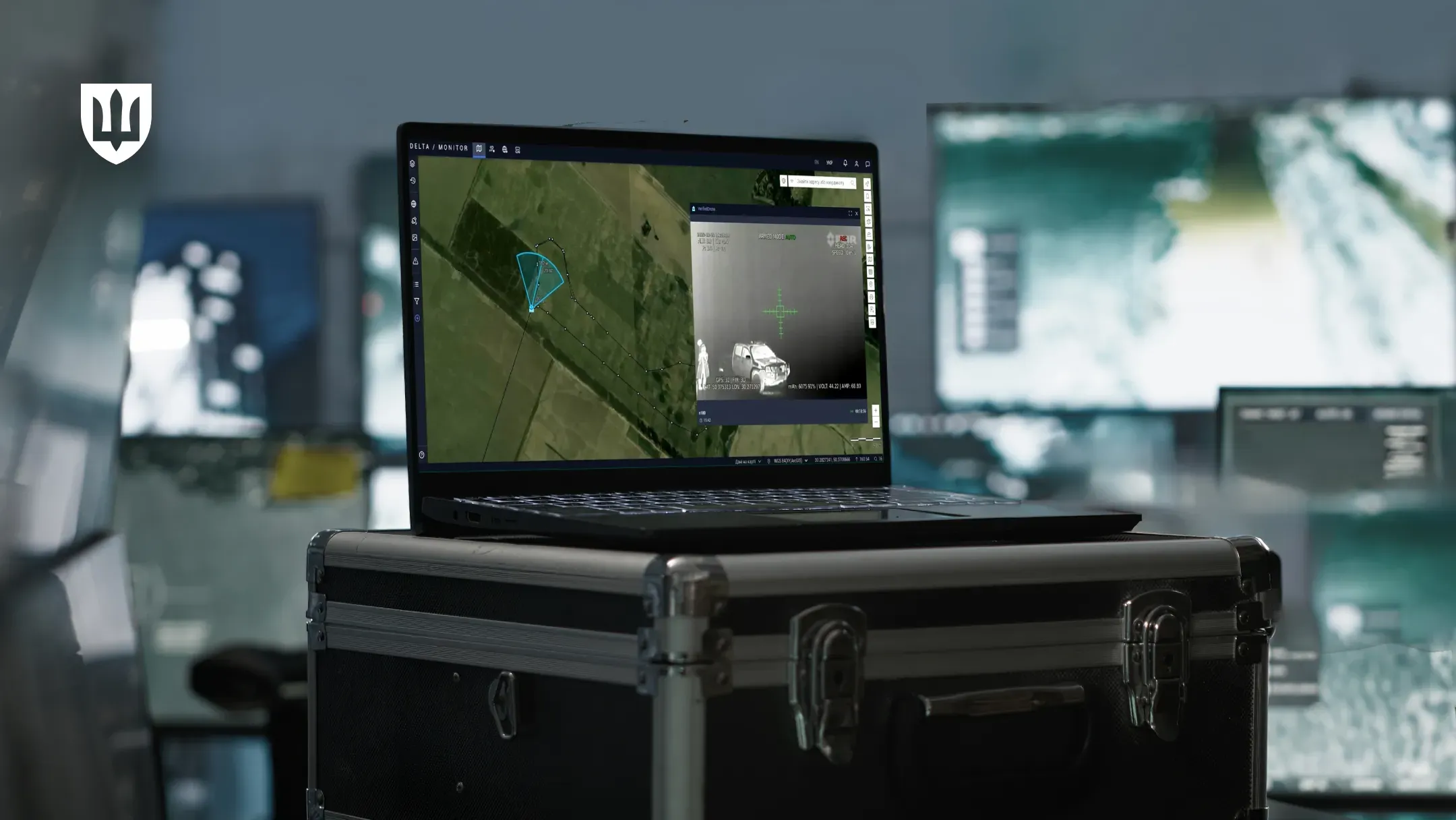
The system runs in the cloud and is built around a digital map that fuses manual inputs with feeds from sensors, trackers, radars, drone video, and satellite imagery. Publicly described modules include secure messaging, live streaming from unmanned aerial vehicles (UAVs) and fixed cameras, planning and synchronization tools for reconnaissance and targeting assets, and a Mission Control module that records mission execution and unmanned systems employment. Ukrainian officials say DELTA also uses neural networks to detect ground and aerial targets automatically.
Interoperability is the main argument for German adoption. At CWIX 2024, DELTA was tested against five interoperability standards across 13 priority areas. At the REPMUS 2026 maritime exercise in Portugal, assets transmitting telemetry under NATO STANAG 4817 were already integrated into the system. Its architecture has also been shaped by the war: in February 2023, the Ukrainian government authorized hosting the system in the cloud outside Ukraine to protect it from Russian cyberattacks. Which modules Germany will access, where its instance will be hosted, and at what classification level remain undisclosed.
Data Firewall and IT Coalition Funding Shape DELTA Lab
The letter of intent draws a hard line on information. According to the Ukrainian Ministry of Defense, German use of DELTA will not involve transferring the combat or other operational data of the Defense Forces of Ukraine, nor accessing such data. Germany receives the platform, not the Ukrainian battlefield picture. Data exchange remains a separate track, governed by the April memorandum. The approach mirrors Kyiv’s AI dataset framework launched in March 2026, which lets partners train models on labeled combat imagery without direct access to sensitive databases linked to DELTA.
Germany plans to support DELTA’s further development in particular through the IT Coalition for Ukraine, alongside other mechanisms. The coalition, created within the Ukraine Defense Contact Group and led by Estonia and Luxembourg, counts Germany among its members. Ukraine’s Ministry of Defense credits the coalition with €1.85 billion in support over three years, with donor contributions procured through the NATO Support and Procurement Agency. Khmara framed the exchange in the ministry’s statement:
Ukraine has technological solutions tested at the front. DELTA is a unique digital platform that combines planning, operations management, and situational analysis. German technological expertise will help develop and scale up the system’s capabilities.
Analysis: The arrangement reverses the usual direction of military technology transfer, with a NATO framework nation evaluating command-and-control software written by a partner at war. It also lands as Germany’s own Digitalization of Land-Based Operations (D-LBO) program recovers from delays; during the D-LBO operational test in Munster on October 12, 2026, Pistorius said the system works, while industry reported more than 2,000 vehicles converted to the D-LBO basic standard, fewer than agreed. DELTA is unlikely to replace that vehicle-level backbone. The more plausible fit is a cloud-based fusion and planning layer above it, though neither government has described how the two would connect. For Kyiv, the data firewall turns DELTA into an exportable capability without exposing its most valuable asset.
The next step is a separate agreement setting out the practical, technical, and legal terms of cooperation. No timeline, budget, or Bundeswehr user units have been announced. Key questions include accreditation of DELTA for German networks, intellectual property rights over jointly developed features, and whether other NATO members follow Berlin into DELTA Lab once the framework is in place.