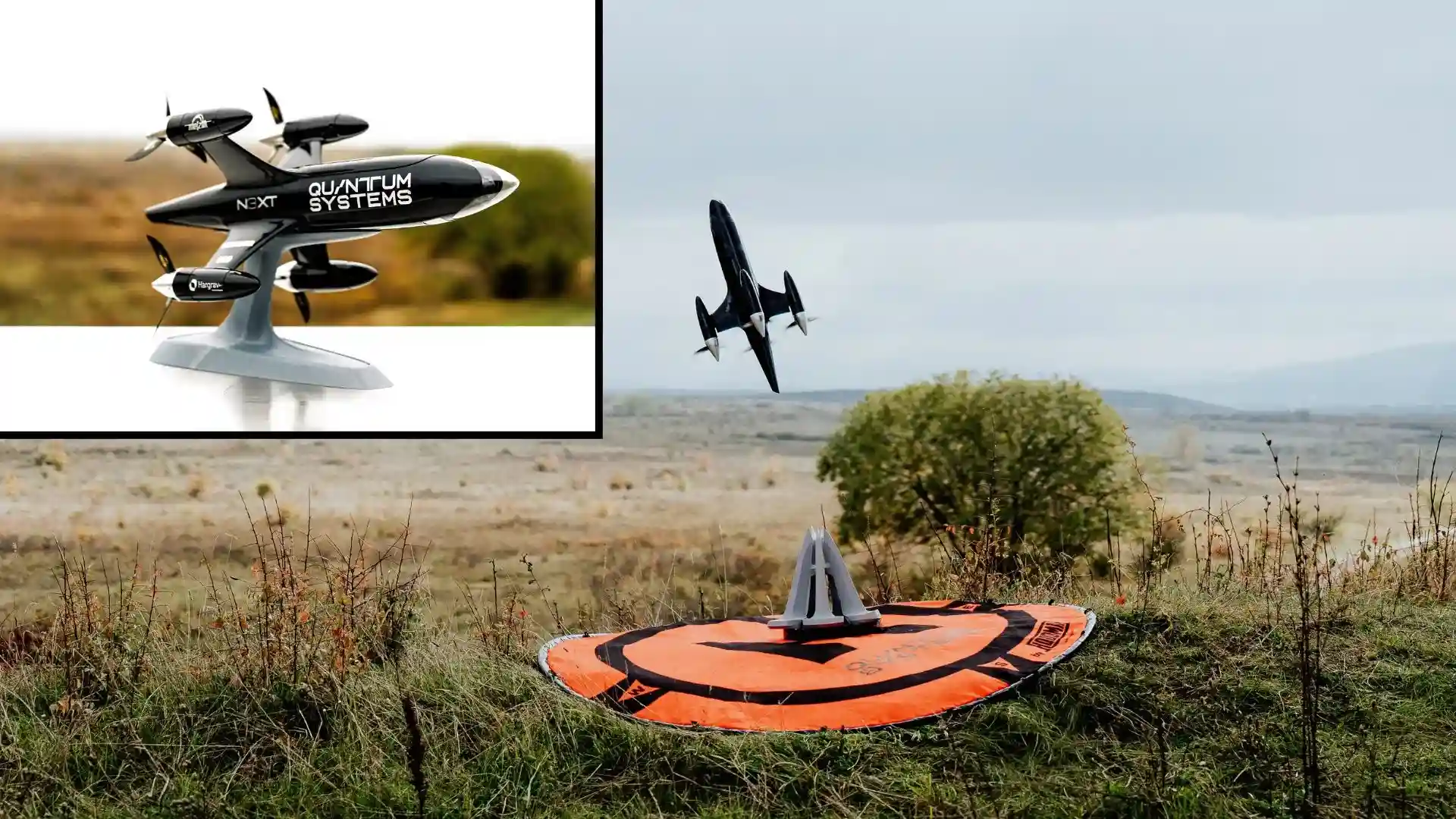
Quantum Systems announced on November 26, 2026, that its Apex Recordhunter set a world speed record for battery-electric flight, averaging 727 km/h (452 mph) over a two-way 100-meter course at a German military base.
The company presents the aircraft as a counter-unmanned aircraft system (C-UAS) technology demonstrator, not a weapon. The effort tracks a specific threat: Russia’s jet-powered Geran-4 and Geran-5 one-way attack drones, which Ukrainian military intelligence credits with speeds of up to 500 km/h and 600 km/h respectively, are outrunning much of the propeller-driven interceptor fleet built to defeat earlier Shahed-type drones.
How the Apex Recordhunter Record Was Measured and Verified
The 727 km/h figure is the average of two runs flown in opposite directions across the measured 100 meters, the standard method for cancelling out wind. According to Quantum Systems, independent experts verified the result on site by evaluating GPS speed data and cross-checking it against flight logs stored in the aircraft’s onboard black box. The record is listed by Drone World Records. The company disclosed neither the flight date nor the base.
The official mark caps a three-step progression. In an internal test on June 26, 2026, the aircraft reached 699 km/h. In October 2026, during the company’s Forward Edge 26 multi-domain exercise, it reached 777 km/h in a one-way run with a peak of 795 km/h. Neither result qualified as a record because no return leg was flown. The previous recognized benchmark for a battery-powered multirotor stood at 657.59 km/h, set on December 11, 2025, by the South African-built Peregreen V4 quadcopter and certified by Guinness World Records. Apex Recordhunter exceeds that figure by roughly 69 km/h, although different bodies certified the two marks.
N3XT Propulsion Lessons Feed Skyron and Future Interceptors
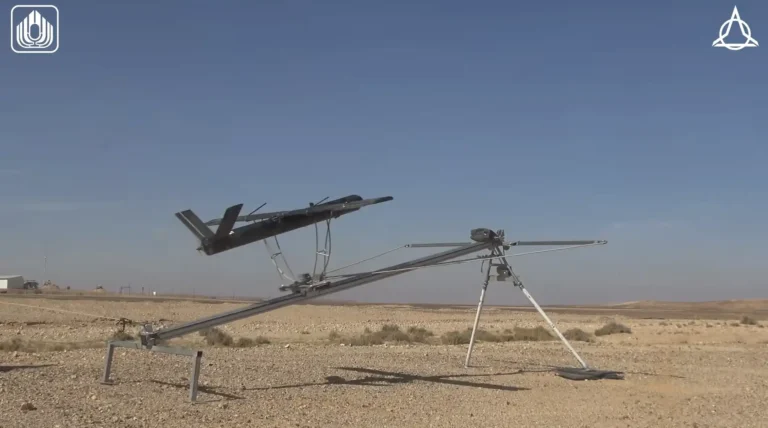
N3XT, the Quantum Systems department responsible for experimental technologies, developed the aircraft. The company has not published dimensions, weight, motor output or battery capacity. Company imagery shows a slender, streamlined fuselage driven by four propellers. Co-founder and co-CEO Florian Seibel identified the main difficulty as integrating batteries, motors, propellers, motor controllers and flight control systems into a compact, lightweight and low-drag airframe, a task that required several major design iterations.
Four suppliers contributed key components. Liebherr developed and manufactured the high-performance battery, Mejzlik developed the propellers, Hargrave Technologies supplied the electronic speed controllers, and EOS produced additively manufactured parts. Quantum Systems states that engineering insights from the program have already contributed to its Skyron C-UAS system and will support future high-speed interceptors in propulsion, energy management and system integration. “The record is not an end in itself,” Seibel said.
Analysis: Speed margin is the operational point. An interceptor needs overtake speed to complete a tail chase or recover from a missed pass, and a Geran-5 at 600 km/h leaves little margin for electric interceptors in the 380 to 480 km/h class, the range reported for the Skyron 400 and stated by the company for its SPYS interceptor. A 727 km/h run shows that battery-electric propulsion can exceed the speeds credited to jet-powered Gerans without the cost and supply chain of a turbojet. The record does not demonstrate endurance, range, or the ability to carry a seeker and warhead at that speed, and a 100-meter sprint tolerates battery discharge rates that an operational interceptor could not sustain. The transferable value lies in the motor, speed controller and battery technology, not in the record airframe itself.
Quantum Systems has not announced an interceptor derived directly from Apex Recordhunter, performance targets for future systems, or a fielding timeline. The company is documenting the attempt in a three-part film, with the first part released on November 26, 2026, and the remaining parts scheduled for November 30 and December 2. The open questions are how much of the sprint performance survives once a seeker, warhead and useful range are added, and whether the company will seek further certification of the record.