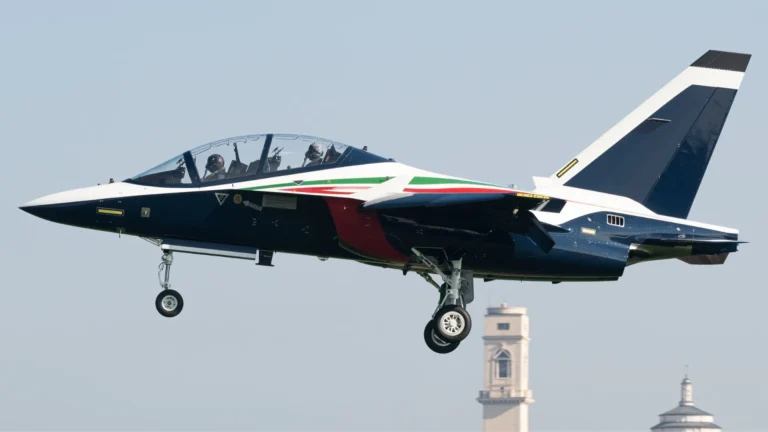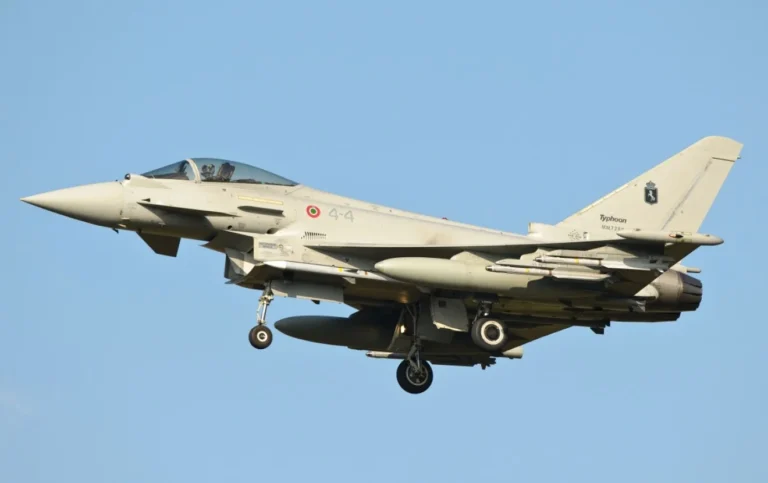
NATO counter-drone training over the Baltic region on November 17-19, 2026, pitted Belgian and Turkish F-16s, Finnish F/A-18 Hornets and Italian Eurofighters against real drones alongside Lithuania’s National Advanced Surface-to-Air Missile System (NASAMS). NATO Allied Air Command (AIRCOM) ran the counter-uncrewed aircraft systems (c-UAS) activity as a Flexible Deterrence Option (FDO) mission, with an Airbus A330 Multi-Role Tanker Transport (MRTT) from the Multinational MRTT Unit (MMU) in Eindhoven, Netherlands, refueling the fighters.
The serial follows similar AIRCOM counter-drone training over the Baltics on February 20 and May 27, 2026. NATO launched Eastern Sentry on September 12, 2025, after Russian drones violated Polish airspace two days earlier, and through 2026 folded its long-running Air Policing mission into a broader Air Defence posture combining fighters, surveillance, counter-drone systems and sea- and surface-based defences. Baltic fighters now shoot as well as intercept: an Italian jet downed an unidentified drone over Lithuania on September 15, 2026, after it likely entered from the direction of Belarus, and Turkish F-16s took part in a mission to down a drone over Latvia on August 14.
Fighters and Tankers Behind NATO Counter-Drone Training in the Baltics
Three of the four fighter nations are on Baltic air defence duty. Italy has led the mission at Šiauliai Air Base, Lithuania, since July 31, 2026, with four Eurofighter Typhoons. Belgium reinforced Šiauliai in late October with six F-16AM fighters and about 100 personnel, a deployment AIRCOM confirmed on November 12. Türkiye has flown five F-16s from the 181st Squadron out of Ämari Air Base, Estonia, since August 1, on a rotation scheduled to end on November 30, 2026.
Finland sits outside the rotational roster, making its Hornets the notable addition. On March 29, 2026, two drones strayed into southeastern Finland during Ukrainian strikes on Russian infrastructure, and Finnish F/A-18s scrambled before the drones crashed near Kouvola.
The Belgian detachment carries the most relevant weapons development. On November 18, 2026, the second day of the FDO, two Belgian F-16AMs from Šiauliai flew over Riga for Latvia’s 108th Independence Day carrying Thales Belgium FZ275 70 mm laser-guided rockets alongside AIM-9 Sidewinder and AIM-120 AMRAAM missiles. The Aviationist, which first reported the loadout, said it was the first time Belgian F-16s had been seen on an operational deployment with the rocket, following trials earlier in 2026. The semi-active laser-guided FZ275 gives fast jets a far cheaper shot than an air-to-air missile against slow, low-cost targets. AIRCOM did not say whether the rockets were used in the training.
The MRTT serves the same economics: tanker support lets a small number of jets hold combat air patrols over likely ingress routes instead of cycling back to base.
Red Versus Blue: Live Drones and Lithuanian NASAMS Integration
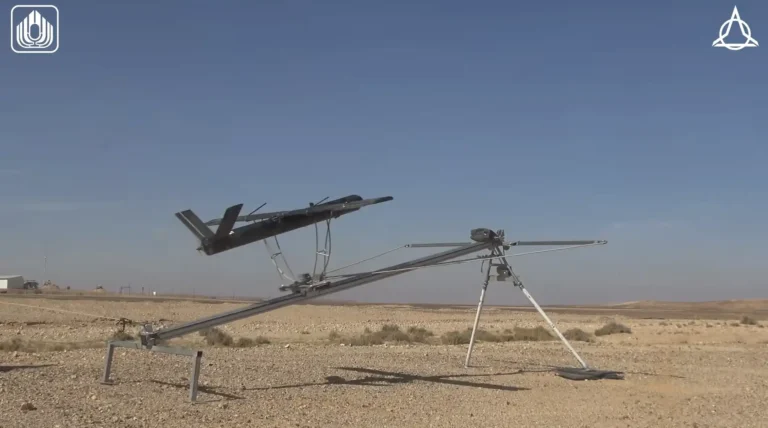
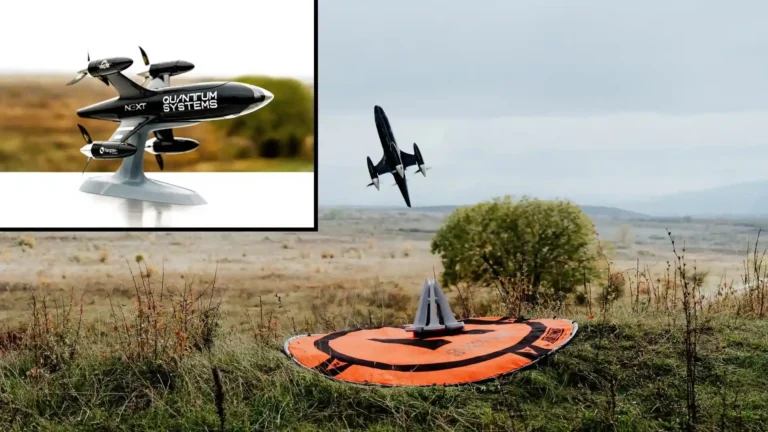
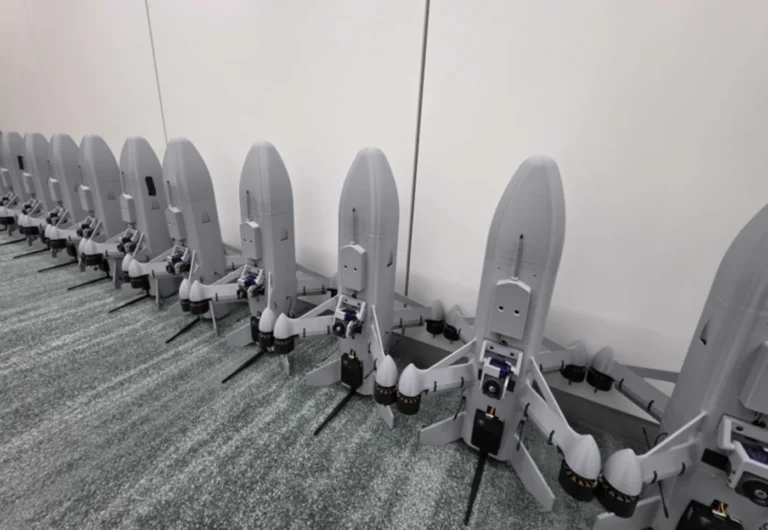
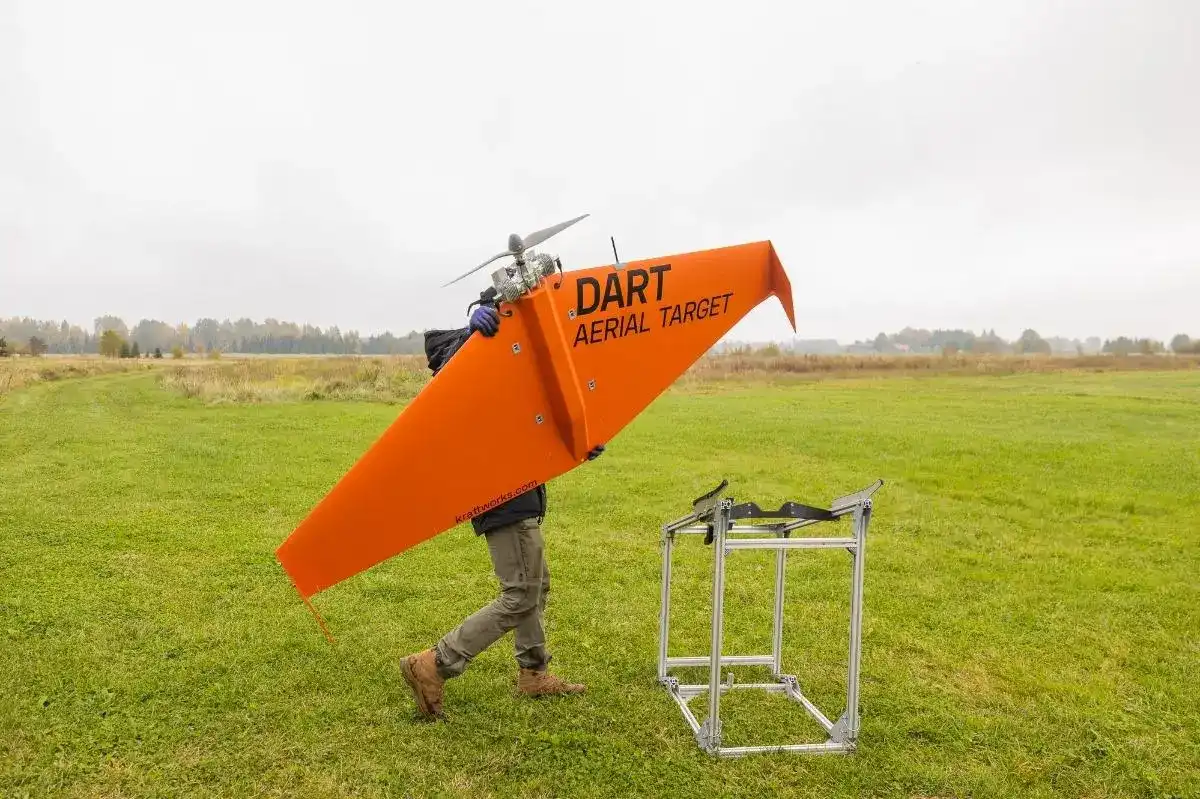
AIRCOM structured the training as a red-versus-blue air scenario, with Allies coordinating their response to threats ranging from one-way attack drones to larger remotely piloted aircraft. Industry support and real uncrewed aerial vehicles allowed participants to train in what AIRCOM called a high-fidelity environment. The command did not identify the industry partners or the drone types flown. Imagery released with the announcement was credited to KrattWorks, an Estonian maker of aerial targets including the DART fixed-wing target and the PARM quadcopter.
Lithuania’s NASAMS provided the ground-based layer. The country operates two batteries; components for the newer one began arriving in April 2026, with initial operational capability expected by the end of the year, and a third battery is due in 2028. In August 2026, Lithuania moved NASAMS onto the approaches to Vilnius, replacing short-range RBS 70 units. Kongsberg states that the NASAMS launcher can fire the AIM-120 AMRAAM, the extended-range AMRAAM-ER and the AIM-9X Sidewinder Block II. Washington approved a $214 million AIM-9X sale to Lithuania in April 2026.
Combining fighters and a surface-to-air system against small drones is the hard part. Both shooters must share one air picture, agree on engagement authority and avoid fratricide while tracking low-flying targets with small radar cross-sections. AIRCOM said the mission was designed to refine exactly those common procedures.
Analysis: The November FDO shows NATO assembling a cost-tiered kill chain in the Baltics rather than relying on any single system. Fighters carrying guided rockets offer a cheap, mobile answer to drones over wide areas; NASAMS defends fixed, high-value zones with interceptors that cost far more than the targets they would face; tankers keep the fighter layer airborne. The binding constraint is magazine depth. A saturation raid of one-way attack drones would force commanders to decide quickly which layer engages what, and live-target training with industry-supplied UAVs is how those decisions become procedure before they are needed in combat.
Türkiye’s Ämari rotation ends on November 30, 2026, and Ankara is scheduled to take on air policing in Romania from December 2026 to March 2027. Lithuania’s second NASAMS battery is due to reach initial operational capability by the end of 2026, with the third following in 2028. AIRCOM has now run at least three counter-drone serials over the Baltics this year, and it has not disclosed whether the FZ275 was fired during the training or how the Allies performed against the live drones.